

Articles (98)
Swap rates: Fundamentals, calculations, risks, types and examples
<div class="article__content"> <style type="text/css">.didyouknow { display: block; background: #5ee15a5e; padding: 5px 20px 20px 20px; border-radius: 10px; margin-top: 20px; } </style> <p>Swap rates are crucial for investors, financial institutions, and corporations participating in the financial markets. They are essential to swap agreements since they are one leg (or step) of the agreement. These rates are critical in managing and hedging against various types of financial risk.</p> <p>This article delves deep into the diverse nature of swap rates, unveiling their implications, the mechanics behind their calculations, and their crucial role in global financial markets. We will explore the different types of swaps, from prevalent interest rate and currency swaps to more niche varieties like commodity or inflation swaps. We will also provide real-world examples of how swaps can help you navigate the volatility and uncertainty of financial transactions.</p> <p>Whether you are a seasoned financial professional or new to the world of finance, understanding swap rates is crucial for navigating the complex and often turbulent financial seas. Join us as we embark on a detailed tour of the world of swap rates, shedding light on how they are determined, their various types, and the inherent risks and rewards they carry.</p> <h2>Understanding swap rate</h2> <p>Understanding the swap rate is crucial, as it significantly impacts the fixed interest rate that one of the parties in an interest rate swap must pay. The swap rate also plays a pivotal role in the costs of holding forex trades overnight.</p> <h3>What is a swap rate?</h3> <p>A swap rate is the fixed rate within an interest rate swap. It is the interest rate at which one party will make fixed payments to the other party over the swap's lifespan. Interest rate swaps are contracts in which two parties agree to trade a fixed interest rate for a floating one over a nominal amount.</p> <p><img alt="" src="/getmedia/623029e7-e7ac-4ca1-a0f9-b07710a4bd8c/Academy-Forex-Swap-rates-interest-swap-rate-definition.png" /></p> <p>Market forces such as supply and demand and projections of future interest rate movements determine the swap rate, which remains constant throughout the term of the swap agreement. The swap rate is used to calculate the fixed leg of the swap, which must be the same amount as the total value of the swap’s floating leg.</p> <h3>How does a swap rate work?</h3> <p>A swap rate operates within the parameters of a swap agreement, a financial derivative that two parties use to exchange one stream of interest payments for another over a predetermined period. The mechanics of a swap typically involve a fixed interest rate (the swap rate) and a floating interest rate, where parties exchange fixed-rate payments for floating-rate payments or vice versa.</p> <p>The first step in a swap rate is the commencement of an agreement, where the two parties sign a formal agreement to swap cash flows over an agreed-upon duration. The fixed and variable rates are set and will be maintained throughout the swap’s duration. In the second step, the two parties periodically exchange the difference between the fixed and floating interest rates.</p> <p>The swap agreement is terminated at the end of the agreed-upon term, although it may sometimes be terminated earlier if the terms allow it.</p> <h4>Swap rate scenario example</h4> <p>Imagine a company has floating rate loans that it wants to hedge against rising rates. It enters into a swap agreement with a bank where:</p> <ul> <li>The company agrees to pay a fixed rate of 5% on a nominal $1 million, resulting in fixed-rate payments.</li> <li>The bank agrees to pay a floating rate tied to London Interbank Offered Rate (LIBOR) on the same notional amount.</li> </ul> <p>If LIBOR is at 4% at the next payment period, the company pays the bank the difference (1% of $1 million). Conversely, if LIBOR rises to 6%, the bank will pay the company.</p> <p>This way, the company converts its floating-rate loans into fixed-rate debt, providing certainty over its interest payments. Meanwhile, the bank might profit from the floating rate if it remains below the fixed swap rate. The swap rate helps the company manage its interest rate exposure and plan its financials more accurately.</p> <p><img alt="How swap rates work" src="/getmedia/b75312fc-99af-413c-8abb-9abbc20e7c8e/Academy-Forex-Swap-rates-interest-swap-rate-example.png" /></p> <h3>Key terminologies of swap rates</h3> <p>As an investor, you must know these key terms when dealing with swap rates.</p> <h4>What is a LIBOR swap rate?</h4> <p>A LIBOR swap rate, also known as the swap rate, is the fixed interest rate that a recipient demands in an interest rate swap in return for the uncertainty of paying the short-term LIBOR over the specified period. It is the market's estimate of the LIBOR as reflected in the forward LIBOR curve.</p> <h4>What is an interest rate swap?</h4> <p>An interest rate swap represents a contractual agreement between two entities that agree to swap cash flows from interest rates based on a specified principal amount. This exchange involves altering interest rate obligations and serves as a tool for hedging against or speculating on interest rate fluctuations. Additionally, interest rate swaps are instrumental in regulating cash flows by transforming variable interest payments into fixed ones or vice-versa.</p> <p>These swaps enable entities with floating-rate debt to stabilise their expenses by committing to a current fixed rate while receiving corresponding payments. Its swap rate is maintained uniformly throughout the agreement’s term. The swap rate generates the swap’s fixed rate flows, while the floating rate generates the cash flows due to the expected floating rate payments.</p> <h2>Swaps as financial instruments and trading</h2> <p>Swaps are regarded as financial instruments and are essential in interest rate trading. Below, we will explore how swap rates work as financial instruments.</p> <h3>Swaps as financial instruments</h3> <p>Swaps are sophisticated financial instruments that help investors and other market participants exchange floating interest rates for fixed rates and vice versa.</p> <p>The swap curve marks swap rates across different maturities. It is a crucial interest rate benchmark, incorporating forward expectations for LIBOR, market perception, liquidity, supply and demand dynamics, and bank credit.</p> <p>Here is some exciting information about swap rates:</p> <p><strong>ThinkMarkets offers some of the best swap rates</strong> on currency pairs. Open a <a href="/en/account-types/">live trading account</a> with us today to start enjoying superior trading conditions. Depending on your region, you may also be eligible for a swap-free account if you prefer to trade without swap fees.</p> <h4>An example of swap rate calculation:</h4> <p>A company may engage with a financial institution to initiate a five-year swap. The company commits to a fixed interest rate of 3.5% on a notional amount of $10 million while obtaining a variable rate linked to LIBOR. The parties agree to settle the net difference quarterly.</p> <p>When dealing with interest rate swaps, having a well-defined strategy and awareness of the associated risks is essential. Each participant has distinct goals, and the swap's conditions should be meticulously tailored to align with these goals, considering the inherent dangers and prevailing market dynamics.</p> <p><img alt="How to trade interest rate swaps" src="/getmedia/cd11c3f2-c82c-4030-ad35-9036fed83aef/Academy-Forex-Swap-rates-vanila-interest-rate-swap.png" /></p> <h4>What is IRS hedging?</h4> <p>IRS hedging is combating the interest rate risk associated with a firm’s debt obligations using interest rate swaps. The <a href="/en/trading-academy/glossary/i/">Internal Revenue Service</a> offers specific guidelines and regulations concerning the nature and timing of profits and losses from these hedging activities.</p> <p>Profits and losses from hedging activities are considered ordinary to ensure they align with the hedged item’s characteristics.</p> <p>Businesses often hedge to control various risks in their operations, including the risk of interest rate fluctuations on variable-rate debts. The IRS outlines criteria and stipulations for designating and processing transactions as hedges for tax-related considerations.</p> <p>When a hedge qualifies, the associated payments made or received, especially concerning an issue's bonds, are treated under distinct tax regulations.</p> <h4>Interest rate hedging example</h4> <p>Here is an example of interest rate hedging using an interest rate swap to demonstrate how companies or individuals can use this strategy to manage their interest rate risk.</p> <p>Scenario:</p> <p>Imagine "ABC Manufacturing," a business that has secured a $10 million loan to expand its production capabilities. This loan comes with a variable interest rate, initially set at 4%, which adjusts quarterly following the LIBOR rate. ABC Manufacturing's CFO worries that a potential rise in interest rates over the coming years could hike the loan's cost, affecting the firm's financial health.</p> <p>Objective:</p> <p>ABC Manufacturing aims to stabilise its interest costs to facilitate financial planning and maintain predictable loan expenses, thus reducing the impact of potential interest rate hikes.</p> <p>Hedging approach</p> <p>The company opts to engage in an interest-rate swap with a bank.</p> <p>Swap details:</p> <ul> <li><strong>Notional amount:</strong> $10 million, equivalent to the loan amount.</li> <li><strong>Term:</strong> 5 years, coinciding with the loan's duration.</li> <li><strong>Fixed rate obligation:</strong> ABC Manufacturing commits to an annual fixed rate of 5% on the notional value.</li> <li><strong>Variable rate receipt:</strong> The bank consents to pay a variable rate pegged to the prevailing LIBOR rate on the same notional sum.</li> </ul> <p>Implementation:</p> <p>The swap is activated, and both parties make payments according to the predetermined rates and principal amount. If the LIBOR rate escalates to 6% after a year, ABC Manufacturing and the bank reconcile the difference at the end of the year.</p> <p><strong>ABC Manufacturing disburses 5% of $10 million = $500,000.</strong></p> <p><strong>The bank disburses 6% of $10 million = $600,000.</strong></p> <p><strong>The bank consequently pays ABC Manufacturing the net amount of $100,000.</strong></p> <p>Results:</p> <p>Should the LIBOR rate continue to rise, ABC Manufacturing will continually pay the set 5% while receiving a higher variable rate from the bank, counterbalancing the loan's heightened expense. Conversely, if the LIBOR rate dips below 5%, ABC Manufacturing pays more relative to its loan's variable rate. However, the company benefits from consistent and stable interest costs, aligning with its primary hedging aim.</p> <h4>What are derivatives in swap rates?</h4> <p>In the context of swap rates, derivatives are financial instruments that obtain their value from an underlying interest rate swap (IRS) or other related benchmark rates. Indeed, interest rate swaps are also a form of derivatives. Moreover, when their values are linked to swap rates, several different financial instruments are considered derivatives. Here are some crucial derivatives related to swap rates:</p> <h5>Interest Rate Options:</h5> <ul> <li><strong>Definition:</strong> Interest rate options are derivatives that confer on the holder the right, but not the commitment, to buy (call option) or sell (put option) an interest rate swap or a different interest rate-related instrument at a specified strike rate.</li> <li><strong>Purpose:</strong> It lets you speculate on future interest rate changes or manage interest rate risk.</li> </ul> <h5>Interest Rate Futures: </h5> <ul> <li><strong>Definition:</strong> Interest rate futures are regular contracts to buy or sell a particular amount of a financial instrument (usually a government bond) at a specific future date and price.</li> <li><strong>Purpose:</strong> It is used for hedging purposes or speculating future interest rate movements.</li> </ul> <h5>Swaption (Interest Rate Swaption):</h5> <ul> <li><strong>Definition: </strong>A swaption is an option based on an interest rate swap. It gives the holder the right, but not the commitment, to enter an interest rate swap at a future date with specific terms.</li> <li><strong>Purpose:</strong> It allows you to create an interest rate swap tailored to market conditions.</li> </ul> <h5>Constant Maturity Swap (CMS):</h5> <ul> <li><strong>Definition:</strong> A CMS is a type of interest rate swap with one leg paying a variable rate based on a stable maturity rate (e.g., the constant maturity swap rate) while the other pays a fixed rate.</li> <li><strong>Purpose:</strong> It is used to manage interest rate risk with a critical focus on the constant maturity section of the yield curve.</li> </ul> <h5>Basis Swaps:</h5> <ul> <li><strong>Definition:</strong> Basis swaps require the exchange of cash flows based on multiple interest rate benchmarks or indices.</li> <li><strong>Purpose:</strong> It manages basis risk, which emerges from differences between interest rate benchmarks.</li> </ul> <h5>Total Return Swaps (TRS):</h5> <ul> <li><strong>Definition:</strong> Total return swaps are derivatives that allow one entity to agree to pay the total return of a particular financial asset or index, including the capital appreciation and interest payments, in return for a fixed or floating-rate payment.</li> <li><strong>Purpose:</strong> It can be used for synthetic exposure to the returns generated by an asset or to hedge against existing exposures.</li> </ul> <h5>Forward Rate Agreements (FRA):</h5> <ul> <li><strong>Definition:</strong> FRAs are contracts where two entities agree to a fixed interest rate applied to a notional amount for a future period.</li> <li><strong>Purpose:</strong> It is used for hedging purposes against interest rate changes.</li> </ul> <p>The above derivatives provide market participants with multiple tools for managing and leveraging interest rate risk. Financial institutions, investors, and corporations can use these derivatives to tailor their exposure to interest rate changes based on their risk management goals and market views.</p> <div class="didyouknow"> <h2>Did you know?</h2> <p>You can use hedging trading strategies on multiple currency pairs with ThinkMarkets. Our advanced platform allows you to execute these advanced trading strategies and potentially benefit from these market inefficiencies. <a href="/en/account-types/">Open a live trading account</a> with us to explore these opportunities now.</p> </div> <h2>Calculation of swap rates</h2> <p>As an investor, the calculations and metrics related to swap rates are critical to your long-term success. We will examine some of these calculations and metrics below.</p> <h3>Interest rate swap calculation</h3> <p>To calculate the payments in an interest rate swap, consider the terms agreed upon in the swap contract. Let us break down a typical interest rate swap calculation between Party A (paying fixed) and Party B (paying floating).</p> <p>Identify the terms of the swap:</p> <ul> <li><strong>Notional principal (N):</strong> The hypothetical underlying amount for interest calculation.</li> <li><strong>Fixed rate (FR):</strong> An agreed upon fixed interest rate.</li> <li><strong>Floating rate (FLR):</strong> The variable interest rate index, such as LIBOR.</li> <li><strong>Payment frequency:</strong> the frequency of swap payment exchanges.</li> </ul> <p>Determine payment periods:</p> <p>Calculate the interest once per year for annual payments and adjust the calculations accordingly for semi-annual, quarterly, or monthly fees.</p> <h4>Swap calculation formula:</h4> <p><strong>Fixed-rate payment (FP):</strong> FP= Notional Principal (N)×Fixed Rate (FR)×Payment Period/Year</p> <p><strong>Floating rate payment (FLP):</strong> Notional Principal (N)×Floating Rate (FLR)×Payment Period/Year</p> <p>Net payment:</p> <p>The net payment is the difference between the two payment amounts. Usually, only the net amount is exchanged between the parties to settle the difference in interest obligations.</p> <p>Net Payment=Fixed Rate Payment−Floating Rate Payment</p> <p><img alt="Swap rates calculation formula." src="/getmedia/a7df4f74-4aa1-40e4-96c8-ca670d2204ac/Academy-Forex-Swap-rates-gains-floating-rate-swap.png" /></p> <h3>Other key metrics in swap rates</h3> <p>Having seen how swap rates are calculated, we can now move on to other crucial metrics prevalent in interest rate swaps.</p> <h4>Swap index rate</h4> <p>In interest rate swaps, the swap index rate denotes the benchmark rate that sets the variable payments within the swap contract. This rate fluctuates over time in response to market shifts. It serves as the anchor rate for the variable-rate portion of an interest rate swap. Selecting this index influences variable payments and, subsequently, alters the financial structure of the entire swap arrangement.</p> <p><strong>LIBOR (London Interbank Offered Rate)</strong></p> <p>LIBOR is the most widely used benchmark for short-term interest rates globally. It offers in multiple currencies with several different swap agreement lengths (overnight, one week, one month, etc.).</p> <p><strong>SOFR (Secured Overnight Financing Rate) </strong></p> <p>SOFR measures the cost of lending cash overnight, backed by Treasury securities. It has been gaining prominence as a replacement for the USD LIBOR.</p> <p><strong>EURIBOR (Euro Interbank Offered Rate)</strong></p> <p>EURIBOR is like LIBOR but used for Euro-denominated contracts. It represents the average interest rate at which Eurozone banks typically lend unsecured funds to each other.</p> <p><strong>TIBOR (Tokyo Interbank Offered Rate)</strong></p> <p>The TIBOR is used for Yen-denominated contracts, mainly within the Japanese market.</p> <p><strong>Other national rates</strong></p> <p>Each country has unique interbank and overnight index rates that apply to swaps. Below, we cover the characteristics of a swap index rate that distinguish it from the numerous financial instruments on offer.</p> <ul> <li><strong>Fluctuating rate:</strong> A swap index rate is not constant and varies in response to prevailing market interest rate shifts.</li> <li><strong>Reset periods:</strong> The index rate is observed and reset at regular intervals, such as daily, monthly, or quarterly, depending on the swap's terms.</li> <li><strong>Spread adjustments:</strong> Often, a spread is added to or subtracted from the index rate to determine the actual floating rate paid. This spread can compensate for credit risk or other contract-specific factors.</li> </ul> <p>Role of swap index rates in swap agreements</p> <p>In a standard interest rate swap, one party remits a fixed rate, and the other remits a variable rate linked to the swap index rate. Usually, the payments are consolidated, and the party who owes the greater amount pays only the net difference.</p> <p>Take, for instance, a swap dependent on LIBOR for its floating rate. Should LIBOR rise, the variable rate disbursements will increase correspondingly, and if it descends, it will decrease. This fluctuation exposes the variable-rate payer to shifts in interest rates, which the fixed-rate payer aims to protect against.</p> <h4>Bank swap rates</h4> <p>Swap rates from banks denote the interest rates they use when engaging in interest rate swaps among themselves or with other entities like financial institutions, businesses, or individual clients. These rates are part of the larger financial market landscape. They are subject to various factors, including current market dynamics, the parties' credit standing, and the swap contract's specific terms.</p> <h5>Determining swap rates:</h5> <ul> <li><strong>Market conditions:</strong> Current and anticipated short-term interest rates impact swap rates, which affect central bank policies, the economic outlook, inflation expectations, and overall market supply and demand for swaps.</li> <li><strong>Credit risk:</strong> Each party's perceived risk affects the swap rate. Higher credit risk usually leads to higher swap rates due to the increased risk premium.</li> <li><strong>Swap tenor:</strong> The length of the swap agreement can affect the rate. Longer tenors carry higher rates due to increased risk over an extended period.</li> <li><strong>Liquidity:</strong> More commonly traded swap tenors and currencies are usually more liquid and might offer tighter bid-ask spreads.</li> </ul> <h5>Components of bank swap rates:</h5> <ul> <li><strong>Fixed rate:</strong> The fixed rate agreed upon in the swap contract. It is often compared with government bond yields of similar maturity to assess its relative value.</li> <li><strong>Floating rate index:</strong> The index is commonly LIBOR or, increasingly, alternative rates like SOFR or EURIBOR. The floating rate includes the index rate plus or minus a spread, reflecting credit risk and other contract specifics.</li> <li><strong>Spread:</strong> Banks might add a spread over the floating rate index to cover service costs and risks.</li> </ul> <h4>Wholesale market swap rates</h4> <p>Swap rates in the wholesale market pertain to the interest rates relevant to swap deals that are conducted among financial institutions and other leading participants within the wholesale financial markets, as opposed to individual retail clients. These rates are integral to the over-the-counter (OTC) derivative markets, where banks, financial entities, large corporations, and other qualified entities participate in swap dealings.</p> <p><img alt="Swap rates in the wholesale market." src="/getmedia/be4a6ddb-d669-4ef1-aac3-a8c8850fc969/Academy-Forex-Swap-rates-wholesale-interest-rate-swap.png " /></p> <h5>Wholesale market explained:</h5> <ul> <li><strong>Participants:</strong> Banks, hedge funds, pension funds, insurance companies, large corporations, and more.</li> <li><strong>Size and volume:</strong> Deals in the wholesale market typically involve large notional amounts and are a significant part of global financial market activity.</li> <li><strong>Over-the-counter (OTC):</strong> Most swaps are traded over the counter, meaning they are negotiated directly between two parties without going through an exchange.</li> </ul> <h5>Determining wholesale market swap rates:</h5> <ul> <li><strong>Supply and demand:</strong> For swaps impact swap rates, affecting overall market conditions like interest rate expectations, liquidity requirements, and risk appetite.</li> <li><strong>Creditworthiness:</strong> The credit ratings of the parties involved can significantly impact the swap rates, as they indicate a party’s risk of default.</li> <li><strong>Market benchmarks:</strong> Rates are often benchmarked against government bonds or other standard rates, with the swap rate reflecting either a premium or a discount to these benchmarks.</li> </ul> <h5>Characteristics of wholesale market swap rates:</h5> <ul> <li><strong>Competitiveness:</strong> Due to the large size and sophistication of participants, pricing is highly competitive and sensitive to the slightest changes in market conditions.</li> <li><strong>Variability:</strong> Rates vary widely depending on a swap's term or tenor, the currency involved, and the current economic environment.</li> <li><strong>Liquidity:</strong> Liquid swap contracts, such as those with standard terms and major currencies, typically have tighter bid-ask spreads.</li> </ul> <p>Swap rates in the wholesale market are crucial to the financial ecosystem, impacting and mirroring the economy’s borrowing and lending costs. They affect many financial offerings and services, including business funding and home loan rates. These rates are keenly monitored as barometers of market mood and predictors of forthcoming shifts in interest rates.</p> <h2>Payments and terms</h2> <h3>Understanding payments</h3> <p>Understanding the payments associated with swap rates is crucial, and this section will explain some of the termsyou must be familiar with.</p> <h4>What are swap fees/credits?</h4> <p>Swap fees, also known as swap credit charges or swap mark-ups, are the overhead and returns that a lender embeds into the swap rate over the mid-market swap rate. They reflect the swap provider's cost. Swap fees are typically expressed in basis points. They can vary depending on the nominal amount and the swap agreement’s specific terms.</p> <p>Banks and other financial institutions charge these fees when a borrower enters an interest rate swap agreement. A swap fee is the cost of doing business for the borrower, representing the additional cost of the swap.</p> <h4>What are rollover rates?</h4> <p><a href="/en/trading-academy/glossary/i/">In interest rate swaps</a>, <a href="/en/trading-academy/glossary/r/">rollover rates</a> are the cost or credit received for holding an open swap position overnight. Rollover rates in finance are primarily associated with the forex (foreign exchange) market.</p> <p>When you hold a currency trade open past the end of the trading day (5 p.m. EST), the position is 'rolled over'. You either pay or earn interest based on the interest rate differentials between the two currencies in the pair. Here is a detailed look at rollover rates:</p> <h5>How rollover rates work:</h5> <p><strong>Interest rate differential:</strong> The difference between the interest rates attached to the two currencies in a currency pair determines their rollover rate. You will typically earn interest if you buy a currency with a higher interest rate than the one you sell. Conversely, you will typically pay interest if the currency has a lower interest rate.</p> <p><strong>Trade settlement:</strong> Forex trades typically take two business days to settle. Holding a position at 5 p.m. EST is considered keeping the position overnight, necessitating a rollover to the next settlement date.</p> <h4>Calculation of rollover rates:</h4> <p>A rollover rate can be calculated using the following formula:</p> <p>Rollover rate = (interest rate of currency 1−interest rate of currency 2) × position size × days rollover is applied/365</p> <ul> <li><strong>Interest rate of currency 1:</strong> The central bank interest rate for the first currency in the pair.</li> <li><strong>Interest rate of currency 2:</strong> The central bank interest rate for the second currency in the pair.</li> <li><strong>Position size:</strong> The size of the open position.</li> <li><strong>Days rollover is applied:</strong> Number of days the position is rolled over (often just 1 for each day, but can be more over weekends and holidays).</li> </ul> <h4>Triple rollover or swap Wednesdays:</h4> <p>Since forex trades take two days to settle and the markets are closed over the weekend, the rollover is typically tripled on Wednesday to account for the weekend. This means holding a position over Wednesday night will result in three times the usual rollover rate to cover Saturday and Sunday when the market is closed.</p> <p>Rollover rates are integral to forex trading. They represent the cost or benefit of holding a position open overnight due to the interest rate differential between the two currencies.</p> <p>Rollover rates in forex trading.<br /> </p> <table align="left" border="1" cellpadding="1" cellspacing="1" style="width:500px;"> <thead> <tr> <th scope="col"> </th> <th scope="col"> </th> <th scope="col">Swap long in points </th> <th scope="col">Swap short in points </th> </tr> </thead> <tbody> <tr> <td>CADJPY</td> <td>Canadian Dollar vs Japanese Yen </td> <td>11,823 </td> <td>-19,197 </td> </tr> <tr> <td>CHFJPY </td> <td>Swiss Franc vs Japanese Yen</td> <td>4,093 </td> <td>-12,867 </td> </tr> <tr> <td>EURCAD </td> <td>Euro vs Canadian dollar </td> <td>-7,923 </td> <td>-0.763 </td> </tr> <tr> <td>EURCHF </td> <td>Euro vs Swiss Franc</td> <td>2,913 </td> <td>-9,557 </td> </tr> <tr> <td>EURGBP </td> <td>Euro vs Great Britain Pound</td> <td>-5,083 </td> <td>0.697 </td> </tr> <tr> <td>EURJPY </td> <td>Euro vs Japanese Yen </td> <td>9,345 </td> <td>-22,535 </td> </tr> <tr> <td>EURUSD </td> <td>Euro vs US Dollar </td> <td>-7,963 </td> <td>0.533 </td> </tr> <tr> <td>GBPCAD </td> <td>Great Britain Pound vs Canadian Dollar</td> <td>7,197 </td> <td>-14,353 </td> </tr> <tr> <td>GBPCHF </td> <td>Great Britain Pound vs Swiss Franc</td> <td>-7,963 </td> <td>0.533 </td> </tr> <tr> <td>GBPJPY </td> <td>Great Britain Pound vs Japanese Yen </td> <td>11,601 </td> <td>-36,009 </td> </tr> <tr> <td>GBPUSD </td> <td>Great Britain Pound vs US Dollar </td> <td>-5,901 </td> <td>-3,321 </td> </tr> <tr> <td>USDCAD </td> <td>US Dollar vs Canadian Dollar</td> <td>-1,303 </td> <td>-5,295 </td> </tr> <tr> <td>USDCHF </td> <td>US Dollar vs Swiss Franc </td> <td>3,321 </td> <td>-11,329 </td> </tr> <tr> <td>USDJPY </td> <td>US Dollar vs Japanese Yen</td> <td>12,584 </td> <td>-27,216 </td> </tr> </tbody> </table> <h3>Key terms to know about</h3> <p>To better understand swap rates, here are some key terms whose definitions you should be familiar with.</p> <h4>Notional/nominal amount</h4> <p>The notional amount, also known as the notional principal amount is the predetermined dollar amount on which interest payments are based as part of an interest rate swap. It is the face value used to calculate interest payments on financial instruments. The notional amount is theoretical and does not change hands between counterparties.</p> <h4>Swap tenor</h4> <p>Swap tenor refers to how long an interest rate swap remains in effect. It specifies the period during which the parties exchange interest rate cash flows built on a notional amount. The swap tenor can change depending on the parties' needs and range from a few months to several years. The tenor is calculated from its initiation date to the termination or maturity date of the swap agreement.</p> <h2>Market aspects</h2> <p>In the ever-evolving world of global finance, swap rates' market aspect is crucial in determining investment strategies and influencing the decision-making process. This section will examine the intricate relationship between market forces and swap rates. Let’s review how swap rates respond to and mirror the complex workings of the global financial markets.</p> <h3>Market conventions</h3> <p>In interest rate swaps, market conventions refer to the standard practises, habits, and unwritten rules governing their trading and structuring. They encompass payment frequencies, day count conventions, and other commonly used market terms. These conventions are essential for ensuring consistency and understanding among market participants.</p> <h3>Influence of market factors</h3> <p>Here are some of the critical factors that have a significant impact on the interest rate swap market.</p> <h4>Central bank policy</h4> <p><a href="/en/trading-academy/glossary/c/">Central bank policies</a> can impact swap rates through various mechanisms. For instance, when a central bank adjusts its benchmark interest rate, it can influence the entire yield curve, including the rates used as a reference in interest rate swaps. Additionally, central bank liquidity operations and swap lines can affect the availability of funding and, consequently, the overall demand for swaps.</p> <h4>Supply and demand</h4> <p>Supply and demand dynamics can impact swap rates. Current interest rates, credit risk, and liquidity conditions can all affect swap demand. A swap’s availability depends on the dealers' willingness to provide them. When demand for swaps exceeds supply, swap rates can increase; when supply exceeds demand, swap rates can decrease. Various factors, including market conditions, regulatory changes, and macroeconomic events, can impact the relationship between supply and demand.</p> <h4>Prevailing interest rates</h4> <p>Prevailing interest rates significantly impact swap rates. Current interest rates, credit risk, and liquidity levels are some factors that affect swap rates. Specifically, if interest rates are expected to rise, the credit risk of swaps is greater. Therefore, prevailing interest rates play a crucial role in determining swap rates, as they affect market expectations and the cost of exchanging fixed-rate and floating-rate payments.</p> <h4>Market participants’ expectations</h4> <p>Market participants' expectations significantly impact swap rates. If market participants anticipate higher interest rates, swap rates tend to increase, and vice versa. The swap rate reflects the market's expectations for interest rates in the future, making it a valuable tool for fixed-income market participants, including speculators, investors, and banks.</p> <h2>Risk management</h2> <p>Given the many risks associated with swap rates, <a href="/en/trading-academy/forex/risk-management/">risk management</a> is crucial. Here is a list of the most prevalent risks in the interest rate swap market.</p> <h3>Types of risks involved</h3> <p>Here are some of the risks associated with swap rates:</p> <ul> <li><strong>Credit risk:</strong> There is a possibility that one of the parties to the swap will default on its contractual payments. In interest rate swaps, for example, if one party fails to pay, the other party faces potential losses. Credit risk focuses on the creditworthiness of the counterparties involved.</li> <li><strong>Counterparty risk:</strong> Like credit risk, counterparty risk is the risk that the other party in the swap agreement will default or become insolvent, thereby failing to meet their contractual obligations. This risk is particularly pronounced in over-the-counter (OTC) markets where swaps are not cleared through a central counterparty.</li> <li><strong>Market risk:</strong> This is the possibility that changes in market prices will lead to losses in positions. In the context of swaps, this can be due to interest rate changes, currency exchange rates, or the cost of the underlying asset or index.</li> <li><strong>Liquidity risk:</strong> This risk involves the possibility that a party cannot execute a transaction at the preferred price amid a lack of market liquidity. Swaps may not occur if too few participants are willing to take the opposite side of the swap at a given time.</li> <li><strong>Currency risk:</strong> In currency swaps, this risk involves potential losses due to fluctuations in the exchange rates between different currencies. If the exchange rate moves unfavourably, the value of the payments one party receives can be significantly reduced.</li> </ul> <p>Each of these risks requires careful consideration and management to ensure the effective and profitable use of swaps as financial instruments. This often involves conducting thorough due diligence, using collateral agreements, and employing various risk management strategies.</p> <h2>Types and examples</h2> <p>To understand risk management, we will explore some swap rate types and examples of how they are applied in <a href="/en/forex-trading/">forex trading</a>.</p> <h3>Interest rate differentials and carry trading</h3> <p>Interest rate differentials and <a href="/en/trading-academy/glossary/c/">carry trading</a> are concepts primarily found within the forex market and relate to strategies that exploit differences in interest rates between various countries. Here is a breakdown of each concept:</p> <h4>Interest rate differentials</h4> <ul> <li><strong>Definition:</strong> An interest rate differential is the difference in interest rates between two countries. When you invest or borrow in a foreign currency, you are subject to the interest rates in that currency's country.</li> <li><strong>Influence on exchange rates:</strong> The differential can significantly affect exchange rates. If one country's interest rates rise relative to another's, its currency may strengthen due to increased foreign investment in its higher-yielding assets. Conversely, if its interest rates fall, its currency might weaken.</li> <li><strong>Basis of the carry trade:</strong> This differential is the foundational concept behind carry trade strategies. Traders aim to generate a return from the difference between the two currencies' interest rates.</li> </ul> <p><img alt="Interest rate differential." src="/getmedia/50376718-8d42-43cd-96f5-770d17cd4b40/Academy-Forex-Swap-rates-interest-rate-differential.png" /></p> <h4>Carry trading</h4> <ul> <li><strong>Definition:</strong> This strategy involves the process of borrowing a currency, charging a low interest rate and using the cash to purchase (or invest in) a currency yielding a higher interest rate. The investor’s primary goal is to generate a return from the difference between the two rates, known as the "carry."</li> <li><strong>Execution:</strong> Typically, a trader uses leverage to magnify the returns of a carry trade. They might borrow a substantial amount of the low-interest-rate currency and convert it into a currency offering a higher rate of return on deposits or bonds.</li> <li><strong>Risks:</strong> While potentially profitable, carry trades are not without risk. Exchange rate fluctuations can quickly erase interest gains and lead to substantial losses, especially when leverage is used. Furthermore, when too many investors pile into the same carry trade, it can become overcrowded, leading to volatile swings if everyone simultaneously tries to exit the position.</li> <li><strong>Impact of global events:</strong> Economic events, monetary policy changes, or market sentiment shifts can affect carry trades' viability. For instance, if the country has lower interest rate hikes rates or a sudden decrease in risk appetite globally (leading investors to pull out of risky positions), carry trades can unwind rapidly, causing significant exchange rate movements.</li> </ul> <p>Carry trading and interest rate differentials are intricate strategies that require understanding both the forex market and international economic conditions. Successful carry traders must not only understand the basics of the strategy but also keep abreast of global economic trends, interest rate movements, and geopolitical events that may affect their trades.</p> <h3>Common types of swaps</h3> <p>Swaps are versatile financial instruments used for various purposes, like hedging risk, speculating, or altering an entity's asset or liability structure. Here are some common types of swaps:</p> <h4>Tom/Next swaps (tomorrow/next swaps)</h4> <p>Tom/Next swaps are short-term forex transactions in which a currency pair is bought and sold concurrently over two business days—tomorrow (the next business day) and the day after tomorrow (the day after the next business day). Traders typically use these to roll over open positions in the spot forex market to the following delivery date to avoid taking actual delivery of the currency.</p> <h4>Basis interest rate swap</h4> <p>A basis swap is an interest rate swap where two parties swap variable interest rates based on different money market reference rates. Unlike a plain vanilla swap, both legs have floating rates. These are often used to hedge against or speculate on changes in the spreads between the two reference rates.</p> <h4>Floating for fixed swap</h4> <p>This is the most common type of interest rate swap. In a floating-for-fixed swap, one party exchanges the interest payments of a fixed-rate loan for the floating interest payments of another party. Essentially, one party gets certainty on their payments (fixed), and the other benefits from potential rate decreases (floating).</p> <h4>Interest rate swap types</h4> <ul> <li><strong>Plain vanilla interest rate swap:</strong> This is the most basic type of interest rate swap. Two parties exchange fixed-rate interest payments for floating-rate interest payments between two parties, usually based on a nominal principal amount that does not change hands.</li> <li><strong>Amortising swap:</strong> In an amortising swap, the notional principal amount decreases over time, typically in line with a loan's amortisation schedule. Parties paying off loans and looking to hedge against interest rate changes frequently use this type of swap.</li> <li><strong>Accreting swap:</strong> Unlike an amortising swap, an accreting swap increases the notional principal amount over time. It may be used when the amount of debt or investment is expected to grow over time.</li> <li><strong>Forward swap (deferred swap):</strong> This agreement will start an interest rate swap on a future date, with terms agreed upon now. Investors can use this to lock in interest rates for future financial obligations.</li> <li><strong>Zero-coupon swap:</strong> A zero coupon swap involves exchanging periodic floating rate payments for a one-time fixed fee, usually at the end of the swap term.</li> <li><strong>Compounding swap:</strong> This more complex swap involves reinvesting floating payments, with the interest rate compounding over time.</li> </ul> <p>Each type of swap has unique characteristics and applications, and what is chosen depends on the parties' financial goals, risk tolerances, and market conditions. Entities typically enter into swaps after comprehensive risk assessments and considerations of the current and projected interest rate environments.</p> <h3>Three real-world examples of swap rates</h3> <p>Here are three real-world examples of swaps:</p> <h4>1. Forward interest rate swap</h4> <p><strong>Scenario:</strong> Company A expects to receive considerable cash in six months, which it plans to invest in a 5-year term deposit. However, the firm is worried that interest rates will fall over the next six months, leading to a lower return on its investment.</p> <p><strong>Action:</strong> Company A enters a forward-start interest rate swap, agreeing to exchange its floating interest rate payments for fixed payments in six months. The transaction allows it to lock in the current higher fixed interest rate for the deposit term, commencing in six months.</p> <p><strong>Result:</strong> When the six months pass, regardless of where the market interest rates are, Company A will start receiving fixed interest rate payments that reflect the rates from six months ago. Therefore, it has hedged against the risk of falling interest rates.</p> <h4>2. Currency interest rate swap</h4> <p><strong>Scenario:</strong> A US company, Company B, has taken out a loan in euros to fund its operations in Germany, while a European company, Company C, has taken out a loan in USD to fund its US operations. Both companies are exposed to interest rate fluctuations and foreign exchange risks in a foreign currency.</p> <p><strong>Action:</strong> Company B and Company C enter into a currency swap agreement. Company B agrees to pay Company C the interest on its USD loan at a fixed rate, and Company C agrees to pay Company B the interest on its euro loan at a fixed rate. They also agree to swap principals in the respective currencies at the beginning and end of the agreement.</p> <p><strong>Result:</strong> Both companies hedge against foreign exchange and interest rate risks. They benefit from the more favourable interest rates available to the other party in their domestic markets.</p> <h4>3. Interest rate swap mortgage</h4> <p><strong>Scenario:</strong> Homeowners with variable mortgages are concerned about rising interest rates and higher mortgage payments.</p> <p><strong>Action:</strong> The homeowners enter an interest rate swap, agreeing to pay a fixed rate to a financial institution in exchange for receiving a variable rate in return. They swap their variable mortgage rate for a fixed rate.</p> <p><strong>Result:</strong> The homeowners can now stabilise their mortgage payments, protecting themselves from the risk of rising interest rates. They now have predictable mortgage payments, which helps in personal financial planning.</p> <p>In these examples, the specifics of how the swaps are structured and executed depend on numerous factors, including the entities' risk exposure, market conditions, and strategic financial goals. These financial instruments are versatile and can be customised extensively to fit various needs and scenarios.</p> <h2>Conclusion</h2> <p>In summary, swap rates are critical for traders, investors, corporations, and financial institutions. They are the fixed rate of an interest rate swap and can be used to hedge against future interest rate changes. The parties involved in an interest rate swap do not exchange the nominal amount but rather the difference between the floating and fixed rates. Swap rates have multiple uses in the financial markets, including hedging against changes in interest rates and stabilising participants’ interest rate obligations. Some common swaps include tom/next swaps, basis interest rate swaps, and floating-for-fixed swaps.</p> </div>
Forex Trading Hours: Sessions, Overlaps, Time Zones, Strategies & Risk
<div class="article__content"> <style type="text/css">.didyouknow { display: block; background: #5ee15a5e; padding: 5px 20px 20px 20px; border-radius: 10px; margin-top: 20px; } </style> <p>The forex market, boasting a staggering daily trading volume of over $7.5 trillion in 2022, is the world’s largest financial market. It operates around the clock, spanning five days a week. Therefore, traders can log in at any time on a weekday and trade the forex market. However, not all times are ideal for trading, given that the forex market hours are divided into four main sessions.</p> <p>The four main forex trading sessions are the Tokyo and Sydney sessions for Asia, the London session for Europe, and the New York session for North America. These subdivisions are based on the time difference between the three regions and the hours during which the financial market in each region is open.</p> <p>As a trader, you must understand forex trading hours and sessions to identify the best time to trade forex. This article will explore forex trading hours, forex market sessions, overlaps and time zones, and strategies based on sessions and hours. We will also explore risk management and forex trading in different countries.</p> <h2>What are forex trading hours?</h2> <p>Forex trading hours are the hours during which the forex market is open. As a global, decentralised market, the forex market is usually open 24 hours a day, five days a week. On Sunday night, the Asian session begins the trading week with the Sydney market opening at 21:00 GMT and the Tokyo session opening at 00:00 GMT. Next, we have the European session opening at 07:00 GMT and the New York session opening at noon GMT.</p> <style type="text/css">.darkblue{ background-color: #1f497d; color: #FFFFFF; } .lightblue{ background-color: #00b0f0; } </style> <table border="1px solid black;" cellpadding="1" cellspacing="1" style="width:500px;" text-align="center"> <tbody> <tr> <th colspan="3"><strong>Forex Session Times in GMT and Local Time</strong></th> </tr> <tr> <th class="darkblue">Session</th> <th class="darkblue">Local Time</th> <th class="darkblue">GMT</th> </tr> <tr> <td class="lightblue">Sydney</td> <td>07:00 - 16:00</td> <td>21:00 – 6:00</td> </tr> <tr> <td class="lightblue">Tokyo</td> <td>09:00 – 18:00</td> <td>00:00 – 09:00</td> </tr> <tr> <td class="lightblue">London</td> <td>08:00 - 16:00 </td> <td>07:00 – 15:00</td> </tr> <tr> <td class="lightblue">New York</td> <td>08:00 – 17:00</td> <td>07:00 – 15:00</td> </tr> </tbody> </table> <h2>Weekends and holidays</h2> <p>The forex market is typically closed over the weekends since it is only operational from Sunday night to Friday. Once it closes at 9:00 pm GMT on Friday, it will reopen on Sunday night, with the Sydney session opening at 21:00 GMT.</p> <p>The forex market is rarely closed on holidays since most holidays are specific to certain countries but only some of the world. However, the forex market tends to close for the Christmas and New Year holidays, which are celebrated all over the world. Therefore, most brokers will be closed for trading each year on December 25th, 26th and January 1st.</p> <p>There is always thin trading and liquidity during the holiday week between Christmas and New Year's; hence, most trades tend to avoid trading during this low liquidity week, and many usually take a break from the market to resume after the New Year holiday. Trading during the holiday can be risky due to the much higher volatility witnessed in the market.</p> <p>Trading in a market will be limited during country-specific holidays. For example, the country's financial market is typically closed whenever there is a bank holiday in the United States. Therefore, while the Forex market will remain open, there will likely be low liquidity trading the USD pairs during the North American session since most US traders will not participate.</p> <h2>Understanding forex market sessions</h2> <p>As a trader, you must understand how the different <a href="/en/forex-trading/">forex trading</a> sessions work, especially paying attention to the overlap sessions. In this section, we shall analyse the three forex market sessions and pinpoint the best times to trade in each session.</p> <p><img alt="the three major forex trading sessions" src="/getmedia/60606321-8332-4a98-86b7-359101eae2ac/Academy-Forex-Trading-hours-three-major-forex-trading-sessions.png" /></p> <h3>Asian session</h3> <p>The Asian forex trading session starts on Sunday night and opens at 21:00 GMT daily. The Sydney and Tokyo sessions are the two primary representations of the session, with Sydney opening first. The Tokyo session opens three hours later at 00:00 GMT and stays open until 09:00 GMT, while the Sydney session closes at 06:00 GMT.</p> <p>The JPY, AUD, and NZD pairs are the most active during the Asian session. Currency pairs with these three currencies as a base or quote currency are usually the most active during this session. The Chinese yuan is also active during this period. These currencies are best traded during the Asian forex session.</p> <p>The Tokyo session is crucial for Asian market participants, who can trade currencies linked to their local economies during the session. However, the Asian session tends to have fewer participants than the London and New York sessions; hence, it has less liquidity and could be more volatile than the other two sessions.</p> <p>Asian session trading during holidays is typically characterised by low liquidity amid thin holiday trading volumes. Such times are usually more volatile than usual. Long holidays, such as the Chinese New Year holiday, also tend to have low liquidity and minimal trading from Asian traders.</p> <p>Important announcements like GDP growth data from China and other nations, like Japan and Australia, impact trading in the Asian session as well. Central bank announcements from the region's countries, which typically affect the country's currency and its pairs, also impact volatility in the Asian session. Investors usually keep track of high-impact announcements since they could trigger significant, volatile movements in the affected currency pairs.</p> <h3>London session</h3> <p>The London session opens at 07:00 GMT and remains open until 16:00 GMT. The GBP and EUR currency crosses are the most active currencies during the London session. However, many other currencies also came into play during this period, the busiest trading session in the forex market.</p> <p>The London market hours are critical since they usually witness the highest trading volume due to the overlap with the Asian and New York sessions. For a long time, London has been regarded as the global centre for forex trading. The <a href="/en/eur-usd/">EUR/USD</a> is the most heavily traded and liquid currency pair globally.</p> <p>The London session tends to have the highest traded volume of the three forex market sessions. Due to the high liquidity, spreads on the majority of actively traded currency pairs during this time are lower. The session also tends to be less volatile unless there are significant news events that could trigger increased volatility.</p> <p>Peak trading volumes are seen during the hours overlapping with the New York trading session—the 12:00 to 15:00 GMT period—which marks the overlap between the London and New York sessions. These overlap hours are typically characterised by high liquidity and increased volatility due to planned US macro releases.</p> <h4>The London fix</h4> <p>The London fix is when forex market makers, such as banks and leading financial institutions, agree on one price for a currency pair. The market makers then use the agreed-upon price to trade the currency pair with their clients, a fair price for the selected currency pair.</p> <p>The <strong>London fix is always scheduled for 3 pm in London</strong>, which is usually 11 am in New York. However, the New York times may vary based on the daylight savings time zone. Sometimes, the trading flows close to the London fix may overwhelm the forex market by pushing the prices of the affected currencies much higher. This tends to happen during periods of low liquidity.</p> <p>Fixing moves typically occur towards the end of the month, quarter, or year. The most used method of identifying London fix flows is looking at the clock. Fixing moves tend to begin 20–30 minutes before the actual fix, and they peak right at the hour's climax.</p> <h3>New York session</h3> <p>Based on daylight saving time zones, the New York session opens at 12:00 pm GMT or 1:00 pm GMT. Given that the hours overlap with the London session, the session is usually a beehive of activity, leading to increased trading activity and liquidity during the New York trading sessions. The most active currencies now are most USD pairs due to the large size of the American forex trading industry.</p> <p>Most currency pairs, including Asian currencies, tend to have significant price swings during the early New York session due to the overlap with the London session. Most major pairs where the US dollar is the counter or base currency tend to witness significant moves during this session. The US dollar’s performance affects all the currencies it is quoted against.</p> <p>The session is characterised by high liquidity and may also be quite volatile due to the numerous US macroeconomic data releases and Federal Reserve announcements that have a significant impact on USD pairs. The scheduled macro releases, such as GDP, employment, and inflation data, dramatically impact the US dollar and its currency pairs, triggering peak trading volumes.</p> <p><img alt="The forex market opening session times in the EST time zone." src="/getmedia/248d31be-44f9-4089-bf21-23a4d1f49186/Academy-Forex-Trading-hours-forex-market-opening-session-times-in-the-est-time-zone.png" /></p> <h3>Sydney session</h3> <p>Based on daylight saving time zones, the Sydney financial market opens at 20:00 GMT or 21:00 GMT and is one of the four major trading sessions. It is open until 05:00 GMT or 06:00 GMT. The Australian market plays an essential role in the forex market since it is usually the first to open on Sunday night. The Sydney market opens before the Tokyo market by a few hours daily and officially kicks off the trading week.</p> <p>The first few hours of trading in the Sydney market are usually characterised by low liquidity and high volatility since only the Australian and New Zealand markets are now open for trading. However, the liquidity improves once the Tokyo session starts and traders from more Asian countries, such as Singapore, start trading. Generally, the Asian market session tends to have the lowest liquidity of the three major trading sessions.</p> <p>Traders should also consider seasonal trading patterns affecting the Sydney trading session, including the Australian tax season. Many traders tend to close their losing trades towards the end of the Australian financial calendar for tax-loss harvesting reasons. The country's tax season runs from 1 July to 31 October for the fiscal year ending June 30. The traders can then reopen their trades in the new financial year.</p> <h2>Overlaps and time zones</h2> <p>Forex market overlaps are periods when two forex market sessions are open simultaneously. The first overlap is usually recorded when the London session opens at 07:00 GMT, and the Asian session still has one hour to go before it closes. The second overlap occurs when the New York trading sessions begin at noon GMT, and the London market still has three hours before closing at 15:00 GMT. These are the two significant forex market overlaps in the world.</p> <p><img alt="Forex market overlap hours." src="/getmedia/18174152-3cc6-4b13-851d-a17a95077485/Academy-Forex-Trading-hours-forex-market-overlap-hours.png" /></p> <h3>Advantages of forex market session overlap for traders</h3> <ul> <li><strong>Increased liquidity:</strong> Overlap periods tend to witness an increase in trading volume as the number of traders actively trading is usually higher. The higher liquidity makes it easier for traders to execute large orders without having a massive effect on the price. The period is also characterised by tighter spreads and much better pricing for traders.</li> <li><strong>Higher volatility:</strong> The higher trading activity during session overlaps can trigger higher volatility, which presents multiple chances for traders to generate returns from significant price movements. Traders who manage risk and make fast decisions can benefit from these conditions.</li> <li><strong>More trading opportunities:</strong> High liquidity and volatility could create more trading opportunities. Price movements could be more pronounced and easily predictable based on the increased information flow and the global participation of traders.</li> <li><strong>Convenience for different time zones:</strong> Session overlaps allow traders in various time zones to trade during their local trading hours. This increases global participation and creates opportunities for traders who may not be able to trade during the regular hours of a single market session.</li> </ul> <h3>Disadvantages of forex market session overlaps for traders</h3> <ul> <li><strong>Increased risk:</strong> The volatility that provides traders multiple opportunities to profit can also increase the risk of loss. Prices could rush in one direction, and traders could suffer massive losses if they do not apply proper risk management strategies.</li> <li><strong>Market noise:</strong> Session overlaps tend to have an increased volume of trades, which could lead to what is referred to as "market noise." This noise could make it challenging for traders to pinpoint clear trends or patterns. This could complicate decision-making and negatively affect strategy development.</li> <li><strong>Spread fluctuations:</strong> Although spreads are usually tighter during session overlaps due to increased liquidity, there could be moments when prices fluctuate, and the spreads suddenly widen, especially during and after significant news events or economic data releases.</li> <li><strong>Need for fast decision-making:</strong> The fast-paced price movements during overlaps require traders to make quick decisions. This could be challenging, especially for beginner traders, and could lead to mistakes or missed opportunities.</li> </ul> <p><img alt="Forex Market Session Overlaps" src="/getmedia/3ac65bec-8f17-4ae1-8478-3d9f22d10300/Academy-Forex-Trading-hours-forex-market-session-overlaps.png" /></p> <h3>London-New York overlap</h3> <p>The London-New York overlap is crucial in the forex market, creating vast trading opportunities. The three-hour overlap tends to have significant liquidity as the big European banks trade with their counterparts in the United States. Forex trades between the top US banks and even central banks like the Federal Reserve are another factor in the high liquidity.</p> <p>Overlaps are critical in the forex market because they are periods of high liquidity and volume. The high liquidity witnessed in the forex market during the New York and London overlaps tends to create numerous trading opportunities in different currency pairs. The number of market traders is usually the highest during this period.</p> <p>Trading costs during the overlap times tend to be lower due to the higher liquidity, but only sometimes. Spreads will sometimes widen due to high volatility after some scheduled macro releases, such as GDP, inflation, and employment data. Spreads could also widen due to geopolitical events and news.</p> <p>Some famous trading strategies traders implemented during the New York-London overlap include scalping and news trading. Scalping involves making numerous trades where a trader targets just a few pips per trade. This strategy works in highly liquid markets with narrow spreads and high volatility. News trading is another well-liked strategy traders use to trade news events during the overlap session.</p> <h3>Tokyo-London overlap</h3> <p>The Tokyo-London overlap is usually just an hour; hence, it is less pronounced than the New York-London overlap. The volume and liquidity witnessed in this overlap session are typically low compared to the New York-London overlap. Therefore, this overlap provides fewer trading opportunities than its counterpart.</p> <p>Trading costs during the overlap times are lower than during the Tokyo session alone due to the added liquidity from the London session. Still, the overlap is minimal since it is just one hour long and does not present significant trading opportunities.</p> <p>Some famous trading strategies traders apply during the Tokyo-London overlap include range trading due to the lack of liquidity and volatility during the overlap period. The range trading strategy worked well during the Asian session overlap because of the limited price movements witnessed during this period.</p> <h2>Strategies based on sessions and hours</h2> <p>The forex market is open 24 hours, five days a week, allowing traders to trade at convenient times. However, not all forex trading sessions are created equal; some tend to have higher liquidity than others. Below, we shall discuss the best trading strategies for each forex market session.</p> <h3>Optimal times and strategies for trading</h3> <p>These are the trading strategies that a trader can use to trade multiple currency pairs in each of the four forex market sessions. The strategies are tailored to the specifics of each trading session.</p> <h4>Sydney session</h4> <p>The Sydney session is usually the first to open and is regarded as less volatile than other sessions. It usually provides an excellent opportunity for traders to plan and set up their daily trades. During this session, traders might consider more stable, range-bound trading opportunities. Due to the session's lower volatility, traders can utilise strategies like support and resistance levels.</p> <h4>Tokyo session</h4> <p>The Tokyo session usually experiences more action than Sydney because it represents the first major financial centre to open. The session is notable for the large number of Asian market participants. Traders focus on Asian-Pacific currency pairs like <a href="/en/usd-jpy/">USD/JPY</a>, <a href="/en/aud-usd/">AUD/USD</a>, and <a href="/en/nzd-usd/">NZD/USD</a>. Some strategies that worked during this session included breakout trades from consolidation patterns observed during the much quieter Sydney session.</p> <h4>London session</h4> <p>The London session tends to overlap with the Tokyo and New York sessions; hence, it is one of the most liquid and volatile trading times. This session is crucial for the GBP, EUR, and USD trades. Traders could use momentum-based strategies by scouting for significant moves since the European market often sets the tone for the day. Breakout strategies are also popular during this session due to the increased volatility and volume.</p> <h4>New York session</h4> <p>The initial hours of the New York session overlap with the London session, contributing to its extended volatility and liquidity. The USD pairs are usually highly active during this period. News-based trading could be particularly effective during the New York session due to the significant economic releases from the US Traders could also use trend-following strategies since trends set during the London session could continue or reverse.</p> <h4>Overlapping sessions</h4> <p>The London/New York overlap is the most liquid time of the forex market trading day, where the GBP, EUR, and USD pairs are particularly active. Traders could look for momentum trades and high-volume breakouts. The Tokyo/London overlap is less significant because of the smaller overlap period, but it could offer opportunities in the GBP, EUR, and JPY pairs.</p> <div class="didyouknow"> <h2>Did you know?</h2> <p>ThinkMarkets allows traders to profit from the trading opportunities in the forex market, regardless of their trading session. We offer traders the popular <a href="/en/metatrader4/">MetaTrader 4 (MT4)</a> and <a href="/en/metatrader5/">MetaTrader 5 (MT5)</a> trading platforms, along with our proprietary <a href="/en/thinktrader/">ThinkTrader</a> trading app. Traders can use either of these robust platforms to trade the forex market. We offer tight spreads on most currency pairs regardless of market liquidity and provide an ideal environment for all traders, including scalpers, day traders, swing traders, and position traders. <a href="/en/account-types/" target="_blank">Open a live account with us</a> to enjoy all that we offer.</p> </div> <h2>Trading during off-hours</h2> <p>Trading during off-hours entails trading during the three hours that follow the North American session's close at 19:00 GMT and the Tokyo session's opening at 23:00 GMT. It could also mean trading during the Sydney session, which tends to have thin liquidity and low volatility.</p> <h3>Risks of trading during off-hours</h3> <h4>Reduced liquidity</h4> <p>Liquidity is the ability of traders to buy or sell an asset without triggering massive price changes. During off-hours, the forex market tends to have a much lower trading volume, reducing liquidity. Lower liquidity could lead to wider spreads, making it more expensive to trade most currency pairs. It could also cause slippage, where your orders are executed at worse prices than you initially expected, primarily if you use market orders.</p> <h4>Increased volatility</h4> <p>Given that fewer traders are usually in the market during off-hours, any trade made could significantly disproportionately impact market prices, triggering increased volatility. Higher volatility could be a risk or an opportunity, depending on market conditions. While it could lead to massive profits, it also increases the probability of losses, especially when a trader needs to prepare or use proper risk management strategies.</p> <h4>Market gaps</h4> <p>Market gaps occur when the forex market opens after the weekend or holidays. However, they could also happen during off-hours because of significant news events or economic data releases in other time zones.</p> <p>Gaps could lead to massive losses if the market opens much higher or lower than the previous closing price. This is especially true for traders who tend to hold their trades over the weekend or have tight stop-losses within the market gap.</p> <h4>Slippage</h4> <p>Slippage occurs when your trade order is executed at a price different from what you initially expected. Due to reduced market liquidity, it is more prevalent during off-hours. Slippage can affect trades' anticipated entry or exit points, leading to higher costs and lower profits.</p> <h4>Limited economic releases</h4> <p>Major <a href="/en/economic-calendar/">economic releases</a> are released during the main trading hours in each forex market. Hence, during the off-hours, the effect of economic news might be delayed until more traders are active in the market. Therefore, traders operating during off-hours might miss the immediate volatility and multiple trading opportunities after economic data is released. The delayed market reactions may also catch the traders off guard.</p> <h3>Potential rewards of trading the market during off-hours</h3> <h4>Opportunity to capture significant moves</h4> <p>Economic data and news events during off-market hours for a specific region may impact currencies paired with currencies from another area. Hence, traders can position themselves to take advantage of significant market moves due to the releases. For example, a trader could capitalise on an employment report from Australia released during the Sydney session, which could impact the AUD/USD pair despite the closed New York market.</p> <h4>Less competition from major players</h4> <p>Retail traders may have an easier time spotting and exploiting market trends without leading institutional traders and significant hedge funds, which tend to impact currency pairs significantly but are typically less active during off-hours.</p> <p>A retail trader may discover more predictable patterns in major currency pairs, such as the GBP/USD and the EUR/USD, during the Asian session, when American and European traders are less active.</p> <h4>Benefit from overnight swaps</h4> <p>Forex trading is all about exchanging currencies and their interest rates; hence, holding a currency pair overnight could result in the receipt or payment of a swap rate due to the interest rate difference between the two currencies that make up the pair. Therefore, traders with an excellent understanding of interest rate trends and differentials could hold currencies with favourable swap rates overnight to earn interest on their trades.</p> <h4>More time to analyse and plan</h4> <p>Trading during off-hours can offer traders a quieter environment, giving them more time to analyse different trade setups without the added pressure of the rapid price movements seen during regular trading hours. This can be especially useful for part-time traders.</p> <p>A trader could use the Asian session to analyse the market and plan their trades in readiness for the opening of the London session to take advantage of the higher liquidity and volatility needed for the success of specific trading strategies.</p> <h4>Volatility</h4> <p>The higher volatility usually present during the off-hours can be a blessing and a curse. Traders who know how to deal with volatility can benefit from the significant price movements within short periods, potentially leading to higher returns. Day traders and scalpers may find the volatility witnessed at the London session opening and the overlap with the Asian session incredibly lucrative.</p> <h3>Role of news releases</h3> <p><a href="/en/market-news/">News releases</a> play a critical role in off-hours trading as they usually lead to high volatility, which, as discussed above, can be a double-edged sword. Experienced traders could benefit from the increased volatility after scheduled releases during off-hours. On the other hand, traders with less experience may find it difficult to trade the increased volatility created by news releases in the off-hours market.</p> <h3>Risk management</h3> <p><a href="/en/trading-academy/forex/risk-management/">Risk management</a> is critical to your success as a forex trader, regardless of the forex market session that you are trading. You should always apply proper risk management strategies when trading, despite your trading strategy. Let's look at risk and position sizing during different market sessions.</p> <p><img alt="Risk management in forex trading." src="/getmedia/36fd687a-f159-416d-a6a7-b4023aee0005/Academy-Forex-Trading-hours-risk-management-in-forex-trading.png" /></p> <h3>Forex trading in different sessions</h3> <p>As mentioned above, there are four distinct forex trading sessions and trading each of these sessions requires a solid understanding of their inherent characteristics. Below, we delve deeper into the key elements of each of the four sessions.</p> <h4>Asian session</h4> <p>The Asian session tends to have much lower liquidity and volatility; hence, traders must use broader stop-loss orders to avoid having their stops hit and their trades closed prematurely. Due to the lower liquidity, traders in this session should be wary of significant moves in many currency pairs and broader spreads. All these factors must be considered when developing a risk management strategy for the Asian market.</p> <h4>London session</h4> <p>The London session tends to be the most liquid and busiest trading period and is characterised by lower spreads despite higher volatility. However, traders must always look out for sudden, massive moves triggered by UK and Eurozone releases before the New York session opens and the ensuing overlap. Due to the increased liquidity and higher volatility, traders can have much tighter stop-loss orders. However, the volatility could lead to losses as prices whipsaw on significant announcements.</p> <h4>New York session</h4> <p>The New York session offers traders the most opportunities, especially during the overlap with the London session. Several economic releases from the US docket usually occur early in the session, leading to higher volatility, which creates numerous trading opportunities. Traders can use all types of trading strategies during this session. The risk management strategies will also vary between trading styles, as scalpers and day traders have more minor stops than swing traders.</p> <h3>Strategies for volatile and illiquid hours</h3> <p>During volatile and illiquid hours, the best trading strategies are short-term, like scalping to benefit from fast moves. One can also trade long-term, so long as they place a significant enough stop-loss order to give the trade enough room to move around. Overall, trading during volatile and illiquid hours is much riskier than at other times; hence, traders should always be alert.</p> <h2>Forex trading in different countries</h2> <p>The forex trading industry in many countries differs. Traders in each country have unique perspectives as they trade the market at different times based on their country's time zone. Therefore, we shall look at forex trading in several countries to see their similarities and differences.</p> <h3>Forex in key markets</h3> <p>Here, we shall cover forex trading in several leading countries in the industry. Each of these countries has a unique approach to the forex market, but there are also multiple similarities that we shall also cover in this section.</p> <h4>Forex trading in the United Kingdom</h4> <p>Forex trading is a popular activity that attracts numerous participants. The Financial Conduct Authority (FCA) is a Tier 1 regulator overseeing the UK forex market. The FCA ensures that all traders are protected from fraudulent firms and that licenced firms adhere to its rules. Participants in the UK forex market include both retail and institutional traders.</p> <p>UK traders can trade the forex market using either contracts for difference (CFDs) or spread betting, a tax-free trading strategy. Trading with CFDs attracts capital gains tax, but one can also offset their losses.</p> <h4>Forex trading in Australia</h4> <p>Forex trading in Australia is a popular activity attracting local and international participants. The Australian Securities and Investments Commission (ASIC) is a Tier 1 regulator that effectively regulates the forex market in Australia. The ASIC issues an Australian Financial Services Licence (AFSL) to all brokers operating in the Australian market.</p> <p>Forex trading in Australia is considered a taxable activity, and the Australian Taxation Office (ATO) considers forex trading gains as assessable income. Hence, traders must report these gains on their tax returns. The forex market in Australia attracts retail and institutional traders who want to take advantage of the opportunities present in the market. Traders should use proper risk management strategies in the Australian market, which can be highly volatile after news events.</p> <h4>Forex trading in South Africa</h4> <p>Forex trading in South Africa is prevalent, especially among young people. The Financial Sector Conduct Authority (FSCA) oversees the forex market and ensures that all forex brokers within the nation abide by its strict regulations. The forex market in South Africa attracts both retail and institutional traders in equal measure. Profits from forex trading in South Africa may be subject to income tax.</p> <h3>Regulatory considerations and high-volume periods</h3> <p>Some of the regulatory considerations that traders in each country must consider include whether their preferred broker is regulated in their country. Being locally regulated means you can report your grievances to your local authorities with the broker and expect them to be resolved.</p> <p>It would be best to consider whether the forex broker is subject to Tier 1 regulation, which denotes their commitment to upholding the strictest regulatory standards globally.</p> <p>Forex traders should also be aware that trading during high-volume periods such as the New York-London overlap can be advantageous while posing a significant risk due to rapid price movements.</p> <h3>Unique country-specific factors</h3> <p>Some unique country-specific factors, such as elections and high-impact economic releases, can significantly impact the affected currency pairs, regardless of the current forex market session. In most countries, election outcomes, such as former US President Donald Trump's surprise 2016 election win, significantly impact their currency.</p> <p>Other times, when significant news releases exist, the affected currency pairs could experience a significant price move despite the current session. For example, the AUD/USD currency pair could experience a massive price move after a critical economic announcement, such as the GDP, inflation, and jobs data. A central bank announcement could also have a significant impact despite the Sydney session's low trading volumes.</p> <h2>ThinkMarkets forex trading platform operates 24/5</h2> <p>Yes, the ThinkMarkets forex trading platform operates 24/5, allowing traders to enter and exit their trades anytime within 24 hours. Since we offer all these sessions to our clients, traders can choose whether to trade the Sydney, Tokyo, London, or New York sessions. You can learn more about our market hours and forex trading offerings.</p> <h2>Conclusion</h2> <p>The forex market is open 24 hours, five days a week, but the 24-hour session is split into four. The first is the Sydney session, followed by the Tokyo session, the London session, and finally, the New York session. The most liquid session is the London session, which overlaps with the New York session. Traders should customise their trading strategies based on the liquidity levels during their trading session. Some sessions have high volatility, which can be both a blessing and a curse since it triggers sudden price moves in some currency pairs. Understanding the four forex market sessions and their characteristics is crucial to your success as a trader.</p> </div>
Bid-ask Spread: What is it, and How does it work in trading
<div class="article__content"> <style type="text/css">.didyouknow { display: block; background: #5ee15a5e; padding: 5px 20px 20px 20px; border-radius: 10px; margin-top: 20px; } </style> <p>If you have any experience trading the financial markets, you’ve probably come across the term ‘bid-ask spread’, but what exactly is it, and how does it work? In this article, we'll explain this term, how it works, and the impact it can have on your trading costs. We’ll also delve deeper into the factors that can impact the width of the bid-ask spread, including liquidity and trading volume, market conditions, and asset types.</p> <h2>What is the bid-ask spread?</h2> <p>The bid-ask spread subtracts a given financial instrument's buy and sell prices. The bid is the price someone will pay for an instrument, while the ask is the price someone will sell an instrument.</p> <p>So, when a trader wants to buy a currency pair, they will open a position by paying the bid price and then close the transaction by paying the ask (selling price). The opposite is true when a trader wants to sell a currency pair; they will open a position by paying the asking price and close it by paying the bid price.</p> <p>For example, currency pairs are usually quoted at two different prices, such as the EUR/USD currency pair, which, let's say, is priced at 1.09291:1.09306. The first price is the bid (buying) price, while the second is the ask (selling) price. The difference between the two prices is the bid-ask spread, which is 1.5 pips.</p> <p>The EUR/USD forex pair is the most popular currency among traders, which is why it is the most liquid and widely traded. Due to its popularity, the EUR/USD currency pair tends to have the lowest spreads of all currency pairs available to traders.</p> <div class="didyouknow"> <h3>Did you know</h3> <p>ThinkMarkets offers some of the tightest spreads on the <a href="/en/eur-usd/">EUR/USD</a> currency pair? Spreads start from 0 pips with a ThinkZero account, while a standard account gives spreads from just 0.4 pips.</p> </div> <p><img alt="" src="/getmedia/0e14a4dc-23c1-4edb-808b-284052949dc3/Academy-Bid-ask-spread-preview.png" /></p> <h2>Understanding how the bid-ask spread works</h2> <p>The spread is a broker's primary source of income. It's a necessary fee for acting as an intermediary between liquidity providers in the forex market and the trader.</p> <h3>How is spread size calculated?</h3> <p>The spread is the result after subtracting the bid price from the ask price, and it's usually measured in pips, which is the slightest change in the price of a tradable instrument. All CFD brokers measure the changes in the price of forex pairs in pips, while the prices of indices, commodities, and stock CFDs are measured in points.</p> <p>The market makers determine the spread size because they provide liquidity solutions to forex brokers. Market conditions such as volatility, liquidity, and overall market sentiment influence the spread.</p> <p>As the forex market operates without a centralised exchange, market makers play a crucial role as the bridge between forex brokers and the FX markets.</p> <p><strong>For example</strong>, when trading the EURUSD currency pair with ThinkMarkets, the broker might quote the bid price as 1.09493 and the ask price as 1.09497. Brokers generally quote currency pairs this way.</p> <p><img alt="How to determine spread size." src="/getmedia/cc4b7046-81fe-4398-819b-d10f05ec291f/Academy-How-to-determine-spread-size.png" /></p> <h3>What is quote currency vs. base currency?</h3> <p>The base currency in <a href="/en/forex-trading/">forex trading</a> refers to a forex pair’s first currency, while the second currency is called the quote currency. For example, in the GBPUSD currency pair, the Sterling pound is referred to as the base currency, and the quote currency is the US dollar.</p> <p>The base currency plays a crucial role in the bid-ask spread since the bid and ask prices represent the prices at which a trader can buy the base currency using the quote currency. For example, if ThinkMarkets quotes the <a href="/en/gbp-usd/">GBP/USD</a> currency pair at 1.26246 and 1.26249, the spread becomes 0.3 pips.</p> <p>The first price quoted by the broker is the price at which you can buy the Sterling pound in US dollars, while the second price (the ask price) is what you can sell the pound in US dollars. Therefore, the base currency is crucial in determining the bid-ask spreads of a particular forex pair.</p> <h3>Wide vs narrow spreads</h3> <p>The spread width differs between a financial instrument's ask and bid prices. Brokers measure the spread width in pips, making the spread either wide or narrow. A narrow bid-ask spread is between 0.1 pips and 1 pip, while a wide spread is typically 5 pips or more. There is also a moderate spread between 1 pip and 4 pips.</p> <h3>Wide bid-ask spread</h3> <p>Spreads typically widen on financial instruments that experience high volatility or thin liquidity. Wider spreads result in high trading costs, affecting a trade’s profitability.</p> <p>The wider the spread, the less likely traders are to trade a specific currency pair or other financial instrument, leading to lower overall liquidity. This can make it more taxing for traders to enter and exit trades.</p> <h3>Narrow bid-ask spread</h3> <p>Narrow spreads are generally associated with very liquid instruments. For example, a highly liquid stock will have a thin spread in the stock market, while the same is true of the forex market. Most major currency pairs that include the US dollar as a base or quote currency tend to have lower spreads and more liquidity.</p> <p>Many advantages are associated with narrow spreads, which typically indicate that an asset is highly liquid, making it simpler for traders to open and close positions. Narrow bid-ask spreads can potentially make it easier for traders to generate returns when trading a currency pair.</p> <h2>Factors influencing spread size</h2> <p>Several factors can influence the spread size, including overall market conditions, trading volume, liquidity, and the type of instrument being traded.</p> <p>Let's investigate these factors to assess their impact on the bid-ask spread.</p> <p><img alt="Normal spread vs wide spread size" src="/getmedia/bcb7b36e-780f-4c59-890e-39f4faed9067/Academy-Normal-spread-vs-wide-spread-size.png" /></p> <h3>Liquidity and trading volume</h3> <p>The liquidity of an asset is the ease with which traders can convert it into cash at the prevailing market price. Assets with high liquidity can be easily converted into cash, typically because there are many buyers and sellers, so demand is always high.</p> <p>However, in less liquid markets, there tend to be fewer buyers and sellers, making the execution process more difficult for brokers. This is why they typically charge higlowesther fees to initiate and settle transactions in less liquid markets.</p> <h3>Market conditions</h3> <p>The bid-ask spread can be affected by market conditions, especially during high volatility periods when asset prices change frequently. High-volatility market conditions usually occur when significant economic announcements, such as the US non-farm payrolls report, geopolitical events, and other high-impact news, occur.</p> <p>Due to increased uncertainty during volatile market conditions, the bid-ask spread tends to widen. Brokers must charge wider spreads to account for the added risk of loss incurred by high volatility.</p> <h3>Asset types</h3> <p>The different types of assets tend to have varying bid-ask spreads, with forex pairs having the lowest bid-ask spread, which could be as low as 0.0 pips, along with a commission. Other assets, such as large-cap stocks, have different bid-ask spreads than small-cap stocks, which are usually less liquid. Most traders trade large-cap stocks with lower spreads, including large investment banks, while small-cap stocks are less traded and have higher spreads.</p> <p>The same rationale applies to major currency pairs that are more traded; hence, they have lower spreads than minor currency pairs that are less traded and have higher spreads. The same principles apply to exchange-traded funds and the bond market.</p> <p><img alt="Bid-ask spread distance." src="/getmedia/490d5a30-c0c2-42db-ae38-430de70e7ef1/Academy-Forex-Bid-ask-spread-distance.png" /></p> <p>Bid-ask spread trading strategies that exploit bid-ask spreads can be effective, especially in markets where the spread varies significantly. These strategies often capitalise on the differences between the bid (the price you can buy an asset) and the ask (the price at which you can sell an asset). Here are some common strategies: </p> <h3>Scalping:</h3> <p>Scalpers take advantage of small price gaps created by bid-ask spreads. They aim to buy at the bid price and sell at the ask price, generating returns from the spread. This strategy requires quick decision-making and is often executed in high volumes.</p> <h3>Market making:</h3> <p>Market makers provide <a href="/en/trading-academy/glossary/l/">liquidity</a> by being ready to buy and sell anytime. They benefit from the gap between the buying and selling prices. This strategy requires significant capital and often involves automated trading systems.</p> <h3>Arbitrage:</h3> <p>Arbitrage entails purchasing and selling an asset in multiple markets to capitalize on price discrepancies. For example, a trader might exploit differences in bid-ask spreads across various exchanges. This strategy is theoretically risk-free but requires sophisticated tools to identify and exploit opportunities quickly.</p> <h3>Spread trading:</h3> <p>This involves buying one security and selling a related security as a unit. Traders look for securities with historically out-of-line spreads and trade in anticipation of the spread returning to its historical norm.</p> <h3>High-frequency trading (HFT)</h3> <p>HFT strategies use algorithms to exploit tiny market inefficiencies, often related to the bid-ask spread. This requires sophisticated technology and infrastructure.</p> <p><img alt="image showing the spread." src="/getmedia/4b33bab9-79b5-496c-83d7-d71633a2f2e1/Academy-Forex-Bid-ask-image-showing-the-spread.png" /></p> <h2>How to potentially generate a return from the spread</h2> <p>Setting limit orders is one of the best ways to potentially generate a return from the spread. It allows traders to set the exact price at which they enter a trade instead of entering trades at market prices. Limit orders give traders significant control over their trade entry prices, while take profit and stop loss orders allow traders to control where they exit their trades.</p> <p>These orders allow the trader to set a specific price at which they want to enter and exit their trades. Such orders also eliminate the chances of slippage, where an order is executed at a different price than anticipated.</p> <h3>How do you minimise spread costs?</h3> <p>You can minimise your spread costs by trading the major currency pairs or other financial instruments with high liquidity. You can also deal with a reputable broker with tight spreads, like ThinkMarkets.</p> <h2>Conclusion</h2> <p>To conclude, the bid-ask spread is essential when opening a position, as it can impact your overall trading costs. A narrow bid-ask spread indicates high liquidity and low trading costs, while a wider bid-ask indicates low liquidity and high trading costs. By understanding this and factoring it into your trading strategies, you can make better informed trading decisions and heighten your chances of success in the financial markets.</p> </div>
Forex Trading: How It Works, Strategies, and Patterns
<p>Forex trading, short for foreign exchange trading, is your gateway to the largest financial market in the world. Every day, trillions of dollars move through this market as currencies are bought and sold, creating many opportunities for traders. Whether you’re looking to build a side hustle, diversify your investments, or simply explore a new skill, forex trading offers flexibility and accessibility.</p> <p>But what exactly is forex trading? How does it work, and why do millions of people across the globe participate in it? In this guide, we’ll break down the basics, explain key concepts, and give you the tools to start your journey into the dynamic world of currency trading. No jargon, no confusion, just clear and simple steps to help you take your first confident steps. Here’s a detailed look at forex trading.</p> <h2>What is forex trading?</h2> <p><a href="/en/forex-trading/">Forex trading</a> or foreign exchange trading, is the process of buying one currency while selling another to take advantage of changes in exchange rates. It’s the world’s largest financial market where currencies are traded 24/5 by individuals, businesses, and governments for purposes like international trade, travel, and investment.</p> <p><img alt="A breakdown of the forex market" src="/getmedia/48d94796-19d2-44a2-8c78-540c2a064446/what-is-forex-trading.png" /></p> <h2>How does forex trading work?</h2> <p>Forex trading, also known as currency trading, is the act of exchanging one currency for another with the aim of benefiting as their values change. Here’s a simple, step-by-step breakdown of how it works.</p> <h3>Choose a currency pair</h3> <p>Currencies are traded in pairs, like the EUR/USD (Euro vs. US Dollar). When you trade a pair, you're essentially buying one currency while selling the other.</p> <p><strong>Example:</strong> If you think the euro will strengthen against the dollar, you’d buy EUR/USD. If you believe the euro will weaken, you’d sell EUR/USD.</p> <h3>Understand the exchange rate</h3> <p>Understanding exchange rates is crucial in forex trading as they tell you how much of the second currency (quote currency) is needed to buy one unit of the first currency (base currency).</p> <p><strong>Example:</strong> If EUR/USD is 1.2000, it means 1 euro costs 1.20 US dollars.</p> <h3>Place a trade</h3> <p>To trade, you decide whether to:</p> <p><strong>Go long (buy):</strong> If you expect the base currency to rise in value.</p> <p><strong>Go short (sell):</strong> If you think the base currency will drop in value.</p> <p>Use your trading platform to place an order. You can set the trade to execute immediately (market order) or wait for a specific price (limit order).</p> <h4>Monitor the trade</h4> <p>Once your trade is active, its value fluctuates with market prices. Keep an eye on the exchange rate and tools like charts and indicators to track performance.</p> <h4>Close the trade</h4> <p>When you’re ready to exit, close the trade to lock in your profit or limit your loss. The difference between the opening and closing prices determines your gain or loss.</p> <h4>Example in action:</h4> <p>You believe the euro will weaken against the dollar.</p> <ul> <li><strong>Step 1:</strong> Sell EUR/USD at 1.1001.</li> <li><strong>Step 2:</strong> The exchange rate falls to 1.0345.</li> <li><strong>Result:</strong> Closing the trade earns you a profit of 656 pips (the difference in price movement).</li> </ul> <p><img alt="Bearish trade on the EURUSD daily price chart" src="/getmedia/cedb221c-28a6-4c8d-9277-89adecad3738/Academy-Forex-Basics-Bearish-trade-on-the-EURUSD-daily-price-chart.png" /></p> <p>Now that you understand how forex trading works, let’s explore the building blocks every trader needs to know. From understanding currency pairs and bid-ask spreads to mastering order types, margin, and leverage, each plays a crucial role in shaping your trading decisions. Let’s take a closer look at each of these essential components.</p> <p><img alt="How forex trading works" src="/getmedia/6c1090f5-1adc-4044-ab65-be133879a8d6/how-forex-trading-works.png" /></p> <h2>Why trade forex?</h2> <p>Forex trading offers several key advantages that appeal to traders of all levels, thanks to the vast and dynamic foreign exchange market. Let’s explore them briefly:</p> <ul> <li><strong>Flexibility:</strong> The forex market operates 24 hours a day, five days a week, allowing you to trade at any time that fits your schedule. This makes it perfect for those who want to trade without being tied to specific hours.</li> <li><strong>High liquidity:</strong> forex is the world’s most liquid market, with trillions of dollars traded daily. This ensures you can enter and exit trades quickly, even with large volumes.</li> <li><strong>Global opportunities:</strong> forex gives access to currencies from around the globe, influenced by economic, political, and market factors. This global scope creates varied opportunities to trade.</li> <li><strong>Low entry barriers:</strong> You can start trading forex with a small initial investment, as many brokers offer low minimum deposits. Leverage further enhances your ability to control larger positions with less capital. Note that Leverage involves significant risk and may result in losses exceeding your deposit.</li> <li><strong>Profit in any market direction:</strong> Forex trading provides opportunities whether currency prices are rising or falling. You can go long (buy) or short (sell), giving you twice the opportunity compared to other markets.</li> </ul> <p>These benefits make forex trading highly versatile and appealing, offering both new and seasoned traders a world of possibilities.</p> <h2>What are currency pairs?</h2> <p><a href="/en/trading-academy/forex/currency-pairs/">Currency pairs</a> are a crucial part of forex trading, which usually involves buying one currency while selling the other to trade currencies. The typical currency pair has two currencies, with the first being the base currency and the second being the quote currency. The base currency is usually the currency you buy or sell, while the quote currency is the one you use to trade. Currency pairs are divided into three main categories:</p> <p><img alt="Forex currency pair example" src="/getmedia/6ce661c1-e988-483e-ad7a-39908fb6f085/what-is-forex-trading-image01.png" /></p> <ul> <li><strong>Major pairs:</strong> These pairs include the most traded currencies worldwide, like the EUR/USD and GBP/USD. They offer high liquidity and smaller spreads, making them ideal for beginners.</li> <li><strong>Minor pairs:</strong> These pairs exclude the US dollar, such as EUR/GBP or AUD/JPY. While slightly less liquid, they still provide good trading opportunities with manageable costs.</li> <li><strong>Exotic pairs:</strong> Exotic pairs involve a major currency and one from a smaller or developing economy, like USD/TRY. They are less liquid and have higher spreads, making them riskier but potentially rewarding.</li> </ul> <h3>How to choose what to trade</h3> <p>Consider major pairs if you’re new; they are easier to analyse and have more predictable movements. For experienced traders, exploring minors and exotics can diversify strategies and offer unique opportunities.</p> <h2>Key forex terminologies every trader should know</h2> <p>Here are some key forex trading terminologies that every trader should be familiar with when trading in the forex markets.</p> <h3>What is a pip?</h3> <p>A <a href="/en/trading-academy/forex/pips/">pip</a> is the smallest price change in a currency pair, usually the fourth decimal place (e.g., 0.0001). For pairs involving the Japanese yen, it's the second decimal (e.g., 0.01). If EUR/USD moves from 1.1000 to 1.1001, that's a one-pip change. Traders use pips to measure price movements and calculate profits or losses.</p> <p><img alt="A pip in a forex pair" src="/getmedia/f380ceb1-ac55-4d45-afe2-e12a3bbec0ec/Academy-Forex-Pips-one-pip-spread-on-the-eurusd-pair.png" /></p> <h3>Lot size</h3> <p>In Forex, trades are measured in lots, which are currency units. A standard lot is 100,000 units, a mini lot is 10,000, and a micro lot is 1,000. If you’re trading one standard lot of EUR/USD, you're effectively controlling 100,000 euros. Smaller <a href="/en/trading-academy/forex/lot-size/">lot sizes</a> are ideal for beginners as they lower the risk while you’re learning the ropes.</p> <h3>Leverage</h3> <p><a href="/en/trading-academy/forex/leverage/">Leverage</a> is another helpful feature most brokers offer that allows you to open large trade positions with minimal upfront capital. For example, a broker offering 50:1 leverage allows traders to control trades worth $50 for every $1 in their trading account. Therefore, if you deposit $100 into your account, you can take trades worth $5,000.</p> <h3>Margin</h3> <p><a href="/en/trading-academy/forex/margin/">Margin</a> refers to the deposit a broker requires before allowing you to take a trade. For example, a broker with a 1% margin requires you to deposit at least 1% of your trade size to open each trade. Therefore, if your trade size is worth $10,000, you must deposit at least $100 to keep the trade open.</p> <h2>How to start trading forex for begginers</h2> <p>Currency pairs in forex trading are your gateway to the market, but getting started involves a few clear steps. Here’s a simple guide to help you begin:</p> <h3>Choose a reliable broker</h3> <p>Research brokers with strong reputations, proper regulation, and user-friendly trading platforms, as these are crucial for all market participants. Look for features like <a href="/en/demo-account/">demo accounts</a>, low fees, and responsive customer support to ensure a smooth experience. ThinkMarkets is a regulated and highly reputable broker.</p> <h3>Open a trading account</h3> <p><a href="/en/account-types/">Register for an account</a> on your chosen broker’s website. Provide the necessary details, verify your identity, and select an account type that matches your skill level, such as standard, mini, or micro accounts.</p> <h3>Fund your account</h3> <p><a href="/en/deposit-withdrawals/">Deposit money</a> into your trading account using methods like bank transfers, credit cards, or e-wallets. Start with an amount you’re comfortable risking while you learn.</p> <h3>Practice on a demo account</h3> <p>Use the broker’s demo account to practice trading without real money. Familiarize yourself with placing trades, analyzing charts, and managing orders.</p> <h3>Choose a currency pair</h3> <p>Focus on major pairs, like <a href="/en/eur-usd/">EUR/USD</a> or <a href=" /en/gbp-usd/">GBP/USD</a>, as they are more stable and easier to trade for beginners. Study their trends and behaviours to understand market movements.</p> <h3>Place your first trade</h3> <p>Based on your market analysis, decide whether to go long (buy) or short (sell). Set a stop-loss order to manage risk and a take-profit level to lock in gains.</p> <p><img alt="Placing your first trade on the ThinkTrader platform" src="/getmedia/be6009e4-c5be-4574-9cd7-bb3d050f9578/gbpusd-chart-with-a-buy-limit-order.png" /></p> <h3>Monitor and learn</h3> <p>Track your trades and analyse your results to improve over time. Continuously educate yourself on strategies, risk management, and market conditions.</p> <p>Starting Forex trading is a step-by-step process, but with patience and practice, you’ll gain the confidence to trade in the real market effectively.</p> <h2>The role of risk management in forex trading</h2> <p>Currency pairs in forex trading can be unpredictable, which makes it essential to hedge currency risk through effective <a href="/en/trading-academy/forex/risk-management/">risk management</a> strategies. Risk management is the practice of protecting your trading capital by minimizing potential losses and ensuring you stay in the game long enough to achieve consistent profits. Here’s how it works</p> <h3>Stop-loss orders</h3> <p>A stop-loss order instructs your broker to close your open trades if the price goes against your preferred direction. This crucial order type helps traders limit their losses to minimize potential losses by losing trades. Experts recommend that traders use stop-loss orders on all their trades.</p> <h3>Position sizing</h3> <p>Position sizing means adjusting the size of your trade based on how much of your capital you’re willing to risk. A common rule is to risk no more than 1-2% of your total account balance on a single trade. This ensures your account remains funded for future opportunities even if a trade goes wrong.</p> <h3>Risk/reward ratios</h3> <p>The risk/reward ratio compares how much you risk to how much you stand to gain. A good target is a ratio of at least 1:2, meaning you aim to earn $2 for every $1 you risk. This approach ensures that even if you lose more trades than you win, your winners can still outweigh your losses.</p> <p>Using tools like stop-loss orders, controlling position sizes, and focusing on favourable risk/reward ratios, you can safeguard your capital and build a solid foundation for long-term trading success. Risk management isn’t just about avoiding losses, it’s about staying in control.</p> <h2>Best times to trade forex</h2> <p>Currency pairs in forex trading follow the rhythm of global financial hubs, which operate in four main trading sessions within the FX market: London, New York, Tokyo, and Sydney. Understanding these <a href="/en/trading-academy/forex/sessions/">forex trading sessions</a> helps traders identify when the market is most active and volatile, creating better opportunities for profit.</p> <h3>Sydney session (10 PM - 7 AM GMT)</h3> <p>This session kicks off the trading day but is generally quieter. Activity picks up slightly as the Tokyo session opens, making it suitable for trading currency pairs like AUD/USD and NZD/USD.</p> <h3>Tokyo session (12 AM - 9 AM GMT)</h3> <p>The Tokyo session brings moderate volatility, especially for pairs involving the Japanese yen (JPY) like USD/JPY and EUR/JPY. Traders can expect steadier trends during this time.</p> <h3>London session (8 AM - 5 PM GMT)</h3> <p>The London session is the busiest, with high liquidity and strong price movements. Pairs like EUR/USD, GBP/USD, and EUR/GBP see significant action. The overlap with the Tokyo and later the New York session creates even more volatility.</p> <h3>New york session (1 PM - 10 PM GMT)</h3> <p>The New York session is also highly active, especially during its overlap with London. Major pairs like USD/JPY, EUR/USD, and GBP/USD experience sharp price swings, influenced by economic data releases and market sentiment.</p> <p>The best times to trade are during session overlaps, such as:</p> <ul> <li><strong>London-New York overlap (1 PM - 5 PM GMT):</strong> The most volatile time of the day.</li> <li><strong>Tokyo-London overlap (8 AM - 9 AM GMT):</strong> Offers some activity but is less pronounced.</li> </ul> <p>Trading during these periods provides more opportunities due to increased liquidity and sharper price movements. Matching your trading strategy to these active times can maximize your success.</p> <p><img alt="The top forex sessions including the overlap periods" src="/getmedia/18174152-3cc6-4b13-851d-a17a95077485/Academy-Forex-Trading-hours-forex-market-overlap-hours.png" /></p> <h2>Forex trading strategies for beginners</h2> <p>Currency pairs in online forex trading offer countless opportunities, but beginners need straightforward strategies to build confidence and consistency. Here are three simple yet effective trading strategy to get you started:</p> <h3>Trend-following strategy</h3> <p>The trend-following strategy involves identifying and trading in the direction of the market trend.</p> <p><strong>How it works:</strong> Use tools like trendlines or moving averages to determine if a currency pair is in an uptrend (higher highs) or a downtrend (lower lows).</p> <p><strong>Example:</strong> If EUR/USD is in an uptrend, focus on buying opportunities to align with the momentum.</p> <p><img alt="Bearish trend outlined by 20-day moving average" src="/getmedia/19fb9150-f9fc-4b5b-babd-050b4fb2de9e/Academy-Forex-Basics-Bearish-trend-outlined-by-20-day-moving-average.png" /></p> <h3>Breakout trading</h3> <p>Breakout trading focuses on price movements that breach key support or resistance levels.</p> <p><strong>How it works:</strong> Identify consolidation zones on a chart, then enter a trade when the price breaks above resistance (buy) or below support (sell).</p> <p><strong>Example:</strong> If GBP/USD breaks above a recent high, enter a buy trade and ride the upward movement.</p> <p><img alt="Support and resistance levels on the AUDUSD daily price chart" src="/getmedia/8e0db4bd-2c45-4688-8f65-1ee50ac5bb13/Academy-Forex-Basics-Support-and-resistance-levels-on-the-AUDUSD-daily-price-chart.png" /></p> <h3>Moving average crossover strategy</h3> <p>This strategy uses two moving averages—a shorter one (e.g., 10-period) and a longer one (e.g., 50-period)—to generate signals.</p> <p><strong>How it works: </strong>Buy when the shorter moving average crosses above the longer one (bullish crossover) and sell when it crosses below (bearish crossover).</p> <p><strong>Example:</strong> On the EUR/USD pair, if the 10-period moving average crosses above the 50-period, it signals a buying opportunity.</p> <p><img alt="The 10-period MA crossover over the 50-period MA" src="/getmedia/691b0d26-7a24-49f3-b00b-62f7d695f4bd/Academy-Forex-Moving-average-eurusd-daily-chart-with-10-and-50-period-smas.png" /></p> <p>These beginner-friendly strategies provide a solid foundation, helping you develop your trading skills while minimizing complexity. Start with one strategy, test it on a demo account, and refine your approach as you gain experience.</p> <h2>Understanding forex charts and technical indicators</h2> <p>Currency pairs in forex trading are best analyzed using charts and technical indicators, which help retail traders spot trends and predict price movements. Here’s a quick overview of the essentials:</p> <h3>Candlestick charts</h3> <p>Candlestick charts are like a snapshot of the market’s mood. Each candle shows how the price moved over a specific time—its opening, closing, highest, and lowest points. Green or white candles mean the price went up, while red or black candles show it went down. Learning to read these helps you understand what the market is doing at a glance.</p> <p><img alt="A candlestick chart with the EMA indicator" src="/getmedia/d39d7a3e-2447-4fa3-a762-986a86367e6d/Academy-Forex-Moving-average-audusd-1hr-chart-with-the-20-period-hma.png" /></p> <h3>Trendlines</h3> <p>Trendlines are lines you draw on a chart to connect key highs or lows in the price. Think of them as the market’s “path.” If prices keep climbing, you have an uptrend; if they’re falling, it’s a downtrend. Trendlines help you see the bigger picture and determine if the market will likely keep going in the same direction or change course.</p> <p><img alt="Upward trendline on the USDCHF daily chart" src="/getmedia/e17536a2-be4d-44f8-baa8-d5bb11d4bd53/Academy-Forex-Basics-Upward-trendline-on-the-USDCHF-daily-chart.png" /></p> <h3>RSI (relative strength index)</h3> <p>The relative strength index (RSI) is a tool that shows if a currency pair is currently “too expensive” or “too cheap”. It works on a scale of 0 to 100:</p> <ul> <li>If RSI goes above 70, the pair is overbought, meaning it might drop soon.</li> <li>If it dips below 30, the pair is oversold, suggesting it might bounce back up.</li> </ul> <p><img alt="RSI indicator on the USDCAD daily price chart" src="/getmedia/d7cb9d7f-04f9-4732-9049-7558d7e7323a/Academy-Forex-RSI-indicator-on-the-USDCAD-daily-price-chart.png" /></p> <p>MACD (moving average convergence divergence)</p> <p>The MACD helps you spot when trends might be changing. It uses two moving averages to show momentum.</p> <ul> <li>If the MACD line crosses above its signal line, it’s a sign to buy.</li> <li>If it crosses below, it’s time to think about selling.</li> </ul> <p>Learning these tools step by step will help you understand the market and improve your decision-making. Begin with the basics, like candlestick charts and trendlines, and gradually explore indicators such as RSI and MACD as you grow more comfortable.</p> <p><img alt="MACD indicator on the USDJPY daily price chart" src="/getmedia/8fcf6c24-caea-4e32-b649-d86d8838a42d/Academy-Forex-MACD-indicator-on-the-USDJPY-daily-price-chart.png" /></p> <h2>What affects currency prices in forex?</h2> <p><a href="/en/trading-academy/forex/currency-pairs/">Currency pairs</a> in forex trading don’t move randomly—several key factors drive their prices, much like the stock market. Understanding these forces helps traders anticipate market movements. Let’s break it down into three main influences:</p> <h3>Economic factors which impact the forex market</h3> <p>The condition of a nation's economy significantly influences its currency value. Crucial indicators, such as GDP growth, job rates, inflation, and central bank interest rate decisions, can enhance or diminish a currency. For instance, when a nation's economy is thriving and its central bank increases interest rates, the currency is probably going to strengthen as investors look for better returns.</p> <h3>Geopolitical events impact on forex market</h3> <p><a href="/en/trading-academy/forex/geopolitics-impact/">Geopolitical</a> shifts and international occurrences can disrupt currency markets. Elections, trade conflicts, wars, or even natural calamities can cause unpredictability and instability. For example, a country's political instability frequently undermines its currency, whereas stability can enhance investor trust and fortify it.</p> <h3>Market sentiment</h3> <p>The overall sentiment of traders—hopeful (bullish) or wary (bearish)—greatly influences the market. <a href="/en/trading-academy/forex/market-sentiment/">Market sentiment</a> frequently gets influenced by news headlines, economic predictions, or unforeseen incidents. When traders expect the currency to do well, its demand increases, raising its value.</p> <p>By monitoring economic reports, political events, and trader actions, you can more accurately foresee factors that could affect currency prices and modify your strategy as needed.</p> <h2>Costs of forex trading: spreads, commissions, and swap rates</h2> <p>Currency pairs in FX markets come with certain costs that traders need to understand before entering the market. These fees may seem small, but they can add up, so it’s important to know what you’re paying for. Here’s a breakdown:</p> <h3>Spreads (bid-ask spread)</h3> <p>The <a href="/en/trading-academy/forex/bid-ask-spread/">bid-ask spread</a> is the difference between the bid price (what buyers are willing to pay) and the ask price (what sellers want). This is the main cost of trading for most brokers.</p> <ul> <li>Example: If EUR/USD has a bid price of 1.1000 and an ask price of 1.1001, the spread is 1 pip.</li> <li>Why it matters: The tighter the spread, the lower the cost for you to trade. Major pairs like the EUR/USD usually have smaller spreads than exotic pairs.</li> </ul> <p><img alt="The Bid-Ask spread on the EURUSD currency pair" src="/getmedia/0dc1949c-bd93-47ef-a868-7acf8d50ef8f/what-is-forex-trading-image03.png" /></p> <h3>Commissions</h3> <p>Some brokers charge a commission on each trade, in addition to or instead of the spread.</p> <ul> <li>Flat fee: A fixed charge per trade, regardless of size.</li> <li>Percentage fee: A small percentage of the trade value.</li> <li>Why it matters: Low-commission brokers are ideal for frequent traders to reduce overall costs.</li> </ul> <h3>Swap rates</h3> <p><a href="/en/trading-academy/forex/swap-rates/">Swap rates</a> are overnight fees or credits applied when you hold a position past the end of the trading day. These are based on the interest rate difference between the two currencies in your pair.</p> <ul> <li><strong>Earn or pay:</strong> If the currency you’re buying has a higher interest rate than the one you’re selling, you might earn a small amount. If it’s lower, you’ll pay.</li> <li><strong>Why it matters:</strong> Swap rates can impact long-term trades significantly, so check these before holding positions overnight.</li> </ul> <p>Understanding spreads, commissions, and swap rates will help you estimate the true cost of your trades and plan accordingly. Always factor these fees into your strategy to protect your profits and manage expenses.</p> <h2>Common mistakes beginners make in forex trading</h2> <p>Currency pairs in forex trading offer great opportunities, but beginners often fall into traps that can hurt their progress. Here’s a list of common mistakes and tips to avoid them:</p> <h3>Trading without a plan</h3> <ul> <li><strong>Mistake:</strong> Jumping into trades without a clear strategy or goal.</li> <li><strong>Solution:</strong> Develop a trading plan that outlines your entry and exit rules, risk management, and overall strategy. Stick to it!</li> </ul> <h3>Overleveraging</h3> <ul> <li><strong>Mistake:</strong> Using too much leverage, leading to amplified losses.</li> <li><strong>Solution:</strong> Use leverage cautiously. Start small and ensure your position size aligns with your account balance.</li> </ul> <h3>Ignoring risk management</h3> <ul> <li><strong>Mistake:</strong> Not setting stop-loss orders or risking too much on one trade.</li> <li><strong>Solution:</strong> Never risk more than 1-2% of your account on a single trade and always use stop-losses to protect your capital.</li> </ul> <h3>Chasing losses</h3> <ul> <li><strong>Mistake:</strong> Trying to recover losses by taking impulsive trades.</li> <li><strong>Solution:</strong> Take a step back after a losing trade, review your strategy, and avoid emotional decision-making.</li> </ul> <h3>Overtrading</h3> <ul> <li><strong>Mistake:</strong> Placing too many trades without clear opportunities.</li> <li><strong>Solution:</strong> Be patient and wait for high-quality setups that match your strategy.</li> </ul> <h3>Neglecting education</h3> <ul> <li><strong>Mistake:</strong> Trading without understanding market dynamics or tools.</li> <li><strong>Solution:</strong> Invest time in learning forex basics, chart analysis, and trading strategies before diving into live trading.</li> </ul> <h3>Trading during low liquidity times</h3> <ul> <li><strong>Mistake:</strong> Entering trades during quiet market hours, leading to unpredictable price moves.</li> <li><strong>Solution:</strong> Focus on trading during high-liquidity sessions, like the London-New York overlap.</li> </ul> <h3>Unrealistic expectations</h3> <ul> <li><strong>Mistake:</strong> Setting overly optimistic goals without understanding market dynamics.</li> <li><strong>Solution:</strong> Set realistic goals and understand that consistent success requires time, effort, and discipline.</li> </ul> <h2>How to use a demo trading account to practice forex trading</h2> <p>Currency pairs in forex trading can initially seem intimidating, but a demo account is the perfect way to ease into the market without risking real money.</p> <h3>What is a demo account?</h3> <p>A <a href="/en/demo-account/">demo account</a> is a simulated trading platform provided by brokers, allowing you to practice trading with virtual funds. It mimics actual market conditions, so you can explore how Forex works risk-free.</p> <h3>Benefits of using a demo account</h3> <ul> <li><strong>Learn the basics:</strong> Practice placing trades, using charts, and managing orders without fear of losing money.</li> <li><strong>Test strategies:</strong> Experiment with different trading methods to see what works before applying them in a live account.</li> <li><strong>Get used to the platform:</strong> Familiarize yourself with your broker’s tools, features, and order types.</li> <li><strong>Build confidence:</strong> Practice helps you develop discipline and reduce emotional decision-making when you switch to real trading.</li> </ul> <p>Demo accounts are invaluable for gaining experience and preparing for live trading. Use this risk-free environment to practice, refine your skills, and build the confidence needed to succeed in Forex trading.</p> <h2>Forex trading myths debunked</h2> <p>Currency pairs in forex trading attract many beginners with promises of wealth, but some misconceptions can lead to unrealistic expectations. Let’s clear up the most common myths:</p> <h3>Myth 1: Forex trading is easy money</h3> <ul> <li>Reality: Success in forex requires knowledge, practice, and discipline. The market is unpredictable, and even experienced traders face losses.</li> <li>Takeaway: Treat forex as a skill to develop over time, not a shortcut to riches.</li> </ul> <h3>Myth 2: Forex has no risk</h3> <ul> <li>Reality: All trading involves risk. Currency values can change rapidly due to economic or political events, leading to potential losses.</li> <li>Takeaway: Use tools like stop-loss orders and position sizing to manage risk effectively.</li> </ul> <h3>Myth 3: You need a lot of money to start</h3> <ul> <li>Reality: Many brokers offer accounts with low minimum deposits and micro-lot trading, making forex accessible.</li> <li>Takeaway: Start small and focus on learning before increasing your investment.</li> </ul> <h3>Myth 4: Forex is only for professionals</h3> <ul> <li>Reality: While professionals dominate the market, modern platforms and educational resources make it beginner friendly.</li> <li>Takeaway: Anyone can learn to trade with the right tools and dedication.</li> </ul> <h3>Myth 5: A strategy guarantees success</h3> <ul> <li>Reality: Even the best strategies can fail in changing market conditions. Success also depends on emotional control and adaptability.</li> <li>Takeaway: Combine a solid strategy with risk management and constant learning.</li> </ul> <p>By understanding the truth behind these myths, beginners can approach Forex trading with realistic expectations and a better chance of long-term success.</p> <h2>Conclusion</h2> <p>Forex trading is an exciting way to engage with global financial markets, offering opportunities to trade currency price movements. However, success requires more than just enthusiasm, demands preparation and discipline. Start by mastering the basics, practicing with a demo account, and crafting a strategy that suits your trading style. Robust risk management is essential to protect your capital and stay in the game during market fluctuations. Remember, Forex trading isn’t about quick riches but about developing a skill through patience and persistence. The market constantly evolves, so stay committed to learning and adapting as you grow. Trading forex involves significant risk and is not suitable for all investors. Losses can exceed deposits.</p>
Risk management in forex: What it is, how it works and strategies to use
<div class="article__content"> <style type="text/css">.didyouknow { display: block; background: #5ee15a5e; padding: 5px 20px 20px 20px; border-radius: 10px; margin-top: 20px; } </style> <p>In the forex market, risk management is how traders can minimise the potential losses they may incur. Every trader is likely to encounter losing trades in the financial markets. It is essential trader implement risk management rules to protect themselves from potential losses and aim for long-term profitability. However, it is important to note that there is no FX trading strategy that is 100% perfect. Hence, every trader should acknowledge that losses are inevitable throughout their trading journey, and how you learn to deal with them will determine your success.</p> <p>Risk management is crucial. It helps you minimise risk exposure by ensuring your losses are less significant than your gains. It also preserves your trading capital, allowing you to remain in the markets long enough to become a successful trader. You can attain long-term success in the forex market by using an effective risk management strategy.</p> <p>This article will cover forex and operational risk, tailoring your risk tolerance, navigating risk with simple tools like stop-loss orders, and crafting your risk management plan. We shall also tackle strategies, common pitfalls, top tips, psychological aspects, and regulatory considerations in FX risk management.</p> <h2>Navigating risk with simple tools</h2> <p>Forex traders can use five simple tools that are critical in ensuring that each forex trade has proper risk management.</p> <h3>1. Stop-loss orders</h3> <h4>What is a stop-loss order?</h4> <p>A <a href="/en/trading-academy/glossary/s/">stop-loss order</a> is a risk management system that allows a trader to establish a pre-determined price ceiling. The trader’s position terminates automatically once the price hits that limit avoiding potential losses.</p> <h4>Why use stop-loss orders?</h4> <p>You can use them to safeguard against unfavourable market shifts and reduce losses. Establishing an exit point before trading also builds discipline.</p> <h4>Advantages of a stop-loss order:</h4> <p>A stop-loss order enhances a systematic risk management approach, protects against potential losses, and reduces emotional decision-making.</p> <h4>Disadvantages of a stop-loss order:</h4> <p>Trade execution can occur at a different price during high volatility, triggering premature exits from trades.</p> <h3>2. Take-profit orders</h3> <h4>What is a take-profit order?</h4> <p>A take-profit order instructs your broker to close a position to lock in your potential profits once a pre-set profit target is attained.</p> <h4>Why are take-profit orders helpful?</h4> <p>They help secure potential profits, prevent potential reversals, and can allow traders to reach their profit targets.</p> <h4>Advantages:</h4> <p>It secures profits at specified levels and removes the need for frequent monitoring. A take-profit order also encourages disciplined trading.</p> <h4>Disadvantages of take-profit order:</h4> <p>If the market continues to move favourably, you could miss out on additional profit. During high volatility, execution may occur at a different price.</p> <p><img alt="Stop loss and take profit orders" src="/getmedia/7e3fa9dd-2afb-4f8b-bca0-90459a8ad8ce/Academy-Forex-Risk-management-stop-loss-and-take-profit-orders.png" /></p> <h3>3. Position sizing</h3> <h4>What is position sizing?</h4> <p>Position sizing involves allocating the right amount of capital to each trade based on the account size.</p> <h4>Why should position sizing be used?</h4> <p>You must manage risk to ensure that no single trade has a massive impact on your portfolio compared to others.</p> <h4>Advantages:</h4> <p>It helps prevent massive portfolio drawdowns, maintain a more consistent trading approach, and manage the risk-reward ratio.</p> <h4>Disadvantages:</h4> <p>Position sizing requires one to align their risk exposure with the reward. Trading with smaller position sizes may limit your potential returns.</p> <h3>4. Diversification</h3> <h4>What is diversification in trading?</h4> <p>Diversification ensures that your investments are split across different markets, assets, or instruments to reduce your portfolio's overall risk.</p> <h4>Why use diversification?</h4> <p>You can use diversification to minimise the impact of a single investment's poor performance on your portfolio and attain a more stable risk-return profile.</p> <h4>Advantages:</h4> <p>Diversification reduces risk in your portfolio, thus enhancing its stability and allowing you to exploit various market opportunities.</p> <h4>Disadvantages:</h4> <p>You risk over-diversifying your investing portfolio, leading to much lower returns than focusing on a select few investments. Furthermore, owning correlated assets may provide diversification but may not effectively lower your risk.</p> <h3>5. Hedging Strategies</h3> <h4>What are hedging strategies?</h4> <p>Hedging refers to opening positions in the forex market that offset or protect you against potential losses in a different investment or position. You can hedge your positions using multiple financial instruments, such as options, futures, or currency swaps.</p> <h4>Why use hedging strategies?</h4> <p>The primary reason to use hedging strategies is to reduce potential losses from adverse movements in foreign exchange or in the forex pairs you are trading.</p> <h4>Advantages:</h4> <p>The primary advantage of hedging is protection against losses from unexpected price action. Thus, it lets you plan your cash flows and investments more effectively. It is beneficial in volatile market conditions.</p> <h4>Disadvantages:</h4> <p>Hedging activities can incur costs such as futures contract spreads or options premiums. Hedging strategies can also involve complex procedures and require a solid grasp of financial assets and markets.</p> <h2>Crafting your risk management plan</h2> <p>Creating a risk management plan is crucial to your long-term success as a trader since it allows you to limit your losses and improve your potential profits in the markets. Below, we analyse multiple aspects of a solid risk management plan:</p> <p><strong>Setting risk-reward ratios:</strong></p> <p>To set your risk-reward ratios, you must first identify the potential profit and measure it against the possible loss in a trade. For example, a 1:3 risk-reward ratio means that for every $1 you risk, you could gain $3.</p> <h4>Why set risk-reward ratios?</h4> <p>Setting risk-reward ratios gives you an organised approach to overall risk management that ensures the returns you could make from any trade setup will likely exceed the risks taken. It also provides a disciplined and consistent trading strategy.</p> <h4>Crafting your risk-reward ratios:</h4> <p>You must always set a predetermined ratio for every trade you take. They should always align with your trading style and risk tolerance. Additionally, you should regularly monitor and adjust your ratios based on the prevailing volatility and market conditions.</p> <p><img alt="Setting risk-reward ratios compared to win rate." src="/getmedia/5ea05c43-ab2d-43d6-98b1-8da92f6cb1c8/Academy-Forex-Risk-management-setting-risk-reward-ratios-in-relation-to-win-rate.png" /></p> <h3>The power of a trading journal:</h3> <p>It is essential to have a constantly updated trading journal to keep track of all your trades. It acts as a record-keeping tool that allows you to document your trades, emotions, and strategies, while chronicling the lessons you have learned.</p> <h4>Why maintain a trading journal?</h4> <p>You should maintain a trading journal because it helps you self-analyse and learn from your winning and losing trades. It also enables you to identify strengths, patterns, weaknesses, and areas for improvement, thereby allowing you to develop a disciplined trading style.</p> <h4>Crafting your trading journal plan:</h4> <p>You should regularly record the details of each trade, including entry and exit prices, the reasons you took the trade, and your emotional state. Periodically review your entries to refine your strategies and identify patterns. You can also use the trading journal to learn from your mistakes and integrate positive trading habits.</p> <p><img alt="A trading journal template." src="/getmedia/351d34d6-a4d6-4637-81bf-88f2a60c228d/Academy-Forex-Risk-management_trading_journal-template.png" /></p> <h3>Sticking to your trading plan:</h3> <p>You must stick to your trading plan. This plan is a comprehensive strategy with precise entry and exit criteria, risk management tools, and a focus on your overarching trading goals.</p> <h4>Why stick to a trading plan?</h4> <p>A trading plan should align with your long-term trading goals as a successful trader. Therefore, sticking to it helps you maintain discipline and make consistent decisions. It also lowers the emotional impact of your trading activities.</p> <h4>Crafting your trading plan:</h4> <p>It would be best to clearly outline your trading plan, including position sizing, risk tolerance, and exit strategies. This will help you resist the urge to make impulsive decisions based on your emotions. You should update and review your trading plan regularly.</p> <p>Creating a detailed risk management plan involves incorporating all the above elements into your trading plan. To have a disciplined and robust trading mindset, you must always apply risk-reward ratios, stick to your trading plan, maintain a trading journal, and continuously monitor and adjust your trading strategies.</p> <div class="didyouknow"> <h2>Did you know?</h2> <p>We offer multiple tools that can help you manage your risk exposure in the forex market. Utilise take-profit and stop-loss orders to secure potential profits and mitigate risks effectively. With access to a diverse range of currency pairs, you can also strategically diversify your portfolio against market fluctuations. <a href="/en/account-types/">Open a live trading account</a> today to access all the tools and features you need to navigate the markets with confidence.</p> </div> <h2>Strategies for effective forex risk management</h2> <p>Multiple strategies can help traders manage their risk exposure in the forex markets. One effective strategy is applying the correct risk-to-reward ratios.</p> <h3>Risk-to-reward ratio: balancing the scales</h3> <p>The risk-to-reward ratio is a calculation traders use to estimate the expected returns on an investment depending on the risk level they are willing to take.</p> <h4>How risk-reward ratios work:</h4> <p>A risk-to-reward ratio requires a trader to identify trading opportunities with liquidity risk and a potential reward that is more significant than the risk taken. For example, a trader with a 1:3 risk-to-reward ratio risks $1 to gain $3.</p> <h4>Advantages:</h4> <p>The main advantage of this ratio is that it helps you to manage risk and maintain a disciplined trading approach. It also ensures that your losses do not disproportionately affect your trading account.</p> <h4>Disadvantages:</h4> <p>You should also be aware that targeting high-reward opportunities involves more risk than targeting lower-reward opportunities. A risk-to-reward ratio does not guarantee success as a trader; it is simply a guideline.</p> <h4>Example:</h4> <p>If a trader buys the <a href="/en/eur-usd/">EURUSD</a> currency pair at 1.1000 with a stop loss of 1.0970 and a take profit of 1.1090, the trader risks 30 pips to get a reward of 90 pips. This results in a 1:3 risk-to-reward ratio.</p> <p><img alt="Risk-reward ratio (balancing the scales)." src="/getmedia/972009d0-8ded-4ec4-9136-8b52cb943f3d/Academy-Forex-Risk-management-risk-reward-ratio.png" /></p> <h2>Common pitfalls in forex risk management</h2> <p>Many traders encounter common pitfalls in the FX market. They include overleveraging, disregarding stop-loss orders, revenge trading, and neglecting diversification. Here is a detailed discussion of these mistakes.</p> <p><img alt="Common pitfalls in forex risk management." src="/getmedia/cab212ef-21da-499c-bba8-324a69b7f9db/Academy-Forex-Risk-management-common-pitfalls-in-forex-risk-management.png" /></p> <h3>Overleveraging: The danger zone</h3> <p>Overleveraging occurs when traders use excessive <a href="/en/trading-academy/forex/leverage/">leverage</a> in their trades, amplifying their potential profits and losses. Traders should remember that leverage is like a loan from their broker, and can lead to more significant losses than their account balance.</p> <h4>Consequences of overleveraging:</h4> <p>Overleveraging could lead to massive losses from small market or price movements alone, rapidly depleting the trader's capital. Excess leverage also increases the chances of a margin call from your broker, as they demand extra funds to cover your losses.</p> <h4>Caution when using leverage:</h4> <p>Traders should be cautious when using leverage. They should monitor market volatility and match their trades to their risk tolerance. They should also clearly understand how leverage works to limit their risk exposure.</p> <h3>Disregarding stop-loss orders</h3> <p>A stop-loss order is a technique used to mitigate a trader's loss from positions that go against them. Disregarding your stop-loss order implies that you are either not setting it or not respecting it.</p> <h4>Consequences of disregarding stop-loss orders:</h4> <p>You risk significant losses when the markets move against your positions if you do not have stop-loss orders in place. Furthermore, a lack of stop-loss orders could cause you to make emotional trading decisions, as you may want to wait for the market to reverse course and head back in your favour.</p> <h4>Always respect your stop-loss order:</h4> <p>You must always use and respect your stop-loss orders in all your trades. Always set your stop-loss orders based on your risk tolerance, market analysis, and how much you are willing to lose per trade.</p> <h3>Revenge trading: A costly mistake</h3> <p>Revenge trading occurs when traders make impulsive trades to recover their losses quickly. It usually occurs after a trader encounters a losing streak.</p> <h4>Consequences of revenge trading:</h4> <p>Revenge trading tends to lead to poor trading decisions based on emotions instead of a rational analysis of the current market price. It often leads to more losses and a breakdown in your trading discipline.</p> <h4>Maintaining emotional discipline:</h4> <p>Always maintain emotional discipline when trading and follow your predefined trading plan. After a loss, it is essential to take a step back and analyse what went wrong instead of trading impulsively to try to recoup your losses.</p> <h3>Neglecting diversification: A risky proposition</h3> <p>Diversification is the process of spreading risk across different asset classes or multiple currency pairs. Ignoring diversification means focusing on a few assets or investments.</p> <h4>Consequences of lacking diversification:</h4> <p>A lack of diversification increases your exposure to market volatility in the few currency pairs or markets you trade. It can lead to massive losses if your investments perform poorly.</p> <h4>Continuously diversify your trades:</h4> <p>Continuously diversify your trades by spreading them across different markets and currency pairs. Understand the correlations between other asset classes and currencies to make the right diversification choices.</p> <p>Finally, by remaining aware and constantly avoiding the above pitfalls, you can manage your risk better and significantly improve your chances of success as a forex trader.</p> <h2>Top tips for effective forex risk management</h2> <p>Effective forex risk management is crucial for becoming a successful trader. Here are some of the top tips to guide you toward that goal:</p> <p><img alt="Top tips for effective forex risk management" src="/getmedia/92b6d646-5241-4950-9812-ad6daddddc52/Academy-Forex-Risk-management-top-tips-for-effective-forex.png" /></p> <ul> <li><strong>Stay informed and analyse trends:</strong> To manage your forex risk well, you must understand the market well, and have a good grasp of leverage. You should also create a trading plan, analyse trends, and remain informed about market events and movements.</li> <li><strong>Master discipline and emotional control:</strong> You must identify your risk tolerance and use it to create a trading plan, you will always follow. Remain disciplined and master your emotions to act based on your trading plan.</li> <li><strong>Keep records and learn from mistakes:</strong> To learn from your mistakes, you must record your trades and frequently analyse them to identify your winning and losing patterns. As a forex trader, it would be best to learn about the use of take-profit and stop-loss orders to set your risk-reward ratio.</li> <li><strong>Start small and gradually scale up:</strong> You should only trade with money you can afford to lose. Therefore, it would be best to start with a small trading account during your learning phase, scaling up later as you gain more experience in the markets.</li> </ul> <p>Proper risk management is critical in <a href="/en/forex-trading/">forex trading</a> because many forex traders use high leverage levels, which can lead to massive losses.</p> <h2>Psychological aspects of forex risk management</h2> <p>Psychological aspects have a vital role in forex risk management, as they can significantly influence a trader's capacity to make correct decisions and effectively manage their vulnerability to market volatility. Here are some critical pointers to consider when trading:</p> <p><img alt="Psychological aspects of forex risk management" src="/getmedia/50820f17-eb16-4bbf-87a0-e6ff1fe8d645/Academy-Forex-Risk-management-psychological-aspects-of-forex-risk-management.png" /></p> <h3>The emotional challenges traders face:</h3> <p>Trading can affect you emotionally, and traders typically encounter the challenges outlined below:</p> <ul> <li><strong>Fear and greed</strong> are potent emotions that can cause a trader to make impulsive decisions. The fear of loss can make you exit profitable positions early, while greed can cause you to overtrade and take excessive risks.</li> <li><strong>Loss aversion:</strong> As a trader, you tend to feel the pain of losses more deeply than the pleasure of winning. This bias can make it challenging to cut losses quickly, causing you to incur more considerable losses over time.</li> <li><strong>Confirmation bias:</strong> Traders usually look for information confirming their beliefs while ignoring data that contradicts them. Such bias can lead to poor decision-making and the inability to adapt to evolving market conditions.</li> <li><strong>Overconfidence:</strong> Some traders may become overconfident about their trading abilities, which may cause them to open more prominent positions than their skill level and analysis can support.</li> <li><strong>Stress and Anxiety:</strong> The pressure of trading combined with the uncertainty of the markets can trigger stress and anxiety, which can negatively affect your risk management and decision-making capabilities.</li> </ul> <h3>The importance of mental resilience in trading:</h3> <p>Mental resilience means staying disciplined, focused, and emotionally balanced during the winning and losing streaks you experience in trading. It is crucial for proper risk management, and we have outlined the reasons why below:</p> <ul> <li><strong>Maintaining Discipline:</strong> Adhering to trading plans and risk management strategies, even when faced with losses or adverse market conditions, is essential to improve your chances of success.</li> <li><strong>Emotional Control:</strong> Resilient traders know how to control their emotions, preventing impulsive reactions that could lead to lousy risk management choices.</li> <li><strong>Adaptability:</strong> In the ever-evolving forex market, adapting to new information and adjusting your trading strategies is crucial. Resilient traders have a higher chance of making rational adjustments when needed.</li> <li><strong>Staying Objective:</strong> Remaining objective helps a trader avoid falling into emotional traps that could lead to chasing losses or revenge trading.</li> <li><strong>Learning from Mistakes:</strong> Resilient traders are better equipped to learn from their mistakes and use them as opportunities for improvement rather than as sources of frustration.</li> </ul> <p>In summary, the psychological aspects of forex risk management are just as important as the technical aspects. Traders must realise and address their emotional challenges by cultivating mental resilience and developing the psychological fortitude required to make disciplined and informed decisions in the volatile forex trading industry.</p> <h2>Calculations and metrics in forex risk management</h2> <p>Calculating risk in forex trading is crucial for effective risk management. You must determine how much money you will risk on each trade and set your stop-loss orders accordingly. Here's how you can calculate your risk in a forex trading plan and some tools that can assist you, like forex calculators:</p> <p>Calculate position size: To calculate risk, you must first determine your position size. Your position size in trading refers to the units of currency or number of lots you are trading. It's based on the following formula:</p> <ul> <li>Position Size = (Trade Risk / Stop Loss in Pips) / (Pip Value) <ul><br /> <li><strong>Trade risk:</strong> the amount of money you are willing to risk on each trade, usually written as a percentage of your total trading account (e.g., 2%).</li> <li><strong>Stop loss in pips:</strong> the number of pips between your entry and stop-loss prices.</li> <li><strong>Pip value:</strong> the value of one pip for the currency pair you are trading, which depends on your chosen lot size and the currency in which your trading account is funded.</li> </ul> </li> </ul> <p>Once you calculate your position size, you will know how many units or lots to trade to ensure you risk only the amount of capital you want to risk.</p> <ul> <li><strong>Forex calculators:</strong> Forex calculators are essential tools that simplify risk exposure calculations. Multiple types of forex calculators are available online and provided by brokers within trading platforms. Here are a few types: <ul><br /> <li>Position size calculator: This calculator helps you decide the appropriate position size based on your preferred trade risk, account details, and stop-loss order. Many trading platforms have a built-in position-size calculator.</li> <li>Pip value calculator: A pip value calculator helps you identify the value of one pip for the different currency pairs you are interested in, which is crucial for position sizing.</li> <li>Risk-reward calculator: This tool determines a trade's potential risk and reward. You provide your entry price, take-profit, and stop-loss levels, and the calculator provides your risk-to-reward ratio.</li> <li>Margin calculator: Margin calculators help you decide the margin amount needed to open a trade based on your position size and leverage.</li> <li>Swap/rollover calculator: This calculator helps you approximate the overnight swap or rollover interest whenever you hold your trades overnight.</li> <li>Profit/loss calculator: This tool helps you calculate your likely profit or loss on a trade based on your entry and exit prices.</li> </ul> </li> </ul> <p>To use the above calculators effectively, you need to understand your leverage, account currency, and the specific elements of your trade (stop-loss, entry price, and take-profit levels). Many online brokers and trading platforms provide these calculators as part of their trading resources or tools.</p> <p>These calculators can save you time and help ensure accurate risk management. Understanding your position size and risk exposure before entering a trade can help you make better market decisions and protect your trading capital.</p> <h2>Conclusion</h2> <p>In summary, effective risk management is essential for improving your chances of success in forex trading. It can help prevent losses and make more informed trading decisions. Traders must create a robust risk management strategy that includes stop-loss orders, appropriate position sizing, and asset diversification. Such strategies help protect trading capital and ensure longevity in the markets. By following proper risk management strategies, traders and investors can more effectively navigate the volatile forex markets.</p> </div>
How to Understand Forex Trading Signals
Forex signals are popular with beginner traders to improve their success rate and enrich their trading experience. Trading signals are generated either by a human analyst or trader or an automated platform on a forex signal service. <h2>What are forex signals?</h2> <p dir="ltr">Forex signals serve to <strong>determine the right forex trading opportunities at the right moment.</strong> By its very nature, a forex signal refers to a trading idea centred around a particular <a href="/en/forex-trading/">currency pair</a>, which should be implemented at a predefined price and time. </p> <p dir="ltr">Regardless of your trading expertise, using forex signals can significantly improve your trading performance. Furthermore, expert traders can utilise forex signals to expand their profitability scope and experience. </p> <p dir="ltr">As for novice traders, forex signals offer advantages as they allow them to make a profit while still gaining knowledge about the world of trading with currencies. Using the signals, traders can also speed up the learning process because it helps them gain full insight about which trading options the signal is built on.</p> <p dir="ltr">It’s very important to know that a trading signal is useful only when used at the right time, especially in a volatile market such as forex. On the other hand, a signal can easily become useless if a trader gets it too late. </p> <p dir="ltr">To make sure traders receive trading signals at the right time, providers send the signals through multiple communication channels like SMS, e-mail, push notifications. Another option is to <a href="/en/platformoverview">download platform add-ons</a> that allow traders to receive their signals directly on their trading platform. Some traders use social-trading communities to receive relevant forex signals.</p> <p dir="ltr">Simply put, f<strong>orex trading signals</strong> represent essential need-to-know info related to the market. In a lot of ways, a forex signal represents an immediate update that traders can incorporate into the trading decisions they execute. </p> <h2>Types of forex signals</h2> <p>Although a lot of signal services share some features, there is no universal signal service. In this article, we cover the four most common forex signal services.</p> <h3>Manual vs automated forex signals</h3> <p dir="ltr">This service is categorised based on the way the signals are generated. A manual Forex signal is created by an individual who’s usually an analyst or an experienced trader. This is because with <em>manual signal trading</em>, the trader has to make the final decision and the human intelligence factor plays a major role.</p> <p dir="ltr">In contrast, automated trading signals are created by a computer or software that monitors and analyses price action based upon coded algorithms. </p> <p dir="ltr">The main benefit that comes with the automatic signal trading route is that it excludes emotion and provides increased execution trading speed. However, it also has a disadvantage because you rely very much on a computer, system, or individual and it excludes the decision-making process.</p> <p> </p> <h3>Paid vs free forex signals</h3> <p>This category is based upon the price of a signal service operator. Just as their name states, free forex signal providers offer signals without requesting payment, while paid forex signal providers offer signals but require money for that service. The latter category usually requests one-time payments or monthly subscriptions.<br /> </p> <h3>Entry vs exit forex signals</h3> <p dir="ltr">This is a category based on the amount of detail of a trade suggestion. There are signal services that provide only entry signals, that tell a trader when to enter the market, and there are other providers that offer only exit signals that tell traders to close their open position. </p> <p><br /> Most of the time this concerns long-term forex trading signals on financial products that trend for extended periods of time. <strong>When it comes to short-term trading signals</strong>, a trade idea usually takes into account both entry and exit signals.</p> <h2>What is copy trading?</h2> <p dir="ltr">Copy trading is a type of trading that became incredibly popular over recent years because it lets new traders make a profit. As a matter of fact, there are more and more traders who develop the <strong>“people-based” </strong>portfolios where the idea is to invest in other investors who conduct the trades for you, instead of trading currencies yourself. </p> <p dir="ltr">There are a number of ways copy trading can be performed <a href="/en/platformoverview">based on the platform you select</a>. Whatever the platform, the main idea is the same - invest a part of your portfolio in a specific trader and copy all of their trades in a percentage-based way. </p> <p dir="ltr">Keep in mind that most platforms <strong>don’t allow investing over 20% of your portfolio</strong> in a single trader, in order to encourage portfolio diversification. This is actually an efficient policy as sometimes investors appear more skilful than they actually are or they go through a rough streak. That’s why it’s wise not to have too much of your portfolio invested in one trader. </p> <p dir="ltr">When it comes to monitoring graphs and statistics, copy trading is just like normal trading. However, the main difference is that in copy trading you’re monitoring actual people rather than market moves. That’s why it’s of utmost importance to check a trader’s portfolio before copying them. Learn about their strategy, track record as well as risk management strategies they use. </p> <p dir="ltr">One thing is for sure, copy trading is great for novice traders. It’s an easier way into the world of trading and it will let you make some money by generating trading opportunities from successful investors. Even if you start losing, you can’t lose everything thanks to the portfolio diversification policy. </p> <p dir="ltr">Remember that no type of trading guarantees success, but at least it’s a great way to gain trading experience. It’s a great way to learn about trading since you’re learning from more experienced and successful traders.</p> <h2><!--%3Cmeta%20charset%3D%22utf-8%22%20%2F%3E--><b id="docs-internal-guid-42451160-7fff-d07b-57ab-cb71aaea856b">Who provides forex signals?</b></h2> <p dir="ltr">As we’ve already mentioned, there are manual and automated signal providers. Manual providers are usually more experienced traders, market analysts and strategists. Manual providers provide trading opportunities that are derived from their trading experience, fundamental and technical analysis expertise as well as their trading strategies. </p> <p dir="ltr">On the other side, automated signal providers refer to computer software that is developed to create trading instructions when specific set parameters or conditions appear in the market.<strong> Expert Advisors (EA)</strong> is an example of automated signal providers as it utilises technical analysis techniques that are based on forecast indicators,<a href="/en/trading-academy/forex/sma-indicator"> </a><a href="/en/trading-academy/forex/sma-indicator">such as Moving Averages</a>, <a href="/en/trading-academy/forex/analysis-fibonacci-ratios">Fibonacci Levels</a><a href="/en/trading-academy/forex/analysis-fibonacci-ratios">,</a> and Stochastics. </p> <p dir="ltr">Alternatively, there are also other automated signal providers that use <a href="/en/trading-academy/forex/fundamental-analysis">fundamental analysis</a> methods, including monitoring economic news releases and market sentiment. You may prefer automated signal providers to manual signal providers, or the other way around, depending on what you are looking for. </p> <p><br /> You can also find platforms that collaborate with third-party signal providers for free on a daily and weekly basis through market review and analysis.</p> <p dir="ltr">One of the largest auto-trading communities in the world that’s worth mentioning is <strong>MQL5.</strong> Anyone can become a signal provider in this community, however, there are a number of conditions to fulfill to make sure you can subscribe to a signal provider that will suit your requirements. MQL5 assesses the confirmed trading results of all providers and rates them. </p> <p dir="ltr">Additionally, you are able to use different filtering options that will let you choose your preferred signal providers based on their percentage development, drawdown and manual or algorithmic trading. </p> <p dir="ltr">Also, this community will warn you about any provider that still hasn’t delivered enough forex signals or about new signal providers whose successful results could have happened by chance. Once you’re subscribed to an MQL5 signal provider, you will be able to copy trades of the trader you’ve selected.</p> <p> </p> <p> </p> <h2>How to use forex signals</h2> <p>First things first, make sure you choose a good broker. Reliable brokers use trustworthy platforms that are very important for providing signals in a reliable manner.</p> <p dir="ltr">Next, choose a proper provider. This is actually a more difficult task than it seems, even though there is a high number of choices for traders who want to use forex signal providers. This is one of the most important steps because executing trades based on unreliable signals can result in massive losses. You’re putting a lot of faith in the provider, so make sure you choose wisely. </p> <p dir="ltr">That’s why you should conduct a detailed research about available signal providers and choose a provider with a high reputation and reliability. </p> <p dir="ltr">Before you settle and choose a provider, learn about their trading performances and strategies. There are signal providers that offer a free trial period which you can subscribe to at a later stage in case you’re pleased with the results. </p> <p dir="ltr">When it comes to automated strategies, you can usually conduct backtesting to see how the computer would have done in various market circumstances. Also, testing signal providers <a href="https://portal.thinkmarkets.com/account/individual/demo" target="_blank">on a demo account</a> before risking real capital would be a wise thing to do. </p> <p dir="ltr">It’s also important to know that there are<a href="/en/platformoverview"> </a><a href="/en/platformoverview">trading platforms</a><a href="/en/platformoverview"> </a>that offer high customisation features which can really make the difference since not all signal providers will enrich your trading experience. A customisable platform will make sure you can adjust a reliable signal to your investment objectives and aspirations. </p> <p> </p> <p>Don’t forget trading with currency pairs can be short-term or long term. Short-term signals are used in day and intraday trading, while long-term signals are used for several days. Keep in mind that these signals are time-dependent so make sure you make use of a signal as soon as you get it. </p> <p> </p> <h2>Key takeaways</h2> <ul dir="ltr"> <li role="presentation">Trading signals are generated either by a human analyst or trader or an automated platform supplied to a subscriber of the forex signal service.</li> <li role="presentation">Forex signals offer advantages as they allow traders to make a profit while still gaining knowledge about the world of trading with currencies.</li> <li role="presentation">Copy trading allows for investing in other investors who conduct the trades for you, instead of trading currencies yourself. </li> <li role="presentation">There are signal providers that offer a free trial period which you can subscribe to later if you’re pleased with the results. </li> <li role="presentation">Always conduct backtesting to check how the computer would have done in various market circumstances.</li> </ul>
Popular Forex Trading Strategies
<p dir="ltr"><strong>Identifying a successful forex trading strategy </strong>is one of the most important aspects of <a href="/en/forex-trading/">currency trading</a>. In general, there are numerous trading strategies designed by different types of traders to help you make profit in the market.<br /> </p> <p dir="ltr">However, an individual trader needs to find the best forex trading strategy that suits their trading style, as well as their risk tolerance. In the end, no one size fits all. <br /> </p> <p dir="ltr">In order to make profit, traders should focus on eliminating the losing trades and achieving more winning ones. Any trading strategy that leads you towards this goal could prove to be the winning one. <br /> </p> <h2 dir="ltr">How to choose the best forex trading strategy</h2> <p dir="ltr">Before we proceed to discussing the most popular forex trading strategies, it’s important that we understand the best methods of choosing a trading strategy. There are three main elements that should be taken into consideration in this process.<br /> </p> <h3 dir="ltr">Time frame </h3> <p dir="ltr">Choosing a time frame that suits your trading style is very important. For a trader, there’s a huge difference between trading on a 15-min chart and a weekly chart. If you are leaning more towards becoming a scalper, a trader that aims to benefit from smaller market moves, then you should focus on the lower time frames e.g. from 1-min to 15-min charts. <br /> </p> <p dir="ltr">On the other hand, swing traders are likely to use a 4-hour chart, as well as a daily chart, to generate profitable trading opportunities. Hence, before you choose your preferred trading strategy, make sure you answer the question: how long do I want to stay in a trade? <br /> </p> <p dir="ltr">Varying time periods (<strong>long, medium, and short-term</strong>) correspond to different trading strategies. <br /> </p> <h3 dir="ltr">Number of trading opportunities</h3> <p dir="ltr">When choosing your strategy, you should answer the question: how frequently do I want to open positions? If you are looking to open a higher number of positions then you should focus on a scalping trading strategy. <br /> </p> <p dir="ltr">On the other hand, traders that tend to spend more time and resources on analysing macroeconomic reports and fundamental factors are likely to spend less time in front of charts. Therefore, their preferred trading strategy is based on higher time frames and bigger positions.<br /> </p> <h3 dir="ltr">Position size</h3> <p dir="ltr">Finding the proper trade size is of the utmost importance.<strong> Successful trading strategies</strong> require you to know your risk sentiment. Risking more than you can is very problematic as it can lead to bigger losses. <br /> </p> <p dir="ltr">A popular piece of advice in this regard is to set a risk limit at each trade. For instance, traders tend to set a 1% limit on their trades, meaning they won’t risk more than 1% of their account on a single trade. </p> <p dir="ltr"> </p> <p dir="ltr"><img alt="Forex trading - ThinkMarkets" src="/TMXWebsite/media/TMXWebsite/3-strategies-image-1.jpg" /></p> <p dir="ltr">For example, if your account is worth $30,000, you should risk up to $300 on a single trade if the risk limit is set at 1%. Depending on your risk sentiment, you can move this limit to 0.5% or 2%. <br /> </p> <p dir="ltr">In general, the lower the number of trades you are looking to open the bigger the position size should be, and vice versa. <br /> </p> <h2>Three successful strategies</h2> <p dir="ltr">By now, you have identified a time frame, the desired position size on a single trade, and the approximate number of trades you are looking to open over a certain period of time. Below, we share three popular forex trading strategies that have proven to be successful. <br /> </p> <h3 dir="ltr">Scalping</h3> <p dir="ltr"><strong>Forex scalping</strong> is a popular trading strategy that is focused on smaller market movements. This strategy involves opening a large number of trades in a bid to bring small profits per each. <br /> </p> <p dir="ltr">As a result, scalpers work to generate larger profits by generating a large number of smaller gains. This approach is completely opposite of holding a position for hours, days, or even weeks. <br /> </p> <p dir="ltr">Scalping is very popular in forex due to its liquidity and volatility. Investors are looking for markets where the price action is moving constantly to capitalise on fluctuations in small increments.<br /> </p> <p dir="ltr">This type of trader tends to focus on profits that are around 5 pips per trade. However, they are hoping that a large number of trades is successful as profits are constant, stable and easy to achieve. <br /> </p> <p dir="ltr">A clear downside to scalping is that you cannot afford to stay in the trade too long. Additionally, scalping requires a lot of time and attention, as you have to constantly analyse charts to find new trading opportunities. <br /> </p> <p dir="ltr">Let’s now demonstrate how scalping works in practice. Below you see the EUR/USD 15-min chart. Our scalping trading strategy is based on the idea that we are looking to sell any attempt of the price action to move above the 200-period moving average (MA). </p> <p dir="ltr"> </p> <p dir="ltr"><img alt="EUR/USD 15-Minute Chart" src="/TMXWebsite/media/TMXWebsite/EUR-USD-chart.jpg" /></p> <p dir="ltr"> </p> <p dir="ltr">In about 3 hours, we generated four trading opportunities. Each time, the price action moved slightly above the 200-period moving average before rotating lower. A stop loss is located 5 pips above the moving average, while the price action never exceeded the MA by more than 3.5 pips. <br /> </p> <p dir="ltr">Take profit is also 5 pips as we focus on achieving a large number of successful trades with smaller profits. Therefore, in total 20 pips were collected with a scalping trading strategy. <br /> </p> <h3 dir="ltr">Day trading</h3> <p dir="ltr"><strong>Day trading</strong> refers to the process of trading currencies in one trading day. Although applicable in all markets, day trading strategy is mostly used in forex. This trading approach advises you to open and close all trades within a single day. <br /> </p> <p dir="ltr">No position should stay open overnight to minimise the risk. Unlike scalpers, who are looking to stay in markets for a few minutes, day traders usually stay active over the day monitoring and managing opened trades. Day traders are mostly using 30-min and 1-hour time frames to generate trading ideas. <br /> </p> <p dir="ltr">Many day traders tend to base their trading strategies on news. Scheduled events e.g. economic statistics, interest rates, GDPs, elections etc., tend to have a strong impact on the market. <br /> </p> <p dir="ltr">In addition to the limit set on each position, day traders tend to set a daily risk limit. A common decision among traders is setting a 3% daily risk limit. This will protect your account and capital.<br /> </p> <p dir="ltr"> </p> <p dir="ltr"><img alt="GBP/USD 1-Hour Chart" src="/TMXWebsite/media/TMXWebsite/GBP-USD-chart.jpg" /></p> <p dir="ltr"> </p> <p dir="ltr">In the chart above, we see GBP/USD moving on an hourly chart. This trading strategy is based on finding the horizontal support and resistance lines on a chart. In this particular case, we are focused on resistance as the price is moving upward. <br /> </p> <p dir="ltr">The price movement tags the horizontal resistance and immediately rotates lower. Our stop loss is located above the previous swing high to allow for a minor breach of the resistance line. Thus, a stop loss order is placed 25 pips above the entry point. <br /> </p> <p dir="ltr">On the downside, we use the horizontal support to place a profit-taking order. Ultimately, the price action rotates lower to bring us around 65 pips in profits. <br /> </p> <h3 dir="ltr">Position trading</h3> <p dir="ltr"><strong>Position trading</strong> is a long-term strategy. Unlike scalping and day trading, this trading strategy is primarily focused on fundamental factors. <br /> </p> <p dir="ltr">Minor market fluctuations are not considered in this strategy as they don’t affect the broader market picture.<br /> </p> <p dir="ltr">Position traders are likely to monitor central bank monetary policies, political developments and other fundamental factors to identify cyclical trends. Successful position traders may open just a few trades over the entire year. However, profit targets in these trades are likely to be at least a couple of hundreds pips per each trade. <br /> </p> <p dir="ltr">This trading strategy is reserved for more patient traders as their position may take weeks, months or even years to play out. You can observe the <strong>dollar index (DXY)</strong> reversing its trend direction on a weekly chart below.</p> <p dir="ltr"> </p> <p dir="ltr"><img alt="DXY - the dollar index weekly chart" src="/TMXWebsite/media/TMXWebsite/USDX-US-Dollar-Index.jpg" /></p> <p dir="ltr"> </p> <p dir="ltr">A reversal is a result of the huge monetary stimulus provided by the US Federal Reserve and the Trump administration to help the troubled economy. As a result, the amount of active dollars increases, which decreases the value of the dollar. Position traders are likely to start selling the dollar on trillion-dollar stimulus packages. <br /> <br /> <br /> Their target may depend on different factors: long-term technical indicators and the macroeconomic environment. Once they believe that the current bearish trend is nearing its end from a technical perspective, they will seek to exit the trade. In this example, we see the DXY rotating at the multi-year highs to trade more than 600 pips lower 4 months later (March - July).<br /> </p> <h2>Summary</h2> <ul dir="ltr"> <li role="presentation">Each trader needs to find the best forex trading strategy that suits their trading style;</li> <li role="presentation">Choose your own trading strategy by finding a preferred time frame, the desired position size and the number of trades you are looking to open;</li> <li role="presentation">Scalping is a popular trading strategy that involves opening numerous trades over a short period of time to capitalise on smaller market movements;</li> <li role="presentation">Day traders tend to open and close all trades within a single day;</li> <li role="presentation">Position trading is reserved for more patient traders with a background in finance and economics as they look to profit from long-term market trends.</li> </ul>

What are the order types? How do they work, and how are they utilised?
<div class="article__content"> <style type="text/css">.didyouknow { display: block; background: #5ee15a5e; padding: 5px 20px 20px 20px; border-radius: 10px; margin-top: 20px; } </style> <p>In today's financial markets, it is essential for traders of all levels, from beginners to experienced, to understand the various order types available. Each order type provides a unique opportunity for traders and investors to enter or exit the markets. This is why choosing the correct order types based on your trading plan will have a crucial impact on your trading results.</p> <p>This article aims to help you understand the different order types used in financial trading by offering a comprehensive guide on applying each type. We will cover both the primary market and limit orders and the more advanced trailing stop and stop-loss orders, since understanding each of these order types is crucial to your long-term success.</p> <p>Additionally, we will examine the crucial roles that order types play in your journey as a trader. We will also analyse the different order types for trading. Some topics we will delve into include the basic order types, time-restricted order types, the most common order types, and how to apply each of these.</p> <h2>Understanding order types in trading</h2> <p>Order types are the instructions a trader or investor gives their broker to open, manage, or close a specific position. Given the importance of a trader's order types, you must learn what each one entails and how they should be used in trading and investing.</p> <p>The order types available to a trader are key terms you should learn when trading the financial markets. Once you understand the order types used in trading, you can choose the orders that best fit your trading style and overarching goals.</p> <h2>The most common types of orders in the forex market</h2> <p>There are many standard orders in the forex market, including market and limit orders, stop orders, stop-limit orders, and trailing stop orders, among others. However, the two main types are market orders and limit orders. Understanding these is crucial in forex and when you decide to buy and sell stocks online, as it significantly impacts the execution and outcome of trades.</p> <h3>Market orders</h3> <p>A market order is the most straightforward order type that you can execute. It tells your broker to purchase or sell a currency pair for you at the prevailing price. If you want to buy a forex pair, your order will be filled at the current ask price, and if you want to sell a forex pair, your order will be executed at the prevailing bid price.</p> <p>However, you should be aware that a market order will generally always be filled at the best available price, which might not be the same as the last quoted price. Therefore, your fill price might differ from the last quoted price, especially if you are trading a highly volatile forex pair or market. The different fill prices are due to slippage in the markets.</p> <p>Traders and investors who want to quickly fill orders primarily use market orders. Market orders on highly liquid forex pairs will generally be executed at or near the quoted prices. However, markets with low liquidity may lead to the trader getting a worse-than-expected price.</p> <h4>Pros of using market orders:</h4> <ul> <li>The swift execution of market orders is a significant advantage given that such orders are typically executed immediately at the best available price, allowing for the quick completion of the order.</li> <li>Market orders are usually guaranteed lto fill your order, especially if you are trading highly liquid forex pairs. Such orders are the top choice for traders who want their orders to always be filled.</li> </ul> <h4>Cons of using market orders:</h4> <ul> <li>Price fluctuations could lead to market orders being filled at much worse prices than what was initially quoted. This is especially true for illiquid currency pairs, leading to potential slippage.</li> <li>Large market orders could have a significant negative impact on a specific currency pair, especially if it is illiquid, since it could negatively affect the overall pricing.</li> </ul> <p><img alt="An example of market orders." src="/getmedia/56997efe-7cf5-428a-938e-74fff3bed43b/Academy-Forex-Order-types-thinktrader-app.png" /></p> <h3>Limit orders</h3> <p>A limit order instructs a broker to execute your trades only once the price reaches a specified level. For this reason, the order will not be filled if the price does not rise or fall to the predetermined level. A limit order thus guarantees that you will get the exact price you want to enter a trade at, but you may also miss out on the trade if the price does not reach your pre-determined level.</p> <p>A crucial characteristic of limit orders is the ability to define the highest and lowest prices at which you will buy or sell an asset, such as a forex pair. For example, if you purchase a forex pair at 1.1050, you can set a buy-limit order to automatically execute when the market price reaches your specified level. In this case, you will not pay more than the specified price of $1.1050, but you could buy the currency pair at a cheaper price if it falls below the limit.</p> <p>There are two categories of limit orders: a sell limit and a buy limit order.</p> <h4>Buy limit orders</h4> <p>A buy-limit order is an order to purchase an asset at a pre-specified price. The buy limit order cannot be placed above the current market price, but it can be executed at a better level than the predetermined price.</p> <h4>Sell limit orders</h4> <p>A sell limit order directs your broker to sell a forex pair at a specific target price. The order must be positioned at or above the prevailing market price to ensure it sells at or above this target. However, the order could also be executed much higher than your preferred price.</p> <h4>Pros of using limit orders</h4> <ul> <li>Limit orders give a trader close control over the price at which their broker will execute their trade. They also allow a better fill price once the limit order is triggered.</li> <li>Limit orders protect the trader from having their orders filled at worse-than-expected prices, as with market orders.</li> </ul> <h4>Cons of using limit orders</h4> <ul> <li>Using limit orders poses the risk that your order may not be filled if the price does not reach the limit you have set to trigger the order and get you into a trade.</li> <li>Limit orders are also much more complex than simple market orders since they involve more steps, and beginners may find them challenging to implement.</li> </ul> <h3>Buy-stop orders</h3> <p>A buy-stop order instructs your broker to buy a currency pair at a specified price in the future. The order is usually set at a price higher than the current one: the opposite of a buy limit order, which is typically set much lower than the market price. Once the price reaches your set level, it is automatically converted into a limit or market order.</p> <h4>Pros of using buy-stop orders</h4> <ul> <li>Buy-stop orders ensure that you profit from an upward trend as they are executed when the price rises to your specified leveland allow you to benefit from the ensuing uptrend once triggered.</li> <li>These orders allow you to set your buying preferences earlier and minimise the need to constantly track the markets as you wait for prices to reach your specific level.</li> </ul> <h4>Cons of using buy-stop orders</h4> <ul> <li>You may experience slippage once the buy-stop order has triggered if the price surges higher as the order turns into a market order once the price has reached your pre-determined level.</li> <li>You could also incur losses if the buy-stop order is triggered by a false breakout that does not result in a sustained uptrend – i.e. as the price reverses course and heads lower.</li> </ul> <h3>Sell-stop order</h3> <p>A sell-stop order tells your broker to sell a particular security at a specific price in the future. Unlike a sell-limit order, which is typically set above the market price, sell-stop orders are always set at a level below the current market price. Once the price hits the specified level, it is executed as a limit or market order.</p> <h4>Pros of using sell-stop orders</h4> <ul> <li>A sell-stop order protects you from incurring significant losses, as it triggers a sale only once the price of an asset falls to a certain predetermined level. Hence, it can manage risk and preserve your trading capital.</li> </ul> <p>These orders help automate the trading process, so traders do not have to constantly monitor the markets to ensure that they apply for sell orders when the price reaches a certain level.Cons of using sell-stop orders</p> <ul> <li>Using sell-stop orders can result in slippage, as your order will execute as a market order once the specified price level is breached. This is especially true in highly volatile markets where prices move quickly.</li> <li>You could get a worse fill than your specified price if there is a market gap where the price moves beyond the target price you have defined in the sell-stop order.</li> </ul> <h3>Stop-loss orders</h3> <p>A stop-loss or stop order is an instruction to your broker to close your trades once the price reaches a certain level. This is one of the most critical order types to understand, as it protects you from limit losses once a trade goes against your chosen direction. A stop order is also unique in that it remains dormant after being initiated until the specific price is reached, when it is executed as a market order.</p> <p>For example, if you set a sell stop-loss order at 1.1020 on a currency pair currently trading at 1.1040, the order will only be executed once prices drop to 1.1020. Once the price hits your predefined level, the stop-loss order will be converted into a market order, and the currency pair will be sold at the best current price.</p> <h4>Pros of using stop-loss orders</h4> <ul> <li>A stop-loss order is a leading risk management tool that ensures your losing trade is closed at a predetermined rate, limiting your losses to a manageable level.</li> <li>Such an order also automates the exit strategy from a losing trade, eliminating the need to constantly monitor the markets to limit your losses when trades go against you.</li> </ul> <h4>Cons of using stop-loss orders</h4> <ul> <li>Slippage can also affect a stop-loss order in highly volatile markets where the execution price might differ from the specified price, resulting in greater losses than initially anticipated.</li> <li>Temporary price fluctuations that indicate a continued decline could trigger a stop-loss order. However, after a stop-loss order is triggered, the price could reverse and move in the desired direction.</li> </ul> <p><img alt="An example of stop-loss orders." src="/getmedia/9e00abc3-a05a-4ff6-ba84-c90ba8b60384/Academy-Forex-Order-types-stop-loss-order.png" /></p> <h3>Stop-limit orders</h3> <p>A stop-limit order is much like a stop-loss order, but, it is executed as a limit order instead of a market order. Thus, it is essentially a stop-loss order that includes a limit price at which the order will be executed. Stop-limit orders are crucial since they can ensure that your trade will be closed at a predetermined level, regardless of market conditions. Such orders can protect you from a flash crash but cost more than the typical stop-loss order.</p> <p>For example, you can have a stop-limit order on a currency pair with a stop-loss price of 1.1020 and a limit execution price of 1.1020, ensuring that you will get stopped out of the trade at your chosen price.</p> <h4>Pros of using stop-limit orders</h4> <ul> <li>Stop-limit orders give you ultimate control over the price at which your trades will be executed. Once the stop-limit price is reached, it is executed as a limit order, ensuring that you get the exact price you desired or better.</li> <li>These orders also play a crucial role in risk management since they protect you from excessive losses and secure your profits without a need to constantly monitor the markets, leading to disciplined trading.</li> </ul> <h4>Cons of using stop-limit orders</h4> <ul> <li>A stop-limit order might end up not being executed if the stop price is triggered, but the price moves swiftly past the limit price, leaving you out of a trade you would have been initiated into if you had used a market order.</li> <li>These orders are also more complicated than the simple stop or limit orders and can be challenging for beginners since you must set both the stop and limit prices.</li> </ul> <p><img alt="An example of a stop-limit order." src="/getmedia/8148d44c-9244-4d0b-abce-0a4d365301b3/Academy-Forex-Order-types-stop-limit-order.png" /></p> <h3>Trailing stop orders</h3> <p>A trailing stop order is a version of the typical stop-loss order placed at a specific distance from a security's current market price. It is designed to protect a trader's profits from open positions by moving along with the market price. Such orders are usually placed at a specific dollar amount or percentage away from the market price.</p> <p>The trailing stop order usually stops moving when the market price changes direction and will typically close the trade once it hits the pre-determined price level. When dealing with a long (buy) position, the trailing stop order is usually placed below the current market price. It can also be placed above the market price when dealing with a short (sell) position.</p> <h4>Pros of using trailingstop orders</h4> <ul> <li>Trailing-stop orders help traders maximise profits by locking in current earnings as the price moves in their favour. The order is usually set at a distance below or above the current price and will help you protect your gains.</li> <li>The orders automate adjusting your stop-loss orders to secure your gains without requiring you to constantly monitor the markets. This makes your life much easier as a trader and investor.</li> </ul> <h4>Cons of using trailing-stop loss orders</h4> <ul> <li>The trailing-stop loss order may be triggered by temporary price movements, leading to a premature exit from a promising trade. You could also suffer slippage, leading to a worse exit price than expected.</li> <li>Setting the trailing stop distance is challenging as traders must balance between being too close to the current price or too far away. An effective order must be set at the proper distance from the current price.</li> </ul> <p><img alt="An example of a trailing stop loss order." src="/getmedia/d958d1a5-f88d-419e-a6c2-63abd45939f1/Academy-Forex-Order-types-trailing-stop-order.png" /></p> <h3>Take-profit orders</h3> <p>A take-profit (TP) order is an order that instructs your broker to close out an open position for a profit at a specific price level. It will not be executed if the price does not reach the predetermined price limit. A take-profit order is helpful to traders who don't have the time to constantly monitor a trade, as it will automatically close the trade at a profit once the price is hit.</p> <h4>Pros of using take-profit orders</h4> <ul> <li>Take-profit orders help you secure your profits in the financial markets without constantly monitoring your trades. The orders automatically close your open trades once they reach the specified profit level.</li> <li>They also encourage disciplined trading by eliminating the effect of your emotions on trading decisions, as your exit points are predetermined before you enter the trade.</li> </ul> <h4>Cons of using take-profit orders</h4> <ul> <li>Take-profit orders might lead to you leaving money on the table if the price continues moving in your favour after the take-profit order has already been triggered and the trade closed for a profit.</li> <li>In some illiquid or fast-moving markets, the price might jump over the take-profit level, leading to a worse-than-expected order fill price once the price settles.</li> </ul> <p><img alt="An example of a take-profit order. " src="/getmedia/21ebbf62-c88d-4285-a4f6-c424e4a89f7a/Academy-Forex-Order-types-take-profit-order.png" /></p> <div class="didyouknow"> <h2>Did you know?</h2> <p>ThinkMarkets provides traders with access to market, limit and stop orders. As a trader, you can utilise market orders to enter trades at current prices immediately, while limit orders ensure your trades are filled at specific prices.</p> <p>ThinkMarkets also offers take-profit and stop-loss orders to help you exit your trades at predefined price levels. <a href="/en/account-types/">Open a live trading account</a> with ThinkMarkets now to take advantage of these order types.</p> </div> <h2>Timing restrictions on order types</h2> <p>Timing restrictions are a crucial component of order types since they determine how long an order to sell or buy will remain active in the market before it is executed or expires without being filled. Below are some of the timing restrictions that are usually used on orders.</p> <h3>Day</h3> <p>A day order is typically a trader-set order with no expiry timeframe, like a good-till-cancelled (GTC) order and others. In cases where you have not specified what happens to your trade instruction once it has been sent to the broker, the order will expire at the end of the trading day. Therefore, you must re-issue the trade entry orders the next day.</p> <h3>Good-till-cancelled (GTC)</h3> <p>A good-till-cancelled (GTC) order instructs the broker to keep your trade entry order open until you cancel it. You can apply this restriction to most orders, including limit and stop orders, but you should know that most brokers have a maximum limit of 90 days (about three months) on GTC orders. However, you can constantly re-enter the trade after 90 days.</p> <h3>Immediate-or-cancel (IOC)</h3> <p>The immediate-or-cancel (IOC) order tells the broker to execute the order and then cancel any portion not filled immediately. You can apply this restriction to market, limit, and stop orders. If the entire order is not filled immediately, it will be cancelled.</p> <h3>All-or-none (AON)</h3> <p>An all-or-none (AON) order type compels the broker to fill your entire order and restricts them broker partially filling it. Therefore, your order will remain active until the broker can execute it. This order type benefits traders who trade highly illiquid assets like penny stocks.</p> <p>For example, if you have set a limit order to buy 1,000 shares at $20, the broker must wait for 1,000 shares to be available for sale at the exact specified price before buying them on your behalf. The order cannot be executed if the number of available shares exceeds 1,000.</p> <h3>Fill-or-kill (FOK)</h3> <p>A fill-or-kill (FOK) order type combines the all-or-none (AON) order with an immediate-or-cancel (IOC) order. The FOK order instructs the broker to fill your entire order within an ultra-short timeframe, usually a few seconds. If the whole order is not filled quickly, it is typically cancelled.</p> <h3>On-open</h3> <p>An on-open order usually instructs the broker to execute your trade at the market's opening price for the day. Traders can submit their on-open orders up to two minutes before the US stock markets open at 9:30 a.m. ET. An on-open order is also known as a market-on-open (MOO) order. Such orders are typically used during a stock exchange's opening auction.</p> <h3>On-close</h3> <p>The on-close order is the opposite of the on-open order in that it tells the broker to buy or sell a stock precisely at the day's closing price or slightly after the close. An on-close order is also known as a market-on-close (MOC) order.</p> <p>Using an MOC order ensures you get the exact last traded price of the day. However, not all brokers offer MOC orders and they are not available for all securities. All MOC orders must be entered by 3:50 p.m. on the NYSE, ten minutes before closing.</p> <h2>How to use different order types in forex trading</h2> <p>You can use market or limit orders when trading the forex markets. Below, we will cover buying forex pairs with a limit order.</p> <h3>How to buy currency pairs with a limit order</h3> <p>Buying a currency pair using a limit order involves specifying the maximum price you're willing to pay for the pair rather than buying it at the current market price. Here's how you can place a buy-limit order:</p> <ol> <li><strong>Select a currency pair:</strong> Decide which forex pair you want to buy. Conduct your research to determine a fair price for the pair based on technical and fundamental factors, historical performance, and prospects.</li> <li><strong>Determine your limit price:</strong> Choose the maximum price you will pay for the currency pair. This should be based on your analysis and investment strategy. The limit price is the top price at which your order will be executed.</li> <li><strong>Log in to your brokerage account.</strong> Access your online brokerage account. If you don't have one, you must open an account with a brokerage firm first.</li> <li><strong>Enter the forex pair symbol:</strong> Locate the trading section of the platform and enter the trading symbol of the currency pair you wish to purchase.</li> <li><strong>Select 'buy' and choose 'limit order':</strong> Select the 'Buy' option when placing your order. Then, choose 'Limit Order' as the type of order you want to place.</li> <li><strong>Set the limit price and trade size:</strong> Enter the limit price you've decided on and specify how many lots you want to buy at this price.</li> <li><strong>Set the duration of your order:</strong> You'll need to decide how long you want your order to remain active. This can be for the day (a 'Day' order) or until a specified date (a 'Good-till-canceled' or GTC order typically lasts 30 to 90 days).</li> <li><strong>Review and place your order:</strong> Double-check the details of your order to make sure everything is correct. Then, submit your order.</li> <li><strong>Monitor your order:</strong> Keep an eye on your order and the currency pair's price. Your order will only be executed if the currency pair's price exceeds your limit.</li> <li><strong>Order execution:</strong> If the currency pair reaches your specified limit price, your order will be executed. However, if the currency pair doesn't reach the set price, your order will not be executed.</li> </ol> <p><img alt="Buy stop vs. buy limit orders." src="/getmedia/9e00abc3-a05a-4ff6-ba84-c90ba8b60384/Academy-Forex-Order-types-stop-loss-order.png" /></p> <p>It's important to note that a limit order doesn't guarantee a purchase; it only guarantees that if the currency pair is bought, it's not at a higher price than your limit. If the currency pair's price doesn't drop to your limit before the order expires, you won't buy the currency pair.</p> <h3>How to sell a currency pair when it hits a specific price</h3> <p>To sell a currency pair after it reaches a particular price, you can use a limit order, a stop-loss order, or a combination of both. Here's how each order type works:</p> <ol> <li><strong>Limit order:</strong> A limit order sets a maximum price at which you're willing to sell the currency pair. The order will be executed only if the currency pair reaches or exceeds the specified limit price. For example, if you want to sell the pair at 1.2020 or less, you can set a limit order at 1.2020. The order will remain open until the currency pair reaches the limit price or the order is cancelled.</li> <li><strong>Stop-loss order:</strong> A stop-loss order sets a price that the currency pair must reach for the order to be executed. This type of order limits a loss or protects a profit on a currency pair you bought or sold. For example, if you want to sell a currency pair if its price falls to 1.2030, you can set a stop-loss order at 1.2030. The order will be converted into a market order when the stop price is reached.</li> <li><strong>Combination of limit order and stop order:</strong> A combination of a stop order and a limit order can ensure that you sell the currency pair only if you can sell at a minimum price while also specifying the maximum price you're willing to sell at. This strategy allows you to set a range within which the currency pair must be sold.</li> </ol> <p>Remember that even if the currency pair reaches the specified limit price or stop price, your order may be skipped if there are orders ahead of yours. In such cases, there may not be enough sellers willing to sell at your specified price, and if so, your order will not be filled.</p> <h2>Buying and selling price considerations</h2> <p>Traders and investors should consider various factors when buying and selling currency pairs and other financial assets using the different order types available to them. Here are a few concerns about buy-and-sell prices.</p> <h3>Buy price and sell price: what investors should know</h3> <p>The concepts of buy and sell prices are fundamental to investing and trading. Understanding these terms can enhance your skills as an investor or trader.. Here’s what you need to know:</p> <ol> <li>The buy price, often called the bid price, is the top price a buyer is willing to pay for a security.</li> <li>It represents the demand side of the market for a particular forex pair or asset.</li> <li>This price is constantly changing during trading hours due to market dynamics.</li> <li>Investors need to consider the buy price when they purchase a security, since it will determine the cost of their investment.</li> </ol> <h4>Sell price (ask price):</h4> <ol> <li>The selling price, or asking price, is the lowest price at which a seller will sell their security or other assets.</li> <li>It represents the supply side of the market for a particular asset.</li> <li>This price is also subject to change throughout the trading day.</li> <li>When selling an asset, the sell price is crucial because it determines the revenue you will receive from the sale.</li> <li>Investors should understand the different types of orders and market dynamics when buying and selling stocks, as these factors significantly influence the asking price and the overall transaction success.</li> </ol> <h4>Spread:</h4> <ol> <li>The spread is the difference the between the buy price from the sell price.</li> <li>A narrower spread typically indicates a more liquid market with many buyers and sellers.</li> <li>Wider spreads can occur in less liquid markets or with currency pairs that have lower trading volumes.</li> </ol> <p>Understanding the dynamics of buy and sell prices is crucial for investors' strategic decisions. Whether you are aiming for short-term gains or long-term profits, knowing how these prices work can help optimise your trading strategies and manage investment risks.</p> <h2>Conclusion</h2> <p>In summary, the differences in order types are important to traders and investors alike. You should be familiar with all the order types available in the market and the situations in which they work best. Market and limit orders are the two most popular and frequently used order types among traders. Investors who want their orders to be filled quickly and don't mind slippage favour market orders, while traders who want precise prices favour limit orders. Having a good understanding of all order types will improve your overall trade execution.</p> </div>

Margin in Trading: Notion, Implication, Risk and Leverage
<div class="article__content"> <style type="text/css">.didyouknow { display: block; background: #5ee15a5e; padding: 5px 20px 20px 20px; border-radius: 10px; margin-top: 20px; } </style> <p>The concept of margin in trading is a crucial concept that all traders should understand as they engage in financial trading. Margin can be regarded as a loan from your broker that allows you to trade a much larger position than your account size.</p> <p>Once a trader opens a trade, there is an inherent risk that the trade could lose money, which is why most brokers require an initial investment (margin deposit) from the trader. The margin requirement for a trader is based on the leverage offered by the broker. Hence, margin in trading and leverage ratios are intertwined.</p> <p>Various margins are available to you, depending on the assets you are trading. For example, the margin available to stock traders differs from that offered to futures and forex traders. Generally, margin means borrowing money from your broker in stock trading.</p> <p>This article aims to explicate the complexities of margin trading for beginner and intermediate traders who may need to become more familiar with the concept. Some of the subtopics covered in this article include the fundamental concepts of margin trading, the practical implications and requirements of margin trading, and the impact of margin calls and risk management.</p> <p>The chart below shows the relationship between the margin debt taken by traders as tracked by FINRA and the S&P 500’s value. The chart has data from 1997 to September 2023 and a consistent track record.</p> <p><img alt="What is margin in trading?" src="/getmedia/655327e2-9819-41e4-b6a7-a0894418cb74/Trading-academy-Forex-Margin-in-trading.png" /></p> <h2>Fundamental concepts of margin</h2> <h3>Understanding margin</h3> <p>Most people think of margin in trading as an upfront cost that traders incur when trading the financial markets on margin. However, the margin is more of a security deposit or collateral that traders pay their broker to cover their potential losses.</p> <p>Margin trading allows traders to control large trade positions compared to their account balance.</p> <p>For example, a trader trading the EUR/USD, priced at 1.1000, would have to deposit about $110,000 into their trading account to trade one lot of the currency pair.</p> <p>However, when trading with a broker who offers a 1% margin, you would need to deposit an initial investment of $1,100 to control the entire position.</p> <p>The trader will profit from the entire position despite only depositing a fraction of the whole trade amount. This is why most forex brokers offer margin trading accounts to their customers. However, just as margin trading tends to amplify a trader's profits, it also amplifies one's losses in equal measure.</p> <p><img alt="Margin based on stop-loss order size" src="/getmedia/a27be4bc-4e8c-49a4-99f1-be021c506e21/Academy-Margin-trading-margin-based-on-stop-loss-order-size.png" /></p> <h3>Types of margin accounts</h3> <p>There are two crucial types of margin trading accounts: Reg T Margin and Portfolio Margin. A Reg T margin account refers to an account based on regulation. Regulation T provisions dictate the margin a trader can borrow from their broker, typically 50% of their trade position.</p> <p>Portfolio Margin in trading refers to the modern composite margin policy that must be maintained in a derivatives margin account that contains swaps, options, and futures contracts. Portfolio margining reduces the broker's risk by netting or consolidating the open positions to account for a portfolio’s risk.</p> <h3>What is the required margin?</h3> <p>Required margin is the initial margin requirement or amount of money a trader must deposit to trade on margin. It refers to the actual amount deposited by the trader and is not a percentage like the margin requirement.</p> <p>For example, a trader who trades with a broker with a 1% margin requirement will be required to deposit an initial investment of $50 to control a trade position worth $5,000.</p> <p><img alt="Example of how Margin calls work" src="/getmedia/f9eaf6fb-d489-4bac-8a69-787bfd7c193b/Academy-Margin-trading-margin-calls-graph.png" /></p> <h3>What is used margin</h3> <p>The used margin is the total of all the required margins for each trade that a margin trader opens at each particular time. Therefore, the used margin on a trader with three traders whose required margin is $50 will have a used margin of $150.</p> <h3>What is equity</h3> <p>Equity in Forex trading refers to a trader’s funds in their trading account while adding or subtracting the open profits or losses.</p> <p>However, in a stock trading margin account, equity refers to the amount of money in the margin trading account at any given time minus the amounts owed to the broker.</p> <p>Equity in a stock or forex trading account differs from the balance since the balance does not include losses or gains from open positions. Equity refers to the total value of the trading account, factoring in things like open positions, deposits/withdrawals, fees, etc.</p> <p>Here is a deeper explanation of a forextrading account's <a href="/en/trading-academy/forex/equity/">balance and equity</a> concepts.</p> <ul> <li>Link to balance/equity article</li> </ul> <h2>Margin vs leverage</h2> <p>Margin differs from leverage in that margin usually refers to the amount of money a trader should deposit to open a trade. Leverage is generally represented as a ratio such as 100:1 or 50:1, while margin is always expressed as a percentage, for example, 2%.</p> <p>As outlined in this section, the two concepts are intertwined but are slightly different. For example, a broker who offers 1:100 leverage will require a trader to deposit funds worth $1,000 as a margin to trade a single lot of a currency pair worth $100,000.</p> <p>Therefore, 1:100 leverage is equal to a 1% margin requirement.</p> <p><img alt="How leverage works with margin" src="/getmedia/c5b157d0-f707-4978-85ab-f568499b600f/Academy-Margin-trading-how-leverage-works-with-margin.png" /></p> <h3>What is free margin</h3> <p>Free margin is the difference between an account's equity and the used margin. It is the amount of money available for trading within an account after subtracting the impact of the margin already committed to open trades. For example, a $1,000 trading account with an open trade utilising $100 in margin still has a free margin of $900.</p> <h3>What is the margin level?</h3> <p>Margin level is the ratio of a trading account's equity to the used margin expressed as a percentage. An account's equity is the sum of the account balance plus or minus the profits or losses from open positions.</p> <p>Margin level = (account equity / used margin) x 100</p> <p><img alt="The margin rate and the Fed Funds rate" src="/getmedia/a46e7151-85c7-44a0-94e1-29760e00fee0/Academy-Margin-trading-interest-rate-fed-rate-graph.png" /></p> <h2>Regulatory aspects</h2> <p>Some financial regulators have imposed limits on the amount of leverage brokers operating within their borders can offer clients. For instance, the European Securities and Markets Authority (ESMA) limits the leverage provided to EU clients by regulated brokers to a maximum of 30:1 for major currency pairs. Leverage on minor current pairs is limited to 20:1.</p> <p>On the other hand, financial industry regulatory authority agencies in offshore locations such as Mauritius and the Bahamas have no limits on the leverage offered to clients. Therefore, brokers licensed by offshore regulators tend to provide very high leverage, up to 400:1 in some cases.</p> <h2>Interest rates on margin</h2> <p>The interest rate on margin used for trading is calculated using the interest rate charged by the brokerage firm. In both stock and forex trading, the margin provided by the broker allows traders to open larger positions than supported by their capital alone.</p> <p>However, there is a crucial difference: in <a href="/en/stocks-trading/">stock trading</a>, the margin is essentially a loan that must be paid back. Therefore, stock trades held overnight or for extended periods will accrue interest charges based on the margin loan amount and the broker's annual interest rate.</p> <p>For example, if a stock trader borrows $20,000 margin from their broker to open a trade, and the broker charges 6% annual interest on margin loans, then:</p> <p>Annual interest payment = $20,000 x 0.06 = $1,200</p> <p>Daily interest = Annual interest / 360 days (since brokers do not use the 365 days in a typical calendar year, instead they use 360 days)</p> <p>Daily interest = $1,200 / 360 = $3.33</p> <p>So, if the trader holds the position for 10 days, they will owe:<br /> <br /> 10 days x $3.33 per day = $33.30 in interest charges</p> <p>In contrast, no explicit interest is charged on the margin deposited to open trades in forex trading. However, fees related to financing overnight positions may apply in some cases.</p> <div class="didyouknow"> <h2>Did you know?</h2> <p>ThinkMarkets does not charge interest on the margin requirement of its traders' accounts, whether trading forex pairs or stocks. Therefore, if you are looking to trade stock CFDs on margin, you should explore our trading account options to determine which suits your needs.</p> </div> <p><img alt="Margin requirements by asset classes." src="/getmedia/9d392a73-b6e5-4b26-9d9a-425b497b3f11/Academy-Margin-trading-margin-requirements-asset-classes.png" /></p> <h2>Practical implications and requirements in margin trading</h2> <h3>Margin requirements by asset classes.</h3> <p>The margin requirements set by each brokerage firm differ, but in the US, FINRA requires traders to deposit at least $2,000 to trade on margin. This amount can be regarded as the minimum margin required for stock trading. The $2,000 margin requirement can also apply to futures and options trading.</p> <p>On the other hand, there is no minimum margin requirement for forex trading since traders can deposit as low as $100 - $200 and start trading the markets. This is because the forex markets allow traders to trade fractions of a whole lot, like micro and mini lots, unlike stock trading.</p> <p>Once one has a margin trading account, one must always have the broker's maintenance margin requirements in it. Otherwise, if one’s open losses exceed the maintenance margin requirements, their trades will be closed prematurely. This rule applies to stocks, forex, and futures trading.;</p> <h3>Minimum margin level requirements by brokers</h3> <p>Most brokers' minimum margin requirements differ depending on whether they are stocks, futures, options, or forex brokers. Margin requirements in the forex markets are usually relatively low, starting from as low as 0.25%.</p> <p>However, the margin level required by stockbrokers is usually much higher, starting at a minimum of 25% for stock trades. For example, in the US, the minimum maintenance margin level set by FINRA is only 25% for long stock positions. For short positions, it can be over 50%.</p> <p>The above margin requirements for stocks also apply to futures and options trading accounts. However, the rules differ for forex traders, who have much lower margin requirements.</p> <h3>Margin usage in active trades</h3> <p>To calculate how much margin has been used in your active trades, you need to add the required margin used in each. For example, if you have three open trades, each using up $100 in margin requirements, your used margin will be $300.</p> <h3>Calculating used margin for active trades</h3> <p>Calculating the used margin on active trades is relatively straightforward in that you multiply the size of the trade by the margin percentage offered by the broker. However, most brokers will not specify their margin percentages outright, but you can calculate the same from the leverage ratio provided by the broker.</p> <p>For example, the margin percentage offered by a broker with a 1:100 leverage ratio is 1%. To get the margin requirement, we divide 1/100 to get 1%. For brokers allowing 1:200 leverage, we divide 1/200 to get a 0.5% margin percentage. The same applies to a broker offering 1:400 leverage ratios, where 1/400 = 0.25% margin requirement.</p> <p>Therefore, the required margin for a broker offering 1:100 on a $10,000 trade will be $100. The required margin on a $1,000 trade will be $10. The used margin is the sum of all the required margins on each open trade. Therefore, for the two trades, it would be $110.</p> <p><img alt="Calculating used margin for active trades." src="/getmedia/1efb650a-0dc3-40a8-8b8a-f0e8b69a8a1f/Academy-Margin-trading-calculating-used-margin-for-active-trades.png" /></p> <h2>Margin calls and risk management</h2> <h3>What is a margin call?</h3> <p>A margin call is an instruction by a broker to an investor or trader, asking them to deposit additional funds or assets to cover the losses incurred from open positions. A margin call usually occurs when a trader's losses from open positions are about to exceed the margin requirement set by a brokerage firm. Most brokers will close your open trades if the losses exceed the set margin levels.</p> <h3>Events leading to a margin call</h3> <p>Some events that could lead to a margin call in trading include unexpected news that triggers a sudden price spike in the opposite direction to a trader's open trades. The surprising news could be from a scheduled news release that misses or exceeds analysts' expectations. It could also be a geopolitical event, such as the Russia-Ukraine war.</p> <h3>Risk management strategies to avoid margin calls</h3> <p>To avoid margin calls in trading, traders should constantly monitor their open trades and use margin to gauge whether they are close to breaching the maintenance margin requirement. They can then close out some of their losing trades or deposit more funds into their accounts before triggering a margin call from their broker.</p> <p>Traders can also use stop-loss orders, which get them out of a trade at a specified price before breaching their margin requirements. They should also limit their position sizes by taking trades matched to their account balance and avoid over-leveraging their trade positions.</p> <p><img alt="Stress among day traders is due to risk management." src="/getmedia/aaad0e70-3f93-41be-b128-5bb0bab960e5/Academy-Margin-trading-Stress-due-to-risk-graph.png" /></p> <h3>Psychological aspects of margin calls</h3> <p>Margin calls tend to have a negative psychological impact on traders. They trigger emotional stress in the affected trader and imbue emotional pressure on the trader, making it hard for them to make rational decisions about their trades.</p> <h2>Risks and leverage in margin trading</h2> <h3>Margin trading risks</h3> <p>Margin trading has inherent risks. If a trade turns into a loss, you can lose more than their initial deposit. Margin trading can also amplify a trader's losses just as much as it amplifies profits.</p> <p>Margin trading can also lead to margin calls that can psychologically tax the trader. If a trader holds their margin trades over several days, the broker may charge interest on margin loans.</p> <h3>Managing leverage with examples</h3> <p>Margin traders should use the leverage the broker offers well by using proper position sizing, monitoring their used and free margins, and using tiered trades instead of simultaneously opening all their trading positions.</p> <p>For example, traders with accounts below $10,000 should not take trades above one lot, given that they might have to risk 10% of their account on each trade. Therefore, such traders could be best-served trading mini and micro-lots.</p> <p>Traders can also stagger their trade entries to open additional trades once the initial trades are in profit. By opening tiered trades, traders will use much less margin than if they open all their trades simultaneously.</p> <h3>Scenario analysis</h3> <p>If you are trading on a margin account and a trade goes against you, the first impact will be on your account equity, calculated as your account balance minus your open losses. Your used margin will rise while your free margin declines.</p> <p>If your losses escalate, you risk receiving a margin call from your broker once you breach your maintenance margin requirement. The initial margin on your account will keep shrinking as trades go against you.</p> <p>The opposite scenario tends to happen if your trades go into profit. Your account equity will increase as your free margin soars and your used margin declines.</p> <h2>Simplified key concepts for beginners</h2> <h3>Free margin and margin level: A simple overview</h3> <p>Free margin is the amount left over in a margin account once you subtract the margin used in open trades from the account equity. On the other hand, the margin level is the ratio of the account equity to the used margin, expressed as a percentage.</p> <p>Free margin = account equity - used margin</p> <p>Margin level = account equity/used margin x 100</p> <h3>Understanding free margin in simple terms</h3> <p>Free margin refers to the amount of money left in a trading account after you subtract the amounts used as required margin in the currently open trades. Free margin is essential to traders because it is the amount of money you have available to open other trades, and it also acts as a buffer against margin calls.</p> </div>
Leverage Trading: How it Functions, Varieties, Risks, Considerations & Strategies
<div class="article__content"> <style type="text/css">.didyouknow { display: block; background: #5ee15a5e; padding: 5px 20px 20px 20px; border-radius: 10px; margin-top: 20px; } </style> <p>Leverage is a fundamental concept for traders to understand, given its crucial role in trading. Leveraged trading is the process by which investors use borrowed funds to trade a stock, currency pair, or other asset. It is commonly used in CFD trading, where traders can control larger position sizes with relatively little capital.</p> <p>As we explore this topic, we shall look at the different types of leveraged trading, how to calculate leverage, and how to start trading with leverage. We shall also look at the risks and benefits of using leverage, leverage trading strategies, and the impact and considerations of using leverage.</p> <p>By using leverage, traders can trade larger positions than the size of their actual capital, amplifying their potential gains. However, leverage can also multiply your losses, so it should be used cautiously.</p> <p>This article will analyse the definition and meaning of leverage and leveraged trading and summarise how leverage is used in the financial markets.</p> <h2>How does leverage trading work?</h2> <p>Leverage in CFD trading is typically expressed as a ratio such as 100:1 or 50:1, which means that every single dollar in your trading account can control a trade worth $100 when a broker offers you 100:1 leverage. The same rationale applies when a broker provides you with 50:1 leverage, which allows you to control a trade worth $50 for each dollar in your account.</p> <p>It’s important to note that the leverage levels offered in the forex market are much higher than those provided in the stock or crypto market. This is due to the much smaller price movements recorded in the forex market compared to other markets.</p> <p>For example, a forex trader trading the EUR/USD currency pair at $1.10 with a broker offering a 100:1 leverage ratio will not be required to deposit the entire amount of $110,000 for one lot worth 100,000 units. Instead, the trader will only have to deposit a fraction of this amount, which is $1,100, to trade one lot of the pair.</p> <h3>Leveraged vs unleveraged trading</h3> <p>Unleveraged trading requires paying the total amount to buy or sell an asset. For example, if you wanted to buy ten shares of a company currently trading at $100 per share, you would have to pay $1,000 to enter the position if you are trading without leverage.</p> <p>Therefore, if the share price rises by $10 to $110, your initial investment would be worth $1,100, and if the price falls by $10 to $90, you will lose $100, making your investment worth $900. In unleveraged trading, the maximum loss is the amount you invested when buying the asset.</p> <p><img alt="Unleveraged trading" src="/getmedia/74aa29cf-6344-49fe-a84c-7fc6bd5ae72f/Academy-Forex-Leverage-unleverage-trading-concept.png" /></p> <p>In contrast, using leverage in your trading means committing a small amount of money when opening a position and borrowing the remaining funds from your broker. If you trade with a leveraged broker with a 10% margin requirement, buying the ten shares of the above company would cost you a mere $100.</p> <p>You would have committed $100 in capital to buy the ten shares, but your overall exposure would have been $1,000. If the stock rises by $10, you would have made the same $100 profit as the person trading without leverage.</p> <p><img alt="Leveraged trading example" src="/getmedia/c5868892-46bd-4020-a313-c3913a826d93/Academy-Forex-Leverage-trading-meaning.png" /></p> <p>The same would also apply to the loss incurred if the price fell by $10. You would have lost the same $100 as the person without leverage. However, your percentage gains and losses would have been higher.</p> <h3>Leverage vs margin trading</h3> <p>Leverage and <a href="/en/trading-academy/forex/margin/">margin trading</a> are closely connected, as the margin requirement, typically expressed as a percentage, determines the leverage ratio. For example, if a trader trades the <a href="/en/usd-jpy/">USD/JPY</a> currency pair with a broker offering a 1% margin requirement, they only need to deposit an initial margin of $1,000 instead of the $100,000 to trade the lot.</p> <p>We can derive the leverage ratio from the above margin requirement by dividing the standard lot by the margin amount, which is $100,000/$1,000, or 100:1.</p> <p><img alt="" src="/getmedia/96465fad-fd89-442e-825f-6942b30b3bd4/Academy-Forex-Leverage-margin-trading.png" /></p> <h2>Types of leveraged trading</h2> <p>Multiple types of leveraged trading are available to traders in the financial markets. Additionally, CFD brokers typically offer the highest leverage levels in the retail trading market.</p> <h3>Leverage in CFD trading</h3> <p>CFDs (Contracts for Difference) are agreements between an investor and a broker to interchange the difference between a financial instrument’s opening and closing prices.</p> <p>Leveraged trading of CFDs allows traders to trade financial instruments that track the prices of various underlying assets, including commodities, stocks, indices, and cryptocurrencies.</p> <p>Most CFD brokers offer much higher leverage on smaller accounts, with the leverage ratio reducing as account sizes grow. For instance, a $50 account might have a maximum leverage of 2000:1, while a $50,000 account might have a maximum leverage of 500:1.</p> <p>For example, a trader trading CFDs on gold is entitled to a maximum leverage of 500:1, translating to a margin requirement of 0.2%. Therefore, if the trader trades 10 lots of gold, the required margin can be calculated as follows:</p> <p style="text-align: center;">Required margin = <u>10 lots x 100 oz x 1800</u> = $3,600</p> <p style="text-align: center;">500</p> <p>Here are other asset classes that one can trade with leverage:</p> <h3>Leverage in forex trading</h3> <p>Leverage in <a href="/en/forex-trading/">forex trading</a> is usually the highest of all asset classes, with many brokers offering up to 500:1 leverage on major forex pairs, depending on the trader’s region. Leverage can help forex traders potentially benefit from smaller price movements, measured in pips.</p> <h3>Leverage in crypto trading</h3> <p>Leverage in <a href="/en/cryptocurrency-trading/">crypto trading</a> usually applies to crypto derivatives such as futures, options, and CFDs. Due to cryptocurrencies’ volatile nature and large price movements, the leverage offered to crypto traders is usually much lower than that offered to forex traders.</p> <h3>Leverage in stock trading</h3> <p>Leverage in <a href="/en/stocks-trading/">stock trading</a> allows traders to take a bigger position on a company’s shares without paying the total upfront cost. CFD brokers typically offer leverage up to 30:1 on stocks, depending on a trader’s region. Other derivatives, such as options and futures, also provide leverage when trading stocks.</p> <h3>Leverage in commodities trading</h3> <p>Leverage in <a href="/en/commodities-trading/">commodities trading</a> primarily applies to derivatives such as futures, options and CFDs. The leverage offered to commodity futures and options traders is usually much lower than that provided to those trading with CFDs. Some CFD brokers offer leverage as high as 500:1 on commodities.</p> <h3>Leverage in indices trading</h3> <p>Leverage in <a href="/en/indices-trading/">indices trading</a> allows traders to borrow capital to gain more extensive exposure to the indices market. CFD brokers often offer leverage up to 200:1 for indices, depending on the trader’s region. Traders can also use futures and options to trade indices with leverage.</p> <p>How to start leverage trading</p> <ol> <li>To start leveraged trading, you must first choose a broker that offers this type of trading. With a broker, you can access the financial markets.</li> <li>Next, you open a trading account with the broker. This could be either a live trading account or a demo trading account.</li> <li>The broker will typically ask for some form of identification to verify your details and for know-your-customer (KYC) purposes.</li> <li>Once your documents have been verified, the broker will send you your trading account details, allowing you to access your trading account.</li> <li>You can select your favourite trading platform as you set up your trading account. <a href="/en/metatrader4/">MetaTrader 4</a>, <a href="/en/metatrader5/">MetaTrader 5</a>, and <a href="/en/thinktrader/">ThinkTrader</a> are among the top choices favoured by traders.</li> <li>It is better to start by opening a demo trading account to become familiar with the broker's trading platform through demo trading before opening and funding a live account.</li> </ol> <h3>Quickly open an account with minimal hassle</h3> <p>ThinkMarkets allows traders in most countries to start trading without initially providing their IDs for verification, making it easier for you to trade the markets. Traders only provide their IDs when they cross the $10,000 mark. <a href="/en/account-types/">Start trading with leverage</a>.</p> <h2>Calculating leverage</h2> <h3>How to calculate leverage in forex</h3> <p>As a forex trader, you must understand how to calculate the leverage ratios a broker offers. The best way to calculate leverage in forex trading is to use the margin requirement set by a broker. For example, when trading with a broker offering a 2% margin, you must deposit $2,000 to trade a single lot of a currency pair worth $100,000.</p> <p>To calculate the leverage ratio a broker offers, we divide the trade size by the margin amount. In this case, it would be $100,000/$2,000 to get a 50:1 leverage ratio.</p> <h3>Understanding account leverage</h3> <p>Account leverage is a crucial concept for traders to understand as it directly impacts the maximum trade size a trader can make. For example, a trader with a $5,000 trading account who wants to risk 1% of their account on each trade will be risking $50 per trade. To minimise risk exposure, a trader can trade mini-lots.</p> <h3>Explanation of margin calls</h3> <p>On the other hand, a trader who decides to trade whole lots will risk $1,000 per trade when using a broker offering 100:1 leverage. If the trader has several open positions, they risk getting a <a href="/en/trading-academy/forex/margin/">margin call</a> as their open losses grow and may exceed the maintenance balance.</p> <p>Therefore, investors and traders should constantly monitor their open trades and account equity when trading with leverage to ensure they do not get margin calls on their accounts. If a trader fails to deposit the additional funds required by the margin call, the broker will liquidate some of their open positions.</p> <h2>Risks and benefits of utilising leverage in trading</h2> <p>Trading with high leverage is extremely risky since there are no guarantees that your trades will be successful. You stand to lose much money if your trades go against you, which could happen anytime in the markets.</p> <p>Because leverage can amplify profits and losses equally, traders should always approach the leverage that most brokers offer with caution.</p> <h3>Advantages and disadvantages of leverage</h3> <p>There are several advantages and disadvantages associated with leveraged trading, as outlined below.</p> <h4>Advantages of leveraged trading</h4> <ul> <li>The primary advantage of leveraged trading is that it allows traders to open much bigger trades than they could have using their funds alone.</li> <li>Opening larger positions than their account equity can also multiply the profits the trader generates from each trade position due to the borrowed funds from their broker.</li> <li>Using leverage allows a trader extra capital to allocate to other investments via gearing.</li> <li>Leverage trading also allows traders to trade the financial markets 24 hours a day, five days a week.</li> </ul> <h4>Disadvantages of leveraged trading</h4> <ul> <li>The main disadvantage of trading with leverage in the forex market is that it can amplify your losses.</li> <li>Traders risk getting margin calls from their brokers when they use high leverage and their trades are unsuccessful</li> <li>Trading stock CFDs using leverage means that traders miss out on opportunities to become shareholders in a particular company.</li> <li>Leverage trading incurs funding charges on borrowed funds, primarily if positions are held overnight.</li> </ul> <h2>Impact and considerations</h2> <h3>The potential impact of using higher leverage</h3> <p>The potential impact of using higher leverage is that it could amplify your profits from winning trades, but you will also have to deal with more significant losses from your losing trades. You should, therefore, always apply prudent risk management strategies when trading with leverage.</p> <h3>Importance of stop loss in leverage trading</h3> <p>A stop-loss order is a critical risk management tool for traders. It helps them limit their losses if a trade goes against them. By limiting their losses, traders can better protect their initial investment and remain in the markets longer.</p> <p>For example, a trader trading the <a href="/en/eur-usd/">EUR/USD</a> pair with a 50-pip stop-loss order will only lose 50 pips if the trade goes against them. Trading one lot would result in a loss of about $500. The potential loss would be lower if the trader used mini or micro lots.</p> <p>Traders risk their positions being liquidated if they trade without stop-loss orders since their losses would be unlimited in this case. This is why stop-loss orders are such a great risk management strategy.</p> <h2>Leverage trading strategies</h2> <h3>High leverage scalping</h3> <p>High-leverage scalping involves conducting numerous trades while risking substantial capital to profit from minor price movements in the underlying asset. Scalpers can use leverage of up to 1:1000 by trading up to 100 lots of a forex pair or CFD while targeting a few pips profit.</p> <p>For example, a scalper could trade 100 lots of EURUSD, risking $1,000 per pip while aiming to make between 10 and 20 pips per trade. Scalpers typically make numerous trades in each trading session.</p> <h3>News trading strategy</h3> <p>Some traders focus on trading assets, especially currency pairs, based on news events about the specific currency pair. Such traders typically wait for high-impact news, such as the GDP, CPI (Consumer Price Index), and labour market data, to trade the affected currency pairs. Depending on their strategy, such traders may use moderate to high leverage.</p> <p>For example, a news trader may specialise in trading highly liquid currency pairs like the EUR/USD whenever the non-farm payroll is released.</p> <h3>Range trading strategy</h3> <p>A range trading strategy is typically used when financial instruments are trading sideways and are neither in an uptrend nor a downtrend. This strategy tries to profit from fluctuations in the underlying asset's price.</p> <p> Range traders tend to buy at the bottom of the range, expecting prices to rise, and sell at the top, expecting prices to fall. Range traders tend to use the amount of leverage they are comfortable with, whether high, medium, or low.</p> <h3>Trend following strategy/h3></h3> <p>The trend-following strategy aims to profit by exploiting the dominant trends in a financial instrument. Trend traders look to benefit from both uptrends and downtrends.</p> <p>An uptrend occurs when prices consistently rise over time, while a downtrend occurs when prices consistently fall over time. Trend traders typically use moderate leverage since they tend to hold onto their trades longer.</p> <h2>Conclusion</h2> <p>In summary, leveraged trading can amplify your profits and losses as a trader in the financial markets. Leverage trading allows traders to borrow funds from their broker to trade larger positions. Various types of leverage apply to forex, crypto, stocks, commodities, indices, and other markets. Traders should also be familiar with the risks and benefits of leveraged trading. Some leading leverage trading strategies include high-leverage scalping, news trading, range trading, and trend-following strategies.</p> </div>
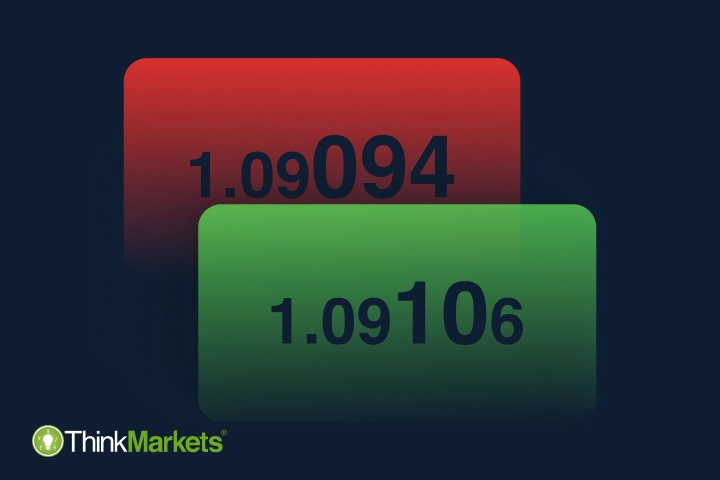
How to trade forex
<p>Besides the obvious way of trading forex in the form of the physical foreign exchange transaction, a large part of forex transactions is executed by retail traders who trade forex pairs online for personal gain. As there is no physical exchange of currencies in online trading, forex pairs are traded via derivatives.<br /> <br /> One of the most popular ways to trade currency pairs online is via CFDs – contracts for difference. If you are not familiar with the concept of derivatives or CFD trading, check out our <a href="/en/trading-academy/cfds/what-are-cfds">CFD trading: a beginner’s guide</a>, where we explain it in detail.</p> <h2>How to trade forex with CFDs</h2> <p>When you trade forex with CFDs, you predict the direction of a future price movement of a currency pair. If the price moves according to your prediction, you gain a profit, and if the market moves against your prediction, you incur a loss. Let's see how it works following simple forex trading examples from the previous What is forex trading article.<br /> <br /> Imagine that the current buy price of the EUR/USD pair is 1.02839. Your research indicates that the euro will soon start strengthening against the US dollar, and the pair's price will go up.<br /> <br /> You open a long (buy) CFD position on the pair. If your prediction is correct and the price goes up to 1.03039, the price difference – 0.0020 or 20 pips, is your profit. If the price moves in the opposite direction and goes down to 1.02639 instead, the price difference becomes your loss.<br /> <img alt="" src="/getmedia/32be74e5-7189-44de-add9-f61a6f466526/article-how-to-trade-forex-long-cfd.webp" style="width: 552px; height: 441px;" /><br /> <br /> In the opposite scenario, where you think the price of the pair will decrease, you open a short (sell) position. If your prediction is correct and the price drops to 1.02639, you gain a profit of 0.0020 or 20 pips. Should the market move against your prediction and reach 1.03039 instead, you lose.<br /> <br /> <img alt="" src="/getmedia/2a0c3c54-37cf-462d-a39a-ac653e6bad4b/article-how-to-trade-forex-short-cfd.webp" style="width: 552px; height: 443px;" /><br /> <br /> The USD 0.0020 seems like a small amount to win or lose. However, this number applies only to 1 unit of a currency – 1 euro in this example, while in CFD trading, currencies are traded in lots.</p> <h2>What is a lot in forex trading?</h2> <p>A lot in CFD trading (whether it's forex or any other financial market) is a measurement of a contract size. It usually varies depending on the market and instrument. In forex, one standard lot of all currency pairs is 100,000 units of a currency. So, one lot of EUR/USD would mean EUR 100,000. Most brokers allow traders to open much smaller positions, also called mini and micro-lots. With ThinkMarkets, for example, you can trade as little as 1,000 units of EUR/USD or EUR 1,000, which is 0.01 lot.<br /> <br /> <img alt="" src="/getmedia/2b6dc4f9-9a54-4222-8318-0d87eaba69b2/article-how-to-trade-forex-lot.webp" style="width: 552px; height: 343px;" /><br /> <br /> If you were trading one lot in our example, the amount of profit or loss – 0.0020 – would be multiplied by 100,000, resulting in a much bigger number:<br /> <br /> <img alt="" src="/getmedia/4c1103c3-3d42-40cc-9ee0-93b72af0becd/article-how-to-trade-forex-lot-formula-1.webp" style="width: 439px; height: 21px;" /><br /> <br /> With this formula, you can always calculate your potential profit or loss:<br /> <br /> <img alt="" src="/getmedia/1ff7f27d-5dbb-408a-987f-1b7b65007ced/article-how-to-trade-forex-lot-formula-2.webp" style="width: 520px; height: 24px;" /><br /> <br /> Now, if you trade one lot of EUR/USD, which means trading EUR 100,000, it may sound like a very large amount to open a trade with. However, when you trade CFDs, you don't need to pay the full amount to open a trade of that size because you trade with leverage.</p> <h2>What is leverage in forex?</h2> <p>Leverage is a term used to describe the process of borrowing funds from a broker to open trades larger than your capital. This term is not forex-specific and applies to any instrument and market traded with CFDs or other types of trading contracts that have this feature. We explain how it works in our <a href="/en/trading-academy/cfds/what-are-cfds">CFD trading: a beginner’s guide</a> too.<br /> To give a brief example based on our EUR/USD currency pair, let's assume you are trading 1 lot with 200:1 leverage. It means that you only need to pay 1/200th part, or USD 500, to open this trade. The higher the leverage, the smaller the amount you need to deposit to open a trade.<br /> <br /> <img alt="" src="/getmedia/15264210-73a6-4725-a562-a37415119a09/article-how-to-trade-forex-leverage-200-to-one.webp" style="width: 552px; height: 308px;" /><br /> <br /> Please keep in mind that using risk management tools when trading with leverage is crucial for every forex trader because while leverage increases buying power, it can also increase losses if a trade happens to be losing.</p> <p paraeid="{22306c66-6283-487d-9399-a4aca021fe63}{241}" paraid="451896581">The maximum level of leverage depends on multiple factors, such as the broker's offering, account type, market, instrument, or country of trader's residence. For example, the maximum allowed leverage in the UK, Australia, and the EU is 30:1 due to regulating bodies within those regions, while in other parts of the world, it can be as high as 500:1. </p> <p paraeid="{250ca595-575b-4406-8923-97f21a83a46f}{2}" paraid="1503769214">However, there is a difference between maximum and optimal leverage, and very few people ever trade effectively at the maximum level, the same way you would not drive a sports car at top speed in a built-up area. </p> <p paraeid="{250ca595-575b-4406-8923-97f21a83a46f}{36}" paraid="1266073801">Instead, people will tend to trade with no more than ten times leverage. So, if a trader has deposited $10,000 to trade, they would rarely open positions larger than $100,000. </p> <h2>How to start trading the foreign exchange market</h2> <p>Here is a list of the first three important steps you need to do to start trading forex online:</p> <h3>Choose a forex broker</h3> <p>Most online trading brokers offer a variety of financial markets, not just currency trading, so you don't need to be focused on finding a forex-specific broker. It's crucial, however, to look for a well-regulated trading partner licensed by reputable regulators. ThinkMarkets, for example, has multiple licences and is regulated by the UK’s Financial Conduct Authority (FCA), the Australian Securities and Investments Commission (ASIC) and the Cyprus Securities and Exchange Commission (CySEC), among others.</p> <h3>Choose a trading platform</h3> <p paraeid="{250ca595-575b-4406-8923-97f21a83a46f}{138}" paraid="1017778112">Most forex brokers usually offer several trading platforms. Explore your options and compare trading account types associated with them to find the one you are most comfortable with. Pay attention to the ease of use, offered spreads and leverage. </p> <p paraeid="{250ca595-575b-4406-8923-97f21a83a46f}{144}" paraid="390720054">ThinkMarkets' proprietary trading platform, ThinkTrader, may be a good option if you are a manual trader. It offers a user-friendly, intuitive design, a wide variety of currency pairs, tight competitive spreads and fast execution. Available as a mobile and desktop app, as well as in a web browser, ThinkTrader is also equipped with a powerful suite of advanced tools to help you grow as a trader. Moreover, you can create a free demo account first and practise trading with virtual funds risk-free. </p> <p paraeid="{250ca595-575b-4406-8923-97f21a83a46f}{178}" paraid="1797459728">ThinkMarkets also offers MetaTrader 4 and 5 for traders who may prefer these platforms, and for their EA or custom indicator capability. </p> <p><br /> <br /> <img alt="" src="/getmedia/e77ab2f8-dd0c-4075-8a02-481d68a8d02f/article-how-to-trade-forex-platform.webp" style="width: 552px; height: 235px;" /></p> <h3>Choose a currency pair to trade</h3> <p>Most new traders tend to start their forex trading journey with the most traded major currency pairs because there is more information about them, and they present diverse trading opportunities. Here are some of the most popular forex pairs among beginners and experienced forex traders:<br /> <br /> <img alt="" src="/getmedia/57fd89e8-5fff-4c02-a731-17275c6196e3/article-how-to-trade-forex-pairs.webp" style="width: 552px; height: 300px;" /><br /> Keep in mind that there are quite a few factors that may cause price swings, so it is necessary to research before selecting a pair and placing a forex trade. In our <a href="/en/trading-academy/forex/what-affects-forex-exchange-rates">next article</a>, we'll find out what moves the forex market prices to help you identify potential trading opportunities. Once you have that knowledge, you can move on to getting to know trading strategies and building your own forex trading strategy.</p>
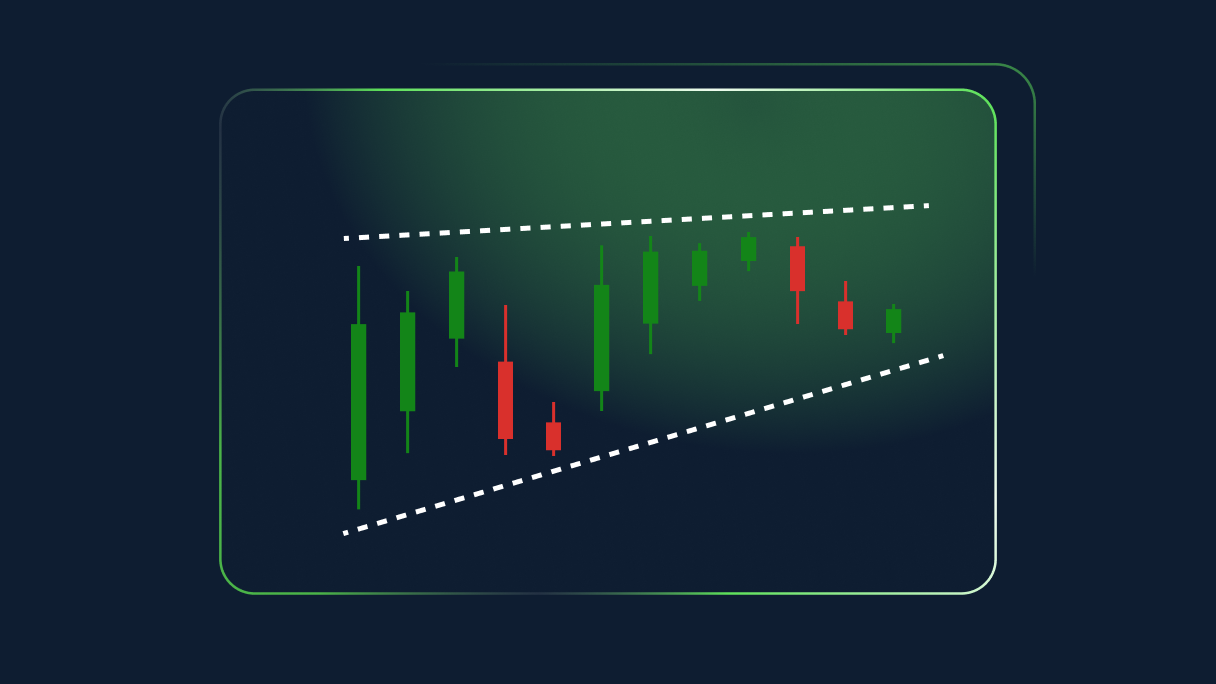
What is a Rising Wedge?
<p dir="ltr">The <strong>rising</strong> (ascending)<strong> wedge</strong> pattern is a <em>bearish</em> chart pattern that signals an imminent breakout to the downside. It’s the opposite of the falling (descending) wedge pattern (bullish), as these two constitute a popular wedge pattern. A rising wedge can be both a continuation and reversal pattern, although the former is more common and more efficient as it follows the direction of an overall trend. <br /> </p> <p dir="ltr">In this blog post, we discuss the rising wedge formation, its main characteristics, how to spot it, and how to make sure that your trades involving the rising wedge pattern are profitable. </p> <h2 dir="ltr">Where does the falling wedge occur?</h2> <p>Similar to <a data-di-id="di-id-d2dcb780-a21cf72e" href="/en/trading-academy/forex/falling-wedge-pattern">the bullish wedge</a>, the rising wedge consists of two converging trend lines that connect the most recent higher lows and higher highs. In a rising wedge, the lows are catching up with the highs at a higher pace, which means that the lower (supporting) trend line is steeper.</p> <p> </p> <p><img alt="rising wedge pattern" src="/TMXWebsite/media/TMXWebsite/Rising-wedge-image-1.jpg" /></p> <p> </p> <p>A rising wedge can occur either in the downtrend, when it is seen as a continuation pattern as it seeks to extend the current bearish move. Or it can occur in an uptrend, ultimately resulting in a reversal pattern. The former is considered to be a more popular, and more effective form of a rising wedge. <br /> <br /> As with the falling wedge, we note three key features of a rising wedge:<br /> </p> <ul> <li>The price action temporarily trades in an uptrend (the higher highs and higher lows)</li> <li>Two trend lines (support and resistance) that are converging</li> <li>The decrease in volume as the wedge progresses towards the breakout</li> </ul> <p><br /> The third point is seen more as a boost to the validity and effectiveness of the pattern, rather than a mandatory element. The decreasing volume suggests that the sellers are consolidating their energy before they start pushing the price action lower towards the breakout.</p> <h2>Strengths and Weaknesses of the Pattern</h2> <p>The main strength of an ascending wedge pattern is its ability to warn us of an imminent change in the trend direction. Despite the fact that the wedge captures the price action moving higher, the consolidation of the energy means the breakout is likely to happen soon. <br /> <br /> Given that the lows are progressing faster than the highs, the wedge is squeezing towards the point where the two trend lines intersect. Despite a push from the downside, the buyers are finding it difficult to break out to the upside, which triggers a move in the opposite direction. <br /> <br /> On the other hand, the rising wedge is still a technical indicator that only generates a signal. As every other indicator, it is not, and it can’t be 100% correct in predicting future price movements. Thus, it is best applied alongside other technical indicators. <br /> <br /> The best possible way to identify the key strengths and weaknesses of a rising wedge is to start analysing the pattern yourself. For this purpose, <a data-di-id="di-id-555d44fe-1d3b3793" href="/en/metatrader5">MetaTrader 5 trading platform</a> offers a great trading environment which allows you to focus on the price action and get more familiar with this and other chart formations. </p> <h2>Spotting the rising wedge</h2> <p dir="ltr">Identifying a rising wedge is not so difficult. As a first step, you should eliminate all types of wedges that are present in the sideways-trading environment. The ascending wedge occurs either in a downtrend as the price action temporarily corrects higher, or in an uptrend.<br /> </p> <p><img alt="rising wedge pattern" src="/TMXWebsite/media/TMXWebsite/Rising-wedge-image-2.jpg" /></p> <p dir="ltr">Down here we have a USD/CHF daily chart. The price action is moving lower until a point when it creates a third in the series of the lower lows. Afterwards, the buyers start pushing the price again higher, creating a rising wedge. </p> <p> </p> <p dir="ltr">Finally, we have a breakout to the downside, as the buyers were unable to capitalise on the positive momentum they had. This wedge is a bit narrower as two trend lines converge quite quickly, which is positive from the risk/reward perspective.</p> <h2>Trading the Rising Wedge</h2> <p>We will now use the same chart to show how you should trade the rising wedge. Of course, there are many rising wedges that we can use to show how to trade the ascending wedge, however, we use the same chart to provide a continuity and complete the process - from spotting the wedge to finalising the trade.</p> <p> </p> <p><img alt="Trading rising wedge pattern" src="/TMXWebsite/media/TMXWebsite/Rising-wedge-image-3.jpg" /></p> <p> </p> <p>Hence, once we identify the wedge, we process towards the second stage when we look at the trade elements - possible entry, stop loss, and take profit. But first, pay more attention to two vertical red lines. In between these two, the volume is decreasing as the wedge progresses. <br /> <br /> The moment the volume breaks the decreasing trend is when the candle breaks out of the wedge. A higher volume behind the break is a great evidence that the breakout is happening, as you can see a strong increase in volume figures once the breakout starts taking place. <br /> </p> <strong>We also have three horizontal lines:</strong><br /> <ul> <li>black (entry)</li> <li>red (stop loss)</li> <li>and green (take profit)</li> </ul> <p> </p> <div dir="ltr">Entry is placed once we have a first daily close outside of the wedge’s territory. A stop-loss should be set inside the wedge’s territory as any return of the price action to the inside of the wedge invalidates the pattern.</div> <div dir="ltr">In this particular case, the distance between the entry and stop loss is very short, since two trend lines have almost intersected. Hence, the risk in this trade is extremely low. As with the falling wedges, the take profit is calculated by measuring the distance (the short blue vertical line) between the two converging lines when the pattern is first formed.</div> <div dir="ltr">Finally, we have our trade details: Entry - $0.9835, stop loss - $0.9855, take profit - $0.9695. Thus, we are risking 20 pips to make 140 pips, which is an extreme scenario in the risk-reward context. </div> <p dir="ltr">Given the very small amount of pips that you risk with this scenario, you may also opt to decrease the amount of pips you are targeting from 140 pips to 70, given that a level of $0.9765 is where an important horizontal resistance is located. Choosing between these two options depends on your risk tolerance and overall trading approach. </p> <p> </p> <p dir="ltr">You can also check how both of these approaches work by opening trades on the demo account, which you can do here. This way you start practising first and choosing the best trading approach that fits your skill set, as one size does not fit all. </p> <p> </p>